Sometimes love begins with the simple act of lifting what cannot yet climb.
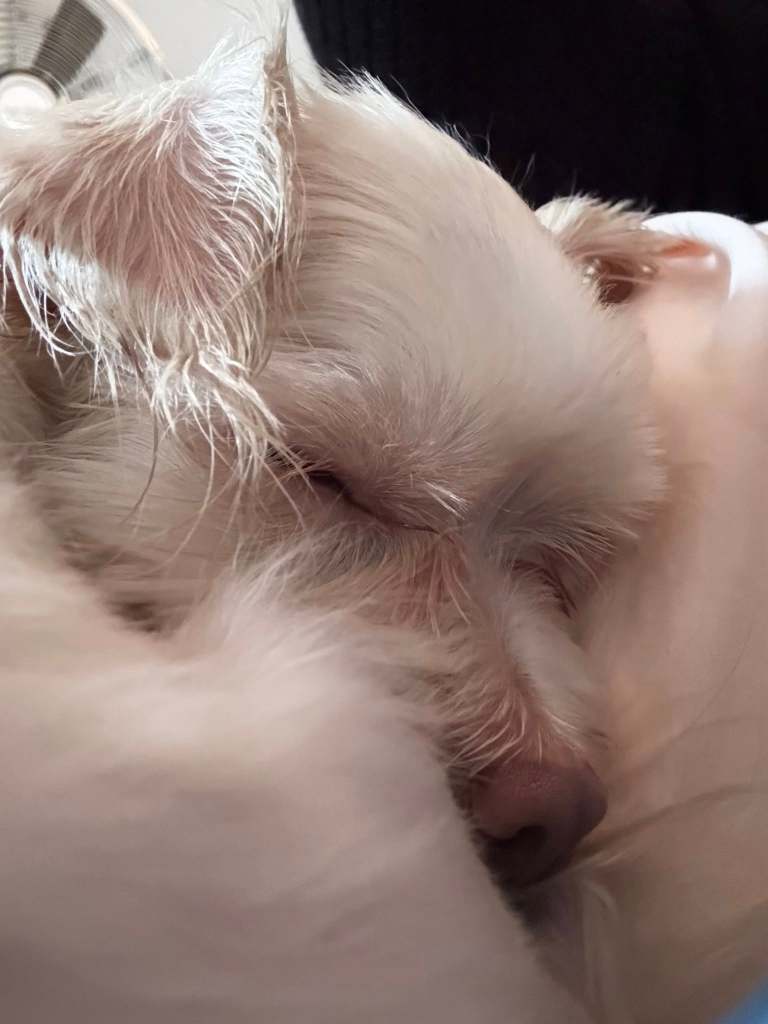
When Olive first came home, she stood just inside the doorway, unsure if she was meant to stay. Olive is a foster, though she doesn’t know that word. All she knows is the soft bed, the food that appears without fight, the hands that don’t harm. I tell myself not to fall in love, but love is part of the work.
I set down a small bowl of food, and she approached it in slow, cautious circles, pausing after each bite as if waiting for it to be taken away. Her thinness told the story before I ever heard it— fifty plus dogs in one home, one life among many, no reason to believe kindness could last.
Later, I bathed her. The water ran brown at first, then clear. She shivered, but didn’t pull away. When I wrapped her in a towel, she pressed her face into my palm, a quiet surrender that felt like trust beginning.
That evening, I opened the door for our walk. Olive watched the others step outside, her head tilted as if studying a new language. The stairs puzzled her—three small steps that might as well have been mountains. She tried, then stopped, trembling at the edge of what she didn’t yet know how to do. So I lifted her. She rested against my chest, heart beating fast beneath her ribs, and I thought about all the times we’re asked to do the same—to carry what is too fragile to climb, to be the strength that love requires. Sometimes, that’s how healing begins: one being steady enough for another to trust the ground again.
The evening air folded around us like a quiet promise. Five pounds of newness among veterans of rescue, she trotted forward, trying to keep pace. The others moved ahead in their practiced rhythm—tails swaying, paws landing in patterns learned from trust—but she was learning the rhythm, too. The gentle give and take of belonging.
That night, I wasn’t sure how sleep would go for her. My dogs share the bed with me, and I always let a foster do the same. Because she is so small, I worried I might roll over her in my sleep. But each time I woke to check—four times, maybe more—she was in the same place, curled into a tight circle against my side. My dogs slept in their usual spots, unbothered, as if they already knew she belonged.
Her breath was rhythmic, deep, threaded with a few soft whimpers. I lay there listening, wondering what kind of sleep this was. The last five days of her life had been chaos—separating dogs, confusion, fear. Was her body simply too tired to stay awake? Or had she, even for a moment, sensed the calm? Maybe sleep itself was her first act of trust.
Each walk, each meal, each quiet hour on my lap teaches her that safety can hum steady in the background of a life. My dogs already know this song by heart. They do not question the newcomer, do not guard their space. They shift without words, making room for the small, trembling presence who is learning what love feels like when it expects nothing in return.
And maybe that is what we all must learn again after loss—how to live inside a world that once felt familiar but now feels foreign. How to feed ourselves, to move, to rest, when the very air has changed its meaning. Grief, like Olive, must be coaxed forward one hesitant step at a time.
Olive came home as a foster, one more soul in need of rest. She doesn’t yet understand the stairs. She stands at the bottom and looks up, measuring the distance, unsure of her strength. But she will learn. One day she’ll move between levels with ease, forgetting there was ever a time she hesitated.
And maybe we will too—learning the steps of this changed life, trusting our footing a little more each day. The climb will never be easy, but it will carry us forward.
This is the rhythm of our home. We make room—for the broken, the frightened, and for the parts of ourselves still learning to rise.
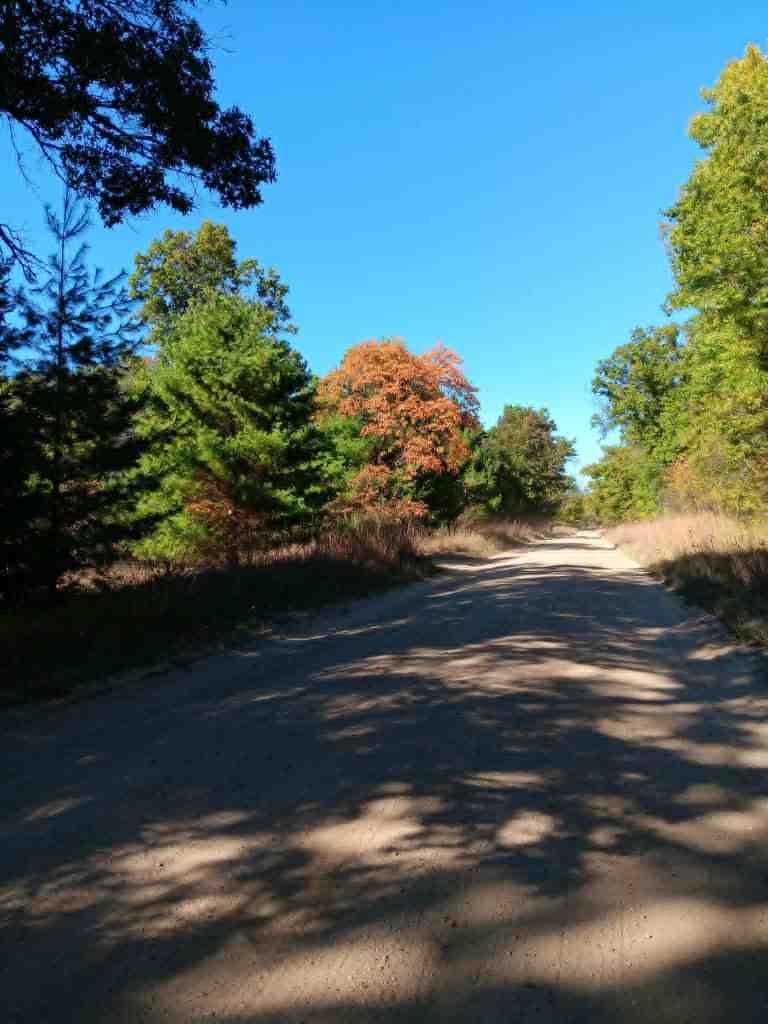
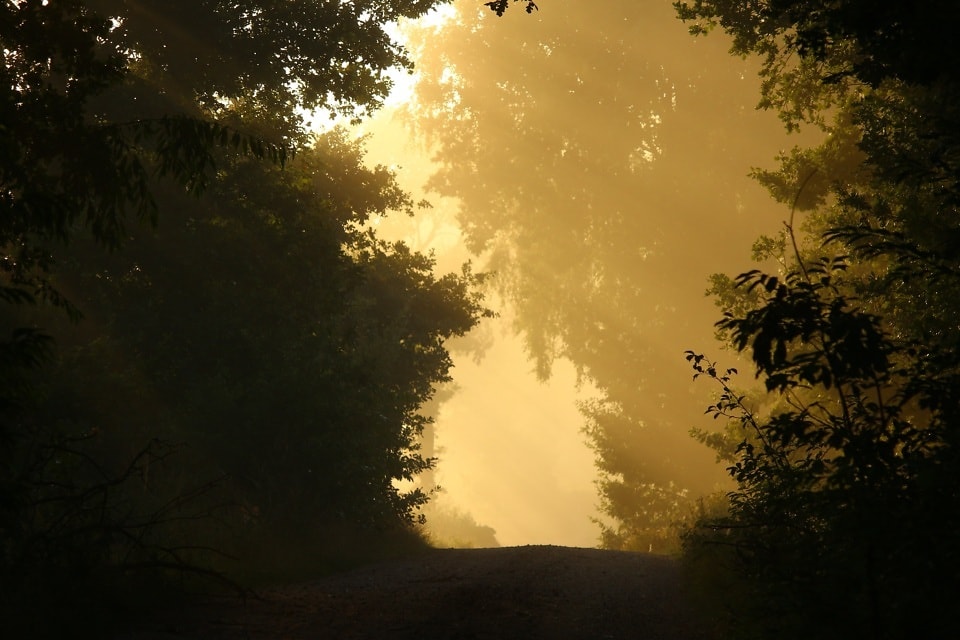
A picture of Lester Street. The street where we lived. Where I brought my Becca home. I drove back up there today just to get this photo because I knew it had to be the image I used with this piece of writing.
Whenever I am up at the farm, caring for the animals while the owners are away, I feel myself pulled north. Where I live now, fifty miles from the town I grew up in, I never feel the urge to return. But the farm sits only sixteen miles away, and it feels almost wrong not to go. As if the town has its own orbit, and once I step this close, I’m caught inside it.
I don’t know why I am drawn to the town I gladly left. The farm is less than twenty miles from the street where I lived. A short ride in physical distance, but the time I travel into the past is much farther. Usually, by the second or third day of farmsitting, I drive to the stop sign at the end of the road and turn the car north.
The flickering of sun through the trees unsettles me, making it too easy to slip into the past, to see the landscape as it was forty years ago. Enough has changed, but just enough remains to trick me into believing I’m heading back to the place I once left.
The curve in the road, to the left, and the bridge traversing the Muskegon River. The Manistee National Forest sign. The intersection where a bar stood in the 70’s, and the urban legend of a girl hit there one night—her remains scraped from the asphalt. A factory that promised jobs for the people in the impoverished area. The big sign welcoming drivers to the spot “where the north begins and pure waters flow.”
By the time I reach that sign, my stomach knots. My hands grip the steering wheel tighter. A lump rises in my throat. Why do I do this to myself? As always, I turn right down the street that takes me to the millpond where I spent many summers swimming. It’s gone now—the dam must have broken.
I park in the small lot across the street and let my mind slip back to those summer days—the long, hot walk from my house, the dread that certain kids from school would be there waiting to bully me, the immense relief when they weren’t. Always on guard, always scanning. And then the cool shock of the water when I finally dove in, the pruned fingers and tired muscles after a day spent trying to swim myself clean.
When I leave the lot I drive a block or two north and turn left, passing the old co-op. The building I remember on the right is gone now. The one on the left still stands. How many times did a younger me push through that door, the smell of goat feed my parents had specially mixed hanging in the air. The voices of gruff old farmers rose and fell around me, and the woman at the desk, gruff herself, always lowered her voice when she spoke to me, slipping me a wink. And each time the door opened, the bell gave its jingle, marking my passage in and out.
The car bumps over the railroad tracks and I am back at the main road.
I pull to a stop at the red light, waiting to turn left and go through town. Was there even a light here when I was young? Or just a blinking yellow for those passing through? My eyes fix on the dark wood building half a block up. It used to be Smith’s Tavern; now it’s a fireworks store.
A horn blasts behind me and I’m yanked forward into today.
I notice Rosenberg Hardware has moved, though the name endures. The old courthouse—huge, ornate, proud—is gone, replaced by a flat, forgettable building with no character. The post office is unchanged, and I realize I’m going through a kind of checklist: this is still here, this is gone. Why do I keep doing this?
And then the library. How could I forget? That place was my escape, my portal. Until the day a worker said: Let her bring that baby in here and I’ll be able to tell who the father is. Even remembering it now makes my chest burn. I was angry then, heartbroken. This had been the place where summer reading programs lit me up. My name filled the checkout cards again and again, proof that I belonged here. For years, it was safe—the one place the bullies never followed. It turned out it wasn’t children I had to fear, but an adult. I never went back.
Decades later, it still presses against me. The library full of books and worlds became hostile ground. And even now, I feel the old surge—to shield my daughter, even her memory, from a town that once wanted to cut her down. A town that kept telling me I was an outsider.
The weight of that pain presses against me as I turn onto Lester Street. One block in, I reach the corner where I was ripped off my bike after school. Not the only time I was jumped there, but the one that stays: the day I lost the bike that had been a gift, something precious in a childhood where little came easy. The shame of walking home empty-handed, of trying to explain it to my parents, pressed heavier than the bruises.
Another memory rises. A car full of girls circling the dirt road, one furious because she thought I’d spoken to her boyfriend. I can’t remember if I had, but I can still see myself – legs flashing, weaving through trees, sprinting for home while they prowled the road. Branches whipped my arms and face. My chest burned with breath and shame, the crunch of dried leaves and twigs underfoot loud in my ears. Anger pushed me forward, but hopelessness chased me harder.
Driving it now, decades later, I see her again, that blur of motion. And my heart aches for her—for the small, scared girl running faster than she should have had to.
I spent so much time in this town just trying to keep myself invisible, unseen. Maybe that’s why I drive back now—to prove I’m no longer hidden, no longer theirs to erase.
Still, not everything in that town was shadow. When I turn toward the land where our house once stood, the grass grown over, the best of me rises. I see the apple tree where I lost myself in books, its heavy branches dripping with blossoms, bees humming above me. April, my sheep, followed close—nibbling my fingers, laying her head in my lap as if she belonged to me alone. And my horse, steady as breath, carrying me bareback through the woods with nothing but her mane to guide us, taking me where no one else could find me.
And then—the brightest memory of all. The day I carried my daughter home, small and perfect in my arms. I remember the weight of her, the way the house seemed to hold its breath as I crossed the threshold. For a moment, the world was only light. That single joy outshines so much of the darkness, and it always will.
Maybe this is why I keep coming back. To test the balance of shadow and light. To remind myself that even in the hardest years, there were creatures who loved me, beings I cared for who, in their quiet way, healed me. And there was her. Always her.
I return to measure what still presses against me and what has loosened. To trace the outline of the girl who once ran unseen, and the woman who refuses invisibility now.
Maybe I drive back not to punish myself with memory, but to claim it. To say, with both ache and defiance: this was mine, too.
And when I leave again, heading back toward the farm, I feel the orbit release me. For a while I am free, until the next time I drift close enough to be pulled in again.
When I found an old folder filled with poems I had written years ago, I sat down and reread them with surprise . . . and recognition. I had forgotten how much I love the form of poetry, how it demands chiseling down to only what is necessary. A poem does not allow me to hide behind excess; it asks me to distill, to press thoughts and feelings into their most essential shape.
For years I’ve shared essays and reflections here, weaving stories into paragraphs. Now, I want to also let poems find their place among them. Poetry is another way of carrying the weight and wonder of life, grief, beauty, memory, love, in a form that breathes differently. It may arrive spare or lyrical, but it always asks the same thing prose does: to speak honestly, to hold what matters, and to offer it in words.
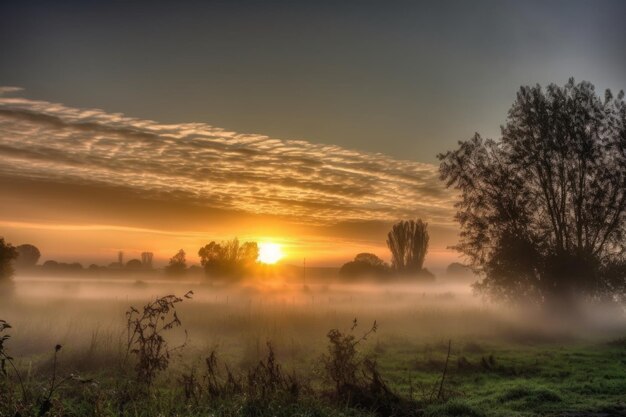
Not my image.
A field holds its breath beneath a low veil of fog. The grasses bend with dew, each blade jeweled in silence, waiting for the sun to rise high enough to burn the mist away.
This is the hour between. Not sky, not earth, not gone, not yet held. A place where sorrow lingers close, dampening skin, refusing to vanish.
Slowly I extend my hand into the vapor, always hoping she’s reaching back. Tender quiet is broken by the cry of a loon from some unseen lake whose edge I cannot name.
Soon the day will come, the light will sharpen, the dew will dry. But for now, I belong to the mist, this tender veil as thin as a breath, between what was and what remains.
There is a change in the air when summer knows it’s time to begin to say goodbye and make space for the next season. It’s a dance as old as time and the earth moves in practiced step as each of them move forth. And somewhere, just beyond the edge of the clearing, my old friend waits – leaning against an ancient pine, his coat made of fog, his breath heavy with the scent of pine needles and rain. He doesn’t rush me. He knows I’ll come. The blues is patient like that, knowing that when the air thickens and the light tilts, I’ll see him standing there, waiting for me.
I feel him before I see him. Dusk arriving early is always the first sign. My chest tightens; my steps falter – not because I don’t know him, but because I do. He is expected, familiar, but in the early days I wasn’t ready for his company. Our connection is different now. Looking forward to seeing him is too strong but there is a comfort when he’s near.
I nod when I reach him. He nods back. There’s no need for greetings – we have known each other too long. We fall into step, side by side, our pace slow enough to notice the damp grass bending beneath us. The crows follow, black shadows skipping from branch to branch, their wings beating the measure of our walk. He doesn’t speak at first. He never does. It’s me who breaks the silence, asking the same questions I always ask – why now, why again, how long will you stay? He only shrugs, the fog shifting around his shoulders like a cloak. The crows answer in his place, sharp cries echoing through the thinning light.
In those early years, the first decade or so after Becca was killed, his presence horrified me. Haunted was how I felt, as if grief were stalking me – waiting around every corner, slipping into every room. He existed only to remind me that my daughter was never coming back. And I hated him for it. His footsteps echoed in mine, heavy and relentless, and no matter how quickly I tried to walk, he was always there. The crows circled above, not companions then but omens, their cries sharp enough to flay. I lived in dread of his visits, even as I knew he would always return.
The season changed quickly this year. I thought I had more time before he appeared. But summer was ready to leave, and autumn was insistent.
We walk for a while in silence before I finally break it. “You’re back early this year,” I say. He shrugs, disturbing the fog around his shoulders. I watch until it settles again. Then he speaks.
“The seasons change when they will. You know that.”
“I do,” I reply. “But sometimes I wish you’d skip a year.”
He chuckles, low and hollow. “You wouldn’t know what to do without me.”
I glance at him. “That used to be true. In the beginning, you terrified me. You felt like a stalker, like grief itself walking at my side. I hated you.”
“And now?” he asks, his voice quieter, like rain slipping through pine needles.
“Now…” I pause, watching the crows settle above us. “Now you’re an old friend I don’t exactly look forward to, but I don’t dread either. You remind me I can still feel. You remind me Becca mattered enough to make me ache.”
He nods, and for a moment, even the crows fall silent. “Then I’ve done my work,” he says.
I don’t answer right away. Part of me wants to snap, to tell him his work was cruel. Part of me wants to thank him, for not letting me forget. What comes out instead is a sigh, heavy as the dusk around us. “Maybe. But you’ll be back again. I don’t think your work is truly ever finished.”
Above us, the crows scatter in all directions, their shrieks falling like shrapnel, leaving the air torn open between us. We stand there, he and I, in the deepening indigo light. For a moment I think of asking him to leave. To never return. But, I know I would miss his companionship.”
I look at my old friend. Once a foe who I felt was here to torment me, now as a trustworthy part of my life. Knowing there is nothing else to say we turn away from each other.
As we move in step, his scent lingers – moss and damp bark, the quiet perfume of things breaking down and beginning again. Comforting, in its way. A reminder that even endings feed the soil. He carries the cycle of life and death in his presence.
We walk until the last light drains from the sky. The crows settle into the branches above, silent now, as if even they know it’s time to rest. He will leave when he chooses, as he always has. But for now, we walk together, and the evening feels less empty with him beside me.
Initially, this piece of writing does not seem to belong with the rest. The writing I have done around loss of a child and the healing journey I am traveling. Trust me. It belongs here.
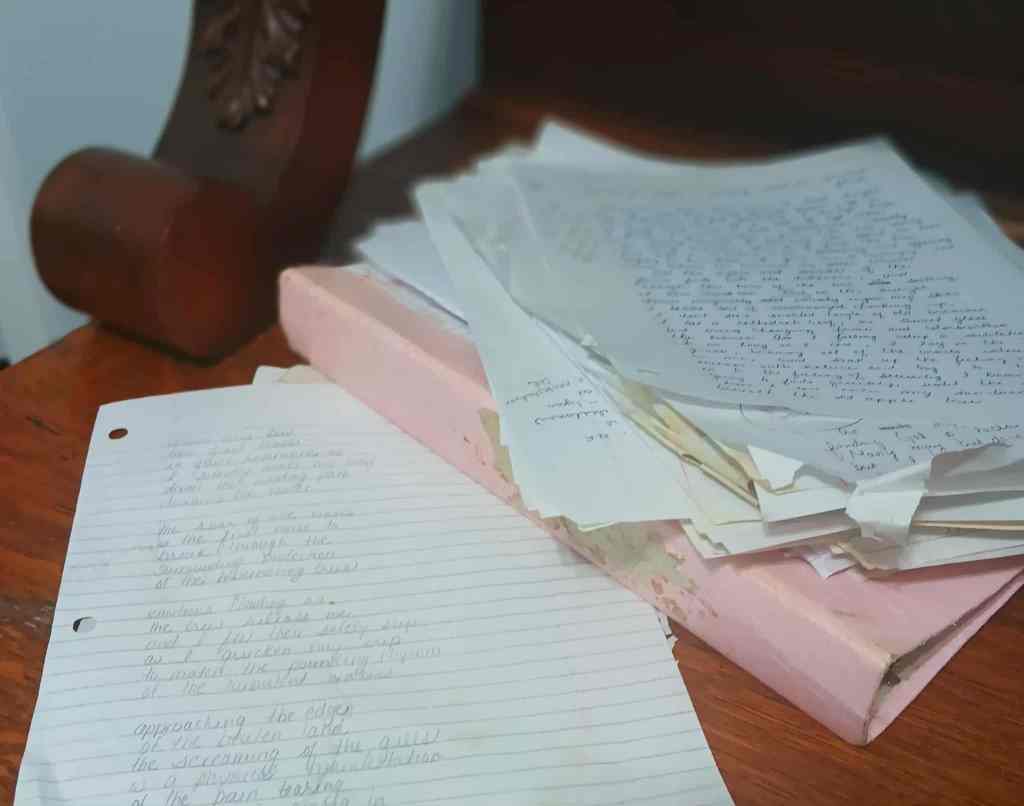
I can’t remember what I was looking for in the boxes in the basement last week. We moved nearly a year ago and most of the packed items remain that way. Last October, when we were packing, I threw away a large amount of things I no longer needed. There were, however, other things I could not bear to part with as they had a connection to my daughter. Or, my boys when they were small. And, to my surprise (and delight) there was a pink hard covered binder that I thought I had lost years ago. Handwritten words on college ruled paper were crammed inside. Relics of a former life.
On these faded and crumpled sheets were dozens of poems I had written over two decades ago. Before I lost my Becca. Prior to the before and after divide her death caused in our lives.
I was happy I had found them as I thought they had been lost forever. And, in truth, I felt kind of alright with that because they had been written about love. Melancholy musings about love lost pale in comparison to the grief one feels after the death of a child.
Carrying them upstairs I placed them on the small desk next to my bed. I was happy I found them but I wasn’t ready to read them yet. I am not sure why. Part of me felt they did not matter anymore. They were of the past. Another part felt as if they would be silly to me after having been through the things I have experienced. I can remember how much I ached when I wrote them but I didn’t truly know what aching loss was. I let them sit there for a few days. Eyeing them every time I entered my room. I felt embarrassed, somehow. Nearly a week passed before I sat down, took the pink binder into my lap, and opened the cover.
The first poem I read pulled me backward through time. My younger self spilled across the page, desperate, raw, convinced that heartbreak was the deepest wound a body could know.
I saw the heartache everywhere. Page after page carried the same refrain: unloved, unlucky, unwanted. I poured it out with the certainty of someone who believed it was her truth.
The emotions were unfiltered, splashed across the page crudely. Anger, sadness, emptiness—they tumbled out without grace, without restraint. I wasn’t writing poetry so much as carving open wounds onto paper. There was nothing polished about it. Just the desperate scrawl of someone who believed she was unworthy and wanted the world to see her ache.
As I was reading them I thought: oh, I would write this so much differently now. Or, would I even write them at all? I can think of little as profound as losing a child. Surely, writing about romantic love lost is superficial. Yet, there were truths I could see between the written words.
Meaning always seems to reside in the space between.
There was anger. Anger is the flame that kept me moving. It burned at men for not loving me the way I thought I deserved. It burned at myself for being “too much” or “not enough.” But beneath it all, anger was a shield – a way to keep from admitting how much I wanted to be loved but I didn’t understand how.
Sadness is the ache I poured into poems, believing I was destined to be unwanted. It sat heavy in my chest, a familiar companion. Sadness told me the lie was truth and convinced me to keep repeating it.
Loss is not just the end of relationships—it is the empty space I carved out myself. It is love I could not hold, because I didn’t believe it belonged to me. I grieve the men I pushed away, but I also grieve the version of myself who never felt safe enough to stay.
Emptiness is the echo of my uncle’s words: you will never be worth loving. I let that sentence hollow me out, and then I kept filling the hollow with chaos. The chaos felt familiar.
Unworthiness is the thread that tied all the others together. I wore it like a second skin, invisible and suffocating. I believed it so completely that I made it real, even when love stood right in front of me and asked me to trust.
Taken together, these emotions painted the story I lived by.
Between the scrawled lines of heartbreak, I saw the girl who believed she was unloved. I saw the anger, the sadness, the emptiness that poured out of her, unfiltered. But I also saw something else—the way she kept writing, kept trying to name her ache. Even then, she was reaching for love, even if she couldn’t recognize it when it stood in front of her.
The truth is, I was loved. There were men who gave me their full hearts, and I could not stay. I read those poems now and feel the grief of that too—the grief of turning away, the grief of sabotaging love that was real.
The harder truth is this: I was not only hurting, I was hurtful. I was the mean one. I lashed out at men who offered me tenderness, cutting them with words sharper than I care to remember. Destroying all in their path. I turned cold when they needed warmth, distant when they reached for closeness. I sabotaged what could have grown, convincing myself that chaos was safer than vulnerable intimacy.
It shames me to admit this, but it is the truth: I drove away the very love I claimed I longed for. I didn’t understand how to stay, how to rest in gentleness. Meanness became my defense, and I used it every chance I could. Looking back now, I see the cruelty was not born of malice but of fear—the fear that if I let love root itself in me, it would reveal my unworthiness all over again.
I saw myself as the victim. And though there were times I truly was, I also made victims out of others. This is the hardest confession: that pain, when left unspoken, when left unhealed, becomes something we pass on. My cruelty was the echo of wounds I carried from childhood, but it did not feel like an echo to the men who received it. To them, it was sharp, cutting, real.
This is what I regret most—that I repeated what had been done to me, even as I swore I wanted love. That I became the one who hurt, even while drowning in my own pain. That there are some who deserve apologies I won’t ever see again.
The grief I feel at this realization is sharp. But it does not live alone. None of my griefs ever have. They are threaded together, one pulling on the next, like pearls on a single strand.
When I grieve the loss of love—the men I pushed away, the tenderness I couldn’t bear—I feel the weight of losing my daughter too. When I ache for Becca, I also ache for the girl I once was, scribbling poems in pink binders, believing she was unworthy. Each grief stirs the others, until I cannot tell where one ends and the next begins.
This is the truth I have come to see: grief is not separate. It belongs to the same necklace, the same life. To touch one pearl is to feel the whole strand tremble.
And yet, even as the strand trembles, I feel something else. The act of holding one pearl, of turning it gently in my hand, seems to soften the weight of them all. Each grief touches the others, but so does each act of healing.
It is not only sorrow that travels along the necklace. When I polish one pearl with honesty, the others catch the light too. Naming my meanness does not excuse it, but it loosens the knot of silence that held it in place. Weeping for my Becca does not lessen the ache of lost love, but it teaches me how to live with a broken heart and still keep loving.
The necklace is heavy, yes, but it is mine. A whole life strung together: love, loss, regret, tenderness. To carry it is to admit I cannot separate the parts of me. I can only tend to them, one by one, until the strand gleams with all that is unbearable and all that is beautiful too.
I don’t think it’s an accident that I found these poems now. If they had surfaced years ago, I might have rolled my eyes at my own melodrama, or stuffed them back into a box. But now I can read them differently. I can see what I never wrote: the fear, the unworthiness, the deep longing that sat beneath every line. Timing matters. The binder waited until I was ready to face not only the lies I believed, but also the truths I could not see.
Between the lines, I found not just sorrow, but myself.
Some moments stay with us long after we think we’ve moved on. Today, a woman I didn’t immediately recognize reminded me of one of those moments—one I had nearly forgotten, but she had not. A quiet kindness during her dog’s final goodbye. A gesture that meant enough to bring her to tears a year later.
It caught me off guard but it reminded me that compassion has a way of lingering. Sometimes the smallest acts echo the loudest.
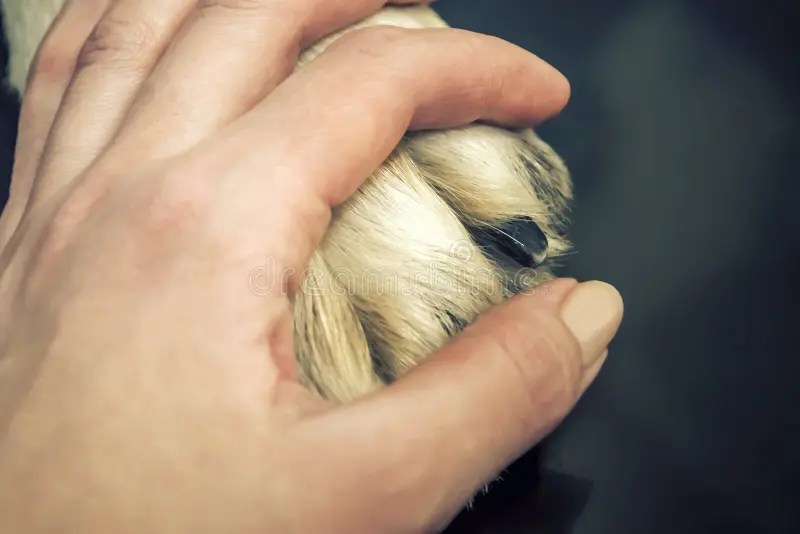
Image not of the author or Maddie. Chosen for symbolic representation of the bond we share with our animals.
Today was one of those perfect West Michigan summer days. Low eighties, little humidity, a breeze off the lake. Downtown hummed with life. Children laughing, birds chirping, the flea market buzzing two blocks away. A line stretched outside the art museum, and big, soft clouds floated across the sky. It was the kind of day that makes people fall in love with small towns.
I was working a fundraiser for the veterinary clinic where I work, a low-cost nonprofit that helps people care for their beloved pets. We don’t receive government funding, so we rely on donations. Today’s event was a “pub pedal” that brought together five local rescues. Volunteers sat at participating eateries to stamp “passports” and enter people into drawings.
I was stationed outside one of the new restaurant buildings. Because our town is small and tightly woven, I saw a lot of familiar faces – clients, friends, people I couldn’t always name but whose animals I remembered. That’s often the way it goes. I remember the dogs before the people.
A woman passed by on her way to the restroom and said she’d grab her stamp on the way out. I turned to my fellow volunteer and said, “I know her. I don’t know from where, but I know her.”
When she returned, she looked at me and said, “I know you from somewhere.”
Then she said, “Oh, you helped me with my do—” (let’s call her Maddie), and her voice broke. She turned away from me, hand covering her mouth, eyes tightly shut. I stood up and walked around the table to hug her, though I still didn’t know what moment she was remembering.
She tried to speak but had trouble finding words. Her tears came quickly and didn’t stop for a while. When she was finally able to talk, she told me I had been in the room when Maddie passed.
“You were incredible,” she said.
She remembered how I wrapped my arm around her when she was falling apart. How I gently positioned myself to block her view when it came time for the final injection – so her last memory wouldn’t be the needle, but Maddie’s face.
“You were so kind,” she said. “You made something unbearable feel a little less alone.”
And as she spoke, the memory returned. Exam Room 1. Her husband was there, his arm around her shoulders. They were both crying. I remember her heartbreak at saying goodbye to Maddie. I remember his grief too – but now I realize, some of his tears were for her. For the weight she was carrying. For the loss she was experiencing that he could not stop.
Summer bustled on around us. People walked past, chatting, laughing, heading to lunch. And there we stood. She hugged me again – one of those long, anchoring hugs, the kind you give someone who helped you survive something you thought you couldn’t.
She cried into my shoulder while the sounds of the day kept going. The two of us, in a little pocket of memory, held still while everything else moved.
It’s rare to know if you’ve made a difference. That day with Maddie was nearly a year ago. I hadn’t thought about it in some time. But today reminded me: the smallest gestures matter. Presence matters. People remember how you made them feel – especially in the hardest moments.
I’m not sharing this to say, look what I did. I’m sharing it because this kind of work – the quiet, emotional, often invisible labor of love – matters.
And sometimes, if you’re lucky, the world hands that truth back to you.
We move through the world so quickly. Errands, events, weather talk. But sometimes, something breaks through – a glance, a hug, a memory returned – and suddenly we’re face to face with a moment that asks us to stay. To bear witness. To soften. These are the soul moments. The quiet confirmations that love – whether for a person, a dog, a stranger – is never wasted. If you feel one, pause. Let it hold you. You may not remember the day. But someone else just might.
Two nights ago, I went down to the lake just to float. Dusk was still a couple of hours away, but the sun had softened. It wasn’t as relentless, and neither was I.
My favorite season at the lake is winter—on the deepest, windiest days. The sand turns to stone beneath my feet, frozen solid. The gulls scream into the sky like something primal and furious. And the waves? They don’t roll—they reach. They claw toward the shore, grabbing at the sand, dragging bits of it back to the cold, dark belly of the water. It’s stark. Wild. Beautiful in a way that feels honest.
My second favorite time is summer—just before the sun goes down. The heat has broken. Most of the crowd has packed up, leaving behind footprints and laughter in the air. It’s quieter then. The beach stops performing. The lake exhales. And in that softness, it’s easier to just be.
By the time I got there, the beach was near perfect. The sun had dipped low, casting gentler light. A few scattered people lingered. Small waves rolled in, steady and unhurried. The water was cool, not cold. A long shadow stretched across the lake from the lighthouse, like even the light had grown contemplative.
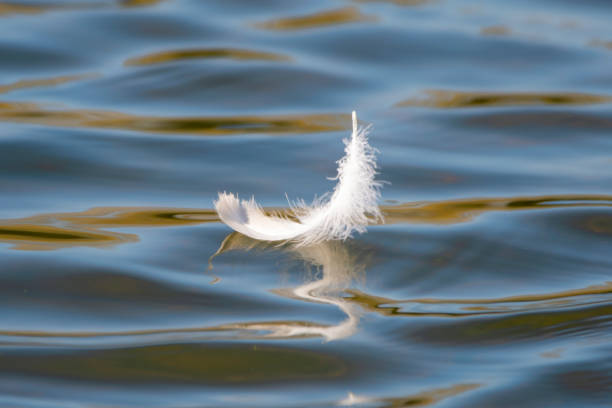
As I floated farther out, I saw a perfect white down feather drifting nearby. The waves swelled just enough to propel it forward without pulling it under. I thought, Well, that has to be a metaphor.
Ride the waves. Don’t let the grief drown you.
Then I thought, That’s too on the nose. Too tired. Surely that couldn’t be the lesson.
As I twirled gently in the water, I saw the lighthouse shadow growing closer. The real lighthouse stood in the distance, still and sure, casting a long dark shape across the surface.
Grieving parents live with the shadows of what life used to be, I thought. We have to find a way to stay in the light.
But that wasn’t it either. That thought didn’t feel right. It felt forced, too polished to be true.
The seagulls cried above me, their haunting screams echoing across the sky. Their voices always touch something in me. I’ve written about them before, about the winter lakeshore and how it mirrors my inner landscape. Grief, embodied. I’ve written about it enough to know that, in this moment, I had nothing new to say.
In all actuality, I didn’t figure out what – if anything – the lake had to teach me until later that night.
Not while I was floating. Not while I was squinting for messages in feathers or light. But much later, while I lay in bed.
The house was still. That kind of deep, sacred quiet that only comes when the day has finally given up. And maybe I had, too. I wasn’t hunting for meaning anymore. I wasn’t trying to pin purpose to every ripple.
I just was.
Earlier, as I had floated, I told myself to stop worrying about what I needed to learn. To stop dissecting every detail for meaning. I let my head fall back. I extended my arms beside me, closed my eyes, and let the moment hold me.
As I’d been taught in counseling, when feeling overwhelmed, I checked in with my five senses.
The smell of the lake was slightly fishy, yet clean.
Distant boats sped by in the background, their hum a kind of white noise beneath the occasional gull call.
I tasted a bit of lake water on my lips, gritty from the sand.
The light beyond my eyelids changed—soft pink to blue, then violet—as clouds passed across the low sun.
But it was the feel of the water that rooted me. The gentle rocking of the float beneath me. My arms lifted and fell with the swells. My feet dangled lower than the rest of me, brushing the colder waters below.
I felt weightless.
I felt cradled.
I felt peace.
Later that night, in bed, I could still feel it. The coolness of my skin. The sensation of water. It was as if the lake had rinsed something off of me, something that had been gathering on my surface for a while.
Grief residue. Thought loops. The ache of trying too hard to make sense of what may never be made sense of.
I felt… cleansed.
And that’s when the realization came.
Yes, we must find our own truth in this journey. Yes, we must seek meaning, search for signs, ask the unanswerable questions. We must question grief.
But we also have to stop chasing. We have to allow space not to know.
Yes, we grieving parents are seekers. We reach for answers. We demand meaning. We beg for signs: Why don’t I see them? Is my child mad at me? Do they still exist?
So many of us feel haunted by silence, wrecked by the absence of proof.
We want to believe our children are near, still part of us, still somewhere.
And yet, sometimes the deeper truth is this:
The burn to understand will exhaust us. The hunger for truth will leave us hollow. The endless grasping will not bring them back.
There is wisdom in the pause. There is grace in the unknowing.
Not trying to figure it all out is just as important as seeking answers. Maybe more important, for the soul.
We have to make space to be still. To unplug. To remain idle. To refill what grief depletes.
As I lay there that night, the peace was still with me.
The next day, I tried to call it back. Tried to summon that sense of floating, of being held.
It was already harder.
And today, it’s harder still.
That’s the nature of moments like that. They aren’t permanent. They don’t live inside us unless we choose to keep making space for them.
The lake held me longer than I expected—but only because I stopped reaching.
Some truths can only be heard in the silence after we stop asking.
This morning started full of intentions. After a full night’s sleep, I felt rested and upbeat. The kind of rested that feels rare. The kind that makes you believe in possibility again.
A whole day stretched out before me like clean canvas – quiet, unhurried, entirely my own. Paint. Write. Read. Maybe fit in a load or two of laundry. Little things, but meaningful. Pieces of a day that might have felt whole.
I got up and got ready to meet two friends for breakfast – an old coworker and my manager. Familiar faces. Easy conversation.
Stuffed peanut butter French toast. A warm cup of coffee. Laughter. The comfort of people I’m familiar with.
Sunday was off to a good start. By the time I got home around 11 a.m., I felt light, maybe even hopeful. Like maybe this would be one of the soft Sundays.
And then – quietly, inexplicably – everything shifted.
It’s like grief and memory sometimes wait until you’re standing still. Until your guard is down, the coffee’s settled, and the toast has been digested. They don’t always arrive with fanfare.
Sometimes they just . . . slip in. Quiet as breath. Heavy as fog.
I had a beautiful, warm morning. And then – without warning – the air changed.
Sitting on my bed, I felt a heaviness settle over me. Not like sadness exactly. More like inertia. Like something unseen had layered itself over my shoulders and made movement feel pointless.
The light in the room looked the same, but I didn’t feel the same in it. It was as though a curtain had been pulled between me and the day I’d planned.
Nothing loud. Nothing dramatic. Just a soft detachment. Like I was watching the hours move from the other side of the glass.
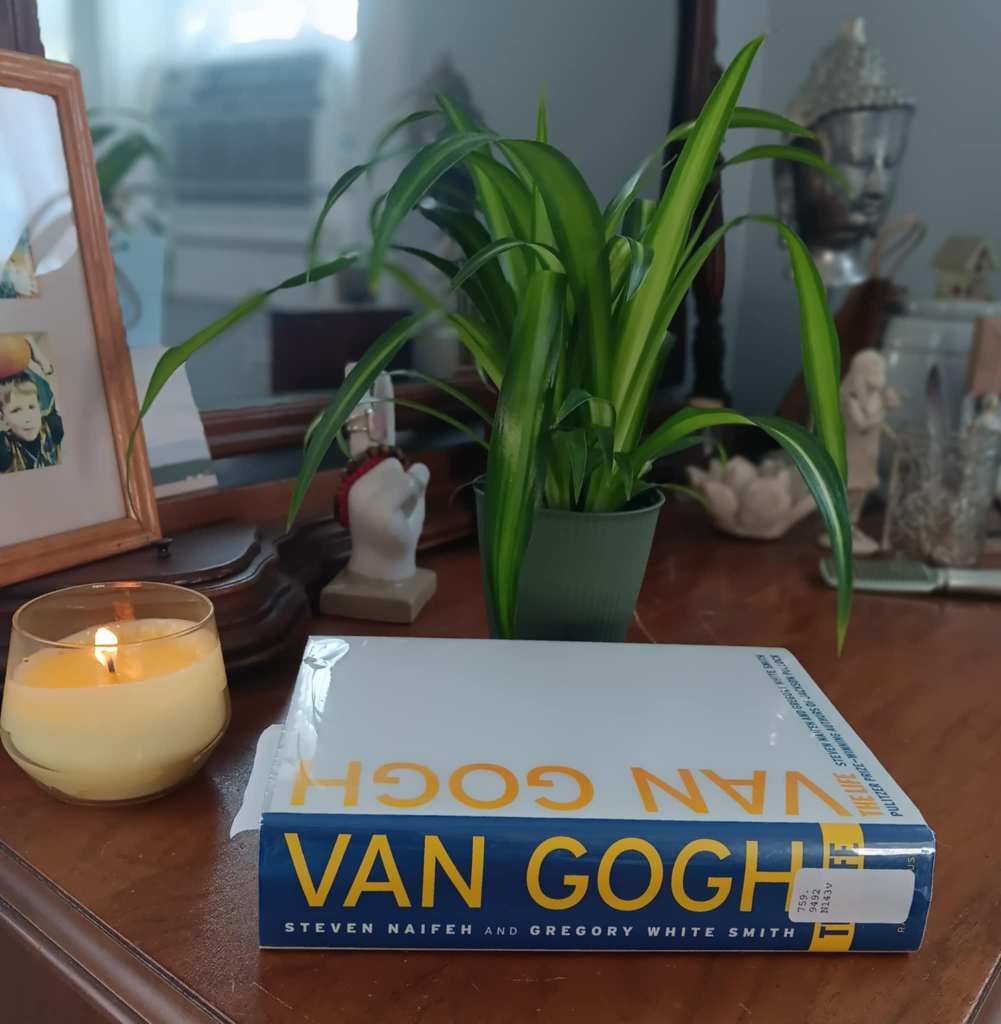
I glanced at the book on my dresser – Van Gogh: The Life – his story calling out in color and ache. But I couldn’t bring myself to open it. I couldn’t carry his sorrow today alongside my own.
I dipped a brush in paint, hoping muscle memory might override the fog. But nothing came out the way I wanted. The colors felt wrong. The strokes were clumsy. The image in my mind never made it to the page.
Still, I pushed through—because it felt like I should accomplish something. I wanted the act of finishing to save me. To prove I hadn’t wasted the day. But the finished piece wasn’t what I’d hoped for. It wasn’t what I needed.
And that’s when the familiar voice crept in—the one that says, Why bother? The one that dresses itself in logic but reeks of loss. The one that pretends to be practical, but is really just grief in disguise.
Because here’s the truth I keep learning. Grief doesn’t need permission. It doesn’t need a trigger or a tidy narrative arc. It doesn’t even need a reason.
Sometimes it’s just Sunday. And sometimes Sunday is enough.
Maybe it’s the echo of all the Sundays that came before. Those restless childhood days when Becca felt a sadness she couldn’t name. She’d act out, and I, not yet knowing how to read the language of her heart, mistook it for misbehavior.
It wasn’t until she was older that I understood: She was never trying to be difficult. She was just feeling too much. She was just being human on a day that always seemed to ache.
And maybe it’s the Sundays I carry from my own memory. The ones when the boys were little. Sundays when I didn’t have to work, when we could stay in our pajamas too long, when the house was filled with their laughter and bickering and cartoons and pancakes and the soundtrack of a life I loved.
Sundays meant all three of them were with me. No school. No rush. No obligations. Just the soft kind of togetherness that mothers memorize without even meaning to.
But even then, Sunday evenings brought their own kind of grief. Because I knew Monday was coming. They’d go back to school. The world would take them again. And I would miss the way the house felt when we were all inside it, breathing the same air.
So maybe the sadness doesn’t just come from loss. Maybe it also comes from love. From having had something beautiful and knowing what it felt like to hold it. From remembering the sacredness of the ordinary.
And maybe it’s that Sunday too—the one that began just after 2 a.m., with a phone call. A shattering. A dividing line between the life I had and the life I live now.
Even when I don’t consciously think about it, my body remembers. My spirit remembers. And sometimes the weight of remembering outweighs the joy of intention.
That doesn’t mean the morning was a lie. It means that joy and sorrow can live side by side. That a day can begin in light and still gather shadow by nightfall.
And maybe that’s okay.
Maybe all that’s asked of me today is to name it. To say: It shifted. To acknowledge that I did what I could. To forgive the rest.
 Words Can Express