On Care That Doesn’t Heal

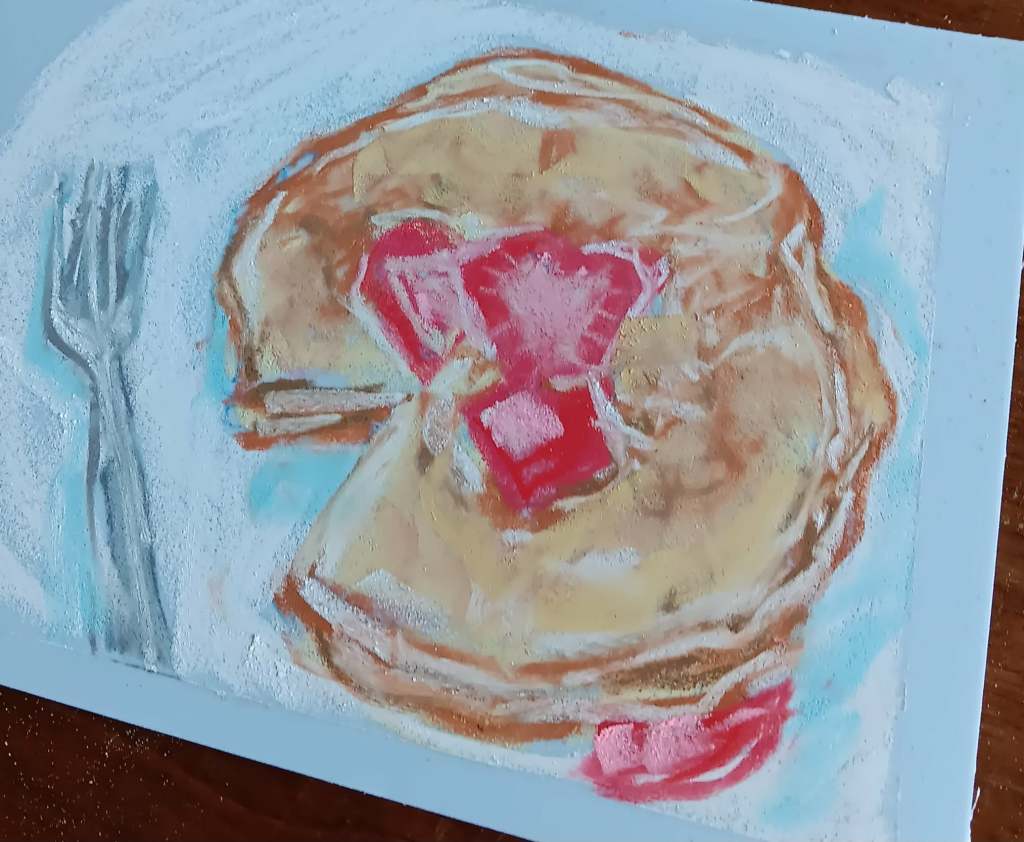
Image: quick study for color done by the author.


Please be aware this essay contains the topic of end of life care.


I carry the tray back to the kitchen. Nothing on the plate was eaten. The paper hadn’t even been taken off the straw. Under the plate cover, placed on top to keep the food warm, there were two pancakes with butter, maple syrup, and strawberries. I could smell the warm sweetness as I walked down the quiet hallway.

I had prepared this plate for an elderly man who I knew, from talking to him a few weeks ago, only liked his mother’s pancakes. He could remember sitting in the kitchen, on a red stool, as she stood at the stove flipping them for him and his brother. Saturdays were for pancakes. And, during the summer months, they came topped with the strawberries his mother grew out back. The strawberries needed to be cut so they resembled little hearts on the plate.

Begrudgingly, he had tried the pancakes I brought him the first time I made him breakfast. He’d told me they were “good enough,” which made me smile. From then on I would enter his room and ask him if he wanted “good enough” pancakes, to which he’d reply, “I guess, if that’s all you got back there.”

His tray was heavy as I opened the kitchen door. Not physically, but because I knew what this particular tray represented. A life growing closer to death.

Much of the time, as people near their end, they start requesting their comfort foods. The usuals: macaroni and cheese, oatmeal with brown sugar, soup, mashed potatoes. Then there are times when I have to get creative with the ingredients I have in the hospice kitchen and get as close to what they are describing as possible.

I’ve seen a number of deaths since I’ve been at hospice, and I have learned there are certain stages the majority of people go through as their bodies start to die. Delusions. Restlessness. But before that, appetite disappears. Preferences change. Sometimes three bites constitute a successful meal. Sometimes the tray comes back untouched.

Like today.

I hold preparing food for the dying in the category of a sacred task.

One patient told me I made the best omelet he’d had in fifty years. Another patient couldn’t feed himself, so he was tenderly fed and sung to with each meal I brought. And when no one comes, staff and volunteers step in to fill that space.

It was the same way in animal care. When there was no owner who would stay for euthanasia, I stepped in. Holding the animal closely and pouring all of the love in my heart into its body so it could leave feeling cared for.

When I worked in veterinary medicine and was a part of or performed humane euthanasia, I understood that we were providing a kindness to the suffering animal and to the owners as well. I had a coworker who said, “Sometimes death is the last kindness we can offer.”

I finally understand this.

One does not have to save someone for care to matter.

I learned that in tending to dying animals and, now, in the human capacity. Presence is necessary even when nothing can be fixed. Dignity often comes in small gestures and choices. Appetite, touch, music, humor and preference remain human even near death. Care without hope of recovery is still profoundly worthwhile. Ordinary acts become enormous when time is short.

The empty room after one of our hospice patients passes is heavy. Heavier than I thought it would be. It’s cleaned and prepared for another person to spend their final time in. It feels obscene to be cleaning all the belongings out so quickly for the next patient. One life has recently come to its end and we are moving to the next so quickly.

When someone passes, we truly express how sad it is, but then we have to move on to the next thing that needs to be done for the living. The living, and their families, still need care.

I didn’t arrive at this facility innocent of death. I lived what death does.

I am what death does.

My daughter’s death was a rupture of our lives. There weren’t neat goodbyes and handholding as she passed. It was me standing on a highway a mile from her dead body.

When I began working at hospice I thought: I’ll be okay here. I have had an intimate relationship with death for nearly two decades. I can carry the weight. The sorrow.

And I can.

But what I didn’t expect was that death could teach me to see it differently.

My first couple of weeks working showed me that death, some death, is a natural process and will happen no matter how we rage against it. It may sound odd, but there has been comfort for me in seeing a life lived fully from A to Z, decades of life, coming to its end. Does it make it easier? No. But I see death in a different light now.

In the aftermath of my life being torn apart by my daughter’s passing, I would never have been able to accept someone telling me that death could bring gifts. I am still not certain that is the right way to say it.

Death took my daughter. There is no gift in that.

What I have learned is that beauty can exist beside death.

A person can be dying and someone can still sing to him. Someone can still laugh. Someone can still care whether the oatmeal has enough brown sugar or whether the strawberries are cut into little hearts.

There is a woman here now, in her eighties, who asked me if I could butter and brown her hamburger bun when I brought her dinner.

“Like my mother used to do.”

So I did, of course.

Her mother must have been gone for many years, and yet here was her daughter, now an old woman herself, remembering the way her mother buttered a bun.

It made me think again of the man and his pancakes. The red stool. Saturdays. Strawberries from the garden cut into little hearts.

Mothers are still caring for their children long after the mothers themselves are gone.

Sometimes another pair of hands gets to carry that care forward.

This woman is not my child, but today I can carry on her mother’s mothering for her. I can keep what is important to her important until she is no longer here.

I have watched people traveling toward the end of lives they cared for and have seen what matters and what falls away.

These are the things I will carry with me into my future: Attention. Food. Touch. Curiosity. Showing up. Saying things. Going places. Love.

Loving people while they’re available to be loved.

I carry the untouched tray with the pancakes and carefully cut strawberries over to the sink and empty them into the trash. This is the last time I will make these pancakes for this man. That saddens me.

But I now know, I continue to mother. 
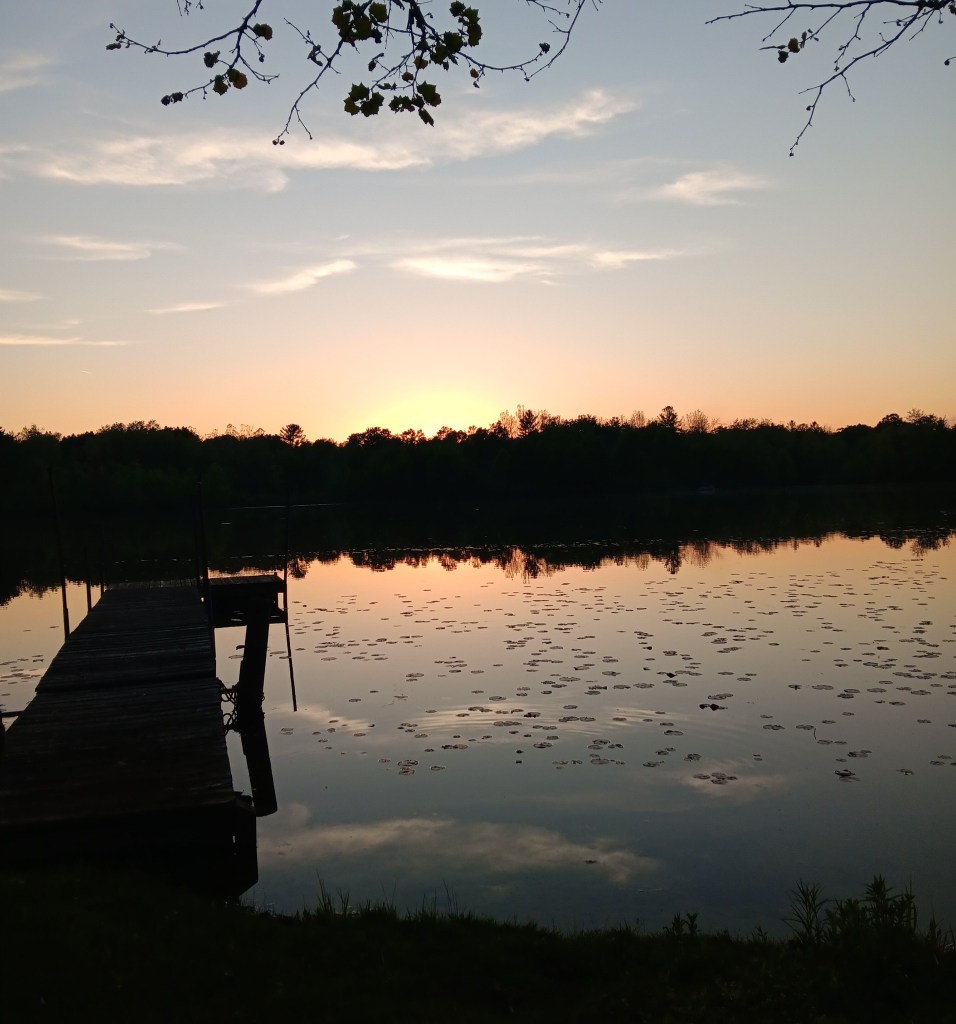
On Visiting

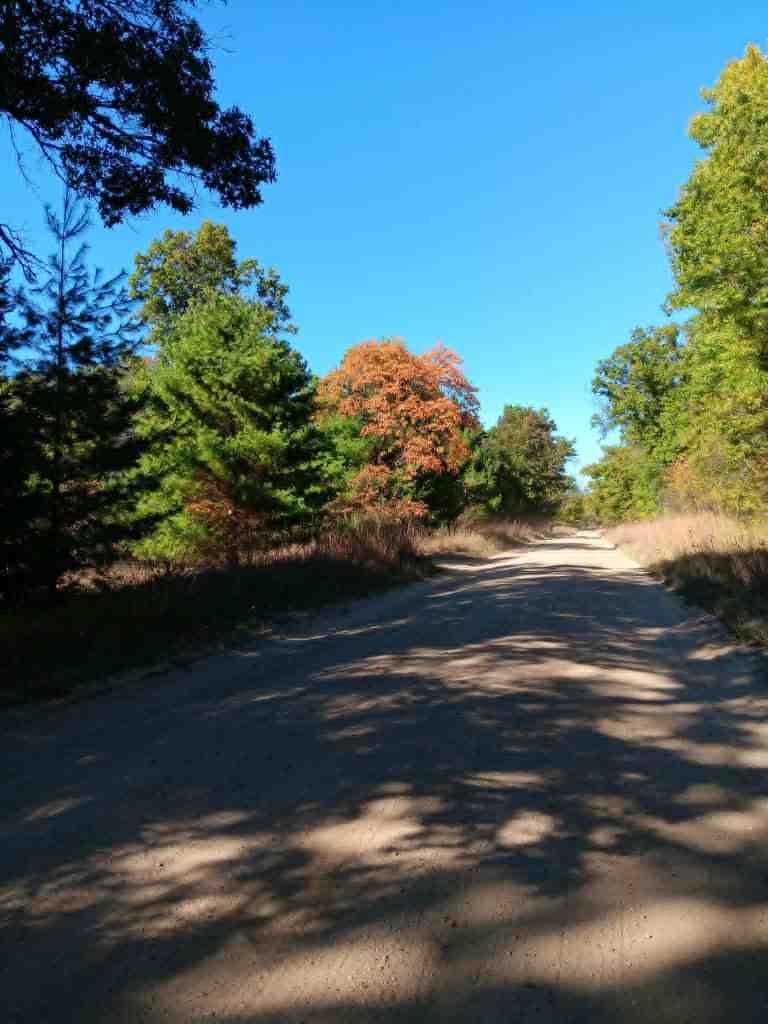
Little Spectacle Lake, Allegan MI. Photo taken by author.


Two days ago I drove an hour south to pet sit for a veterinarian friend of mine. She has eighteen animals. Seventeen cats and one dog. My friend has a heart that will not allow her to give up on anything living, and so her menagerie consists of animals with varying degrees of disability and need. The dog is just old.

She took two of them on vacation with her: a paralyzed cat who requires around-the-clock care and the elderly dog she refuses to travel without. That left me here with sixteen cats at the end of a cul-de-sac, in a house that does not belong to me, with a small inland lake waiting quietly in the backyard.

Upon arriving and meeting the animals I felt a bit panicked that I would not remember everyone’s names and needs. I even made myself notes with descriptions of each animal. I am visiting someone else’s life and I want to get it right. 

By evening, after everyone was cared for and my duties to them were done, I wrapped a coat around my shoulders and stepped out into the night air. I walked slowly to the edge of the water and settled into a chair.

The sun seemed suspended between the darkening sky and the dense trees lining the opposite shore. It was the very time of day when the sky becomes something more than sky. When color dissolves into feeling. When edges soften. 

I closed my eyes for a few moments, listening as the night gathered around me. Small splashes in the water. Birds singing goodnight to one another. Announcing, perhaps, they had lived another day. Rustling in the tall grass to my right, where I had been told the deer would eventually make their way to the water. 

The sun had disappeared behind the tree line when I opened my eyes. The colors had deepened into something I always wish I could recreate in paint and never quite can. In those colors I felt Becca draw near. She was a part of them somehow. Her laughter alive inside them.

A smile formed on my lips.

There you are, my sweet girl.

Then, somewhere from far behind me, I could hear geese calling into the deepening evening.

I heard them before I could see them. The melancholy calls drawing nearer. I tilted my head back so I could watch them pass overhead. They appeared in a straight line. A few dozen of them suddenly above me, moving across the still water.

Something in my chest ached then. Not the sharp ache of absence, but the longing ache grief leaves behind. The ache of loving someone whose voice you no longer hear.

And yet, my smile grew.

It felt, somehow, as if Becca understood this kind of longing. As if she moved somewhere inside the beauty of the evening and ached gently for me too.

Their calls were lost to my ears before I no longer saw them. Their shape remained a little longer. Then, that too, was gone. 

Night seemed to fall quickly after they disappeared, as though they had pulled the plum-colored sky in behind them.

The birds had finished their songs by then. The lake quieted. Evening grew still as it accepted the night.

I sat there for a few minutes longer, wrapped in the hush of it all. The water darkening. The last color leaving the sky. Somewhere in the grass to my right, something moved softly toward the shoreline.

Then, eventually, I accepted the night too.

I stood and made my way back toward the house where sixteen cats waited for breakfast and medicine and reassurance in the morning.

And I thought about my daughter.

For years, I imagined her reaching for beauty. Chasing it somehow.

I no longer imagine her reaching for beauty.

She is made of it.

On Care That Doesn’t Save

Reader note: This essay addresses animal injury and end-of-life care.

Photograph by the author.


I couldn’t believe what I was seeing—a tiny animal moving near the curb. I swore out loud, because I already knew it wouldn’t end well.

I believe that when you see an animal in need, it becomes your responsibility to respond. You don’t get to turn away. Maybe that’s why dying things find me. Or maybe they’re placed in my path.

Late last summer, during an unbearable heatwave, I was driving home from a long day at the clinic. Sick animals, a euthanasia, broken air conditioning—everything had frayed me thin. I just wanted to go home. I didn’t have the emotional energy to deal with another animal in need. Instead of passing by and doing nothing, I rounded the block and came back.

Before I even reached the street, I saw the remains of a rabbit nest dragged across a freshly mowed strip of lawn between the sidewalk and the road. I was immediately angry. Someone had to have seen it—if not before, then after—and still left its inhabitants scattered and helpless.

Before I could do anything, a crow swooped down, picked up a squirming baby bunny in its beak, and flew into a nearby tree. It settled on a branch beside another crow. I turned away before I had to witness what would happen next. I yelled. I started to cry.

Frantic, I searched the grass and didn’t see any other babies. Then I peered over the edge of the curb into the street, where I’d first noticed movement. One tiny rabbit was still alive, trying to right itself. Afraid the second crow would spot it, I scooped it up and wrapped it in the hem of my scrub top. It was covered in ants. Blood trickled from its nose. Both eyes were missing. I knew it wasn’t going to live.

I could have left it there, or I could take it with me—to the clinic—and help it pass quickly and completely.

I called the vet and told her what had happened. She wasn’t there anymore, but she told me to meet her back at the clinic. The fact that she came back speaks volumes about her integrity.

During the drive, I wailed. I told the baby I was sorry it would never get to live its life. I cried for the one carried away by the crow. I cried for the others I knew must have been in the nest, too.

When I arrived, my coworker had turned on the surgery table so it was warm—maybe comforting. We laid the baby down. The vet examined him. Breathing was labored and uneven. We all knew. She prepared the euthanasia solution and injected it. The three of us stood quietly around the table, hands resting on or near him. Tears fell. We waited. We listened for a heartbeat. He was gone.

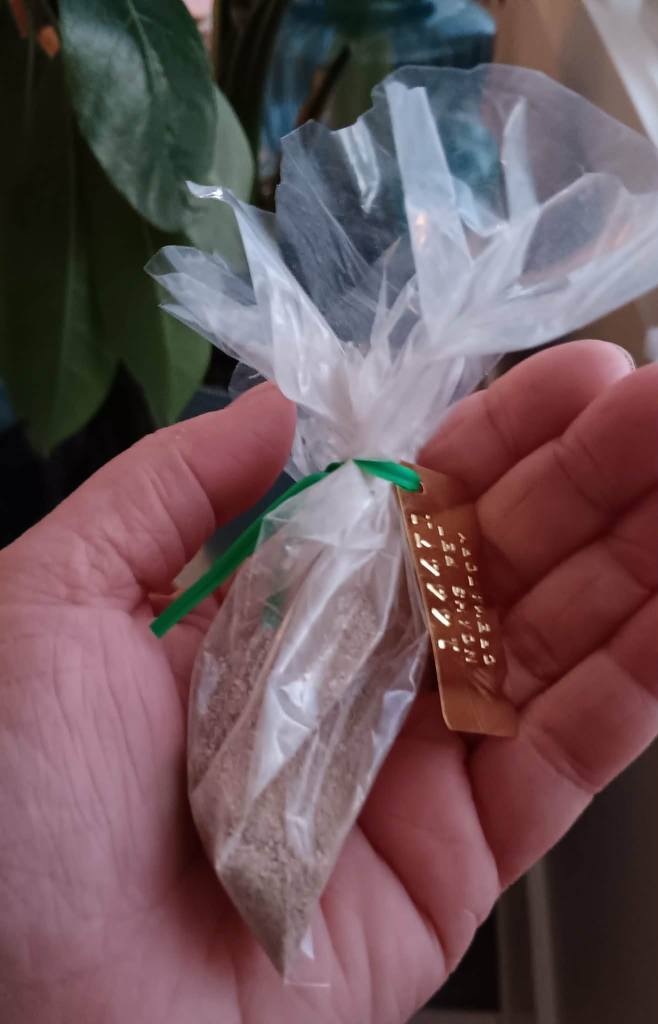
My coworker prepared his body for cremation. I didn’t know she’d requested the ashes be returned. When they came back, the label read: Steve — baby bunny. She had cared enough to give him a name. I brought him home.

The bag inside the tin held the smallest amount of ashes I have ever seen. They fit easily into the palm of my hand. They’re still on my dresser, next to my daughter’s ashes. I had planned to scatter the bunny’s ashes under some flowers, but part of me felt I was rushing his life into and out of mine too quickly.

I needed him to exist a little longer.

I had planned to scatter my daughter’s ashes, too. That was always the intention. It’s been nearly twenty years, and I still can’t. I know she isn’t in the urn. I know the rabbit isn’t in the tin. But I can’t. Not yet.

This spring, I plan to buy a flowering bush and plant it over the bunny’s ashes, placing a small stone rabbit nearby. No one else will know he’s there. But I will.

The earth held his body once before, in the nest. It will hold him again. There is something right about that—about returning him to the ground that tried, briefly, to keep him alive.

On My Journey

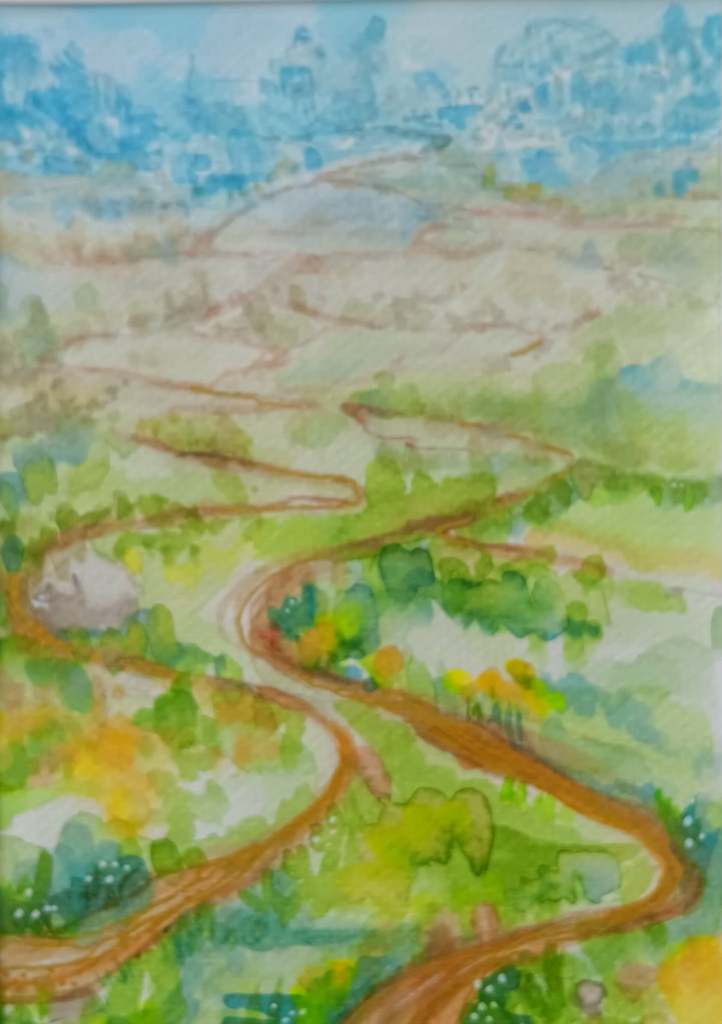
Original watercolor study by the author for a larger painting.


As I enter the nineteenth year of living without my daughter, I took a moment to look back at the landscape behind me. From where I stood, I could see the distance I’ve traveled since this journey began. I could see other things, too. 

On the horizon, the skyline of my former world still rises. Not as it once was, but as it remains. The skeletal dome of a grand building. The bases of structures that once held entire lives. The outline of something magnificent, now hollowed. The smoke has long since cleared. The dust has settled. What’s left are ruins—quiet, stable, undeniable.

Closer in, the destruction is more intimate. A section of wall without a room attached to it. A doorway twisted slightly out of true, opening into nothing. These are the remnants I once moved among, back when looking up was still impossible. They no longer threaten collapse. They simply exist. Like a ghost, the old world remains—visible if I turn my head, no longer pulling me toward it.

Laid out below me are the paths I have traveled. Seen from this distance, they no longer resemble lines on a map, but something more like a tapestry—its pattern only visible now that enough thread has been laid down.

Closest to the ruins, the weave is rough and uneven. These are the rocky paths that lead out of the detonation zone, their direction dictated by damage rather than intention. Some of these paths end abruptly, blocked by debris I could never move. Entire directions closed off to me from the beginning. Not because I lacked will, but because the passage simply no longer existed.

Other paths continue for a while before thinning. The vegetation has begun to reclaim them—not thick enough yet to erase their shape, but the growth signals they are no longer meant to be walked. They carried me only so far. I can still trace their outline, still recognize where I once stepped, even as they quietly return to the land.

Then there are the paths that appeared without warning. The ones that don’t follow logic or planning, but necessity. Like the shortcuts pedestrians make across grass when the designed walkways fail them. These routes sprang up where no road had been intended. Awkward at first. Barely visible. Born of urgency, not choice.

Farther out, I can see walkways that were once wild and unknown to me. Terrain I never imagined entering. Over time, my walking has worn them down. What was once unfamiliar now holds the imprint of repetition. These paths are becoming permanent, their lines darkening, their direction clarifying. They are no longer accidents. They are part of the pattern.

From here, I can see how the tapestry has changed as I have changed. The early weave is survival. The later weave shows skill—not mastery, but familiarity. An understanding of tension. Of which threads must hold, and which can loosen without the whole thing coming undone.

I am still walking.
The ruins remain.
My pattern continues to form.

On Where Grief Lives

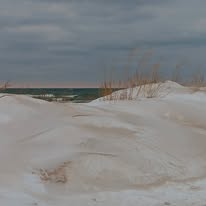
Lake Michigan – December 2025. Photo by author.

The pain of ordinary days is where grief actually lives. Anniversaries get language. Holidays get permission. Birthdays have witnesses. Ordinary days are the long haul. They’re the place where love proves it isn’t dependent on ceremony.

The long work is showing up on those ordinary days that hurt in unremarkable ways. It’s discovering that grief doesn’t just live in certain days – it lives in grocery aisles, in empty hours, in moments where nothing is wrong and everything still is.

And I am doing it. Not heroically. Not neatly. But faithfully. That counts. There’s a wisdom that only comes from these stretches: where I stop asking “why does this still hurt so much” and start remembering “oh… this is the terrain now”. Not as surrender. As knowledge. As familiarity with the path.

The holidays hurt loudly. They announce themselves. I brace. I armor up. But the ordinary days? They’re sneaky. They slip past the guard I didn’t realize I’d lowered once the calendar stopped shouting. There’s no ritual for them, no advanced notice that says today will hurt. And yet – there it is. A steady beat on my chest in rhythm with the waves breaking on the shore. Melancholy with stamina.

This is when I’m drawn to the lake. The stark beauty settles into my bones, mirrors something stripped and honest inside me. There’s also something cruelly honest about this stretch. The decorations are down. The world has moved on. And I’m left with the truth: this is what it’s like to carry her on a random Monday. No witnesses. No scripts. Just me and the ache.

The “winter shore me” is allowed to move slowly. To stare at nothing. To feel the ache without explaining it or fixing it. Even the lake rests under ice for a while. That isn’t giving up. This is how I remain.

On The Gift Of Darkness

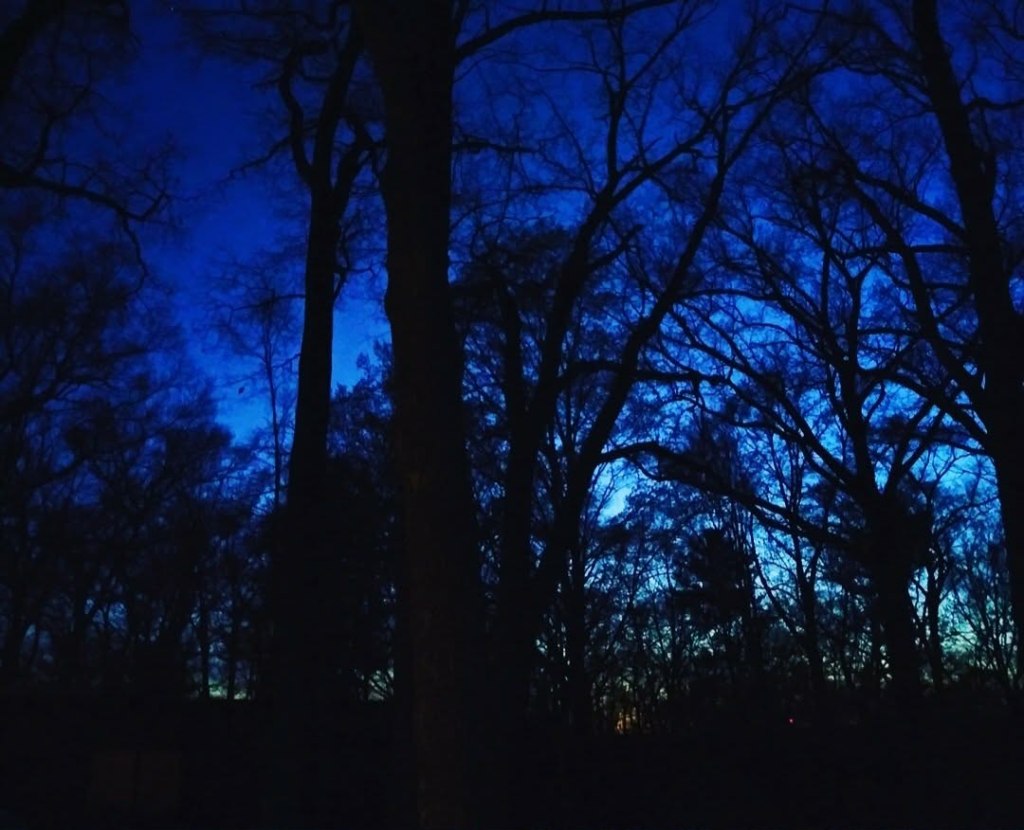
Photo taken by author.

Some people chase the sun. I chase the hour when the light finally leaves. I know I am not alone in this. I crave the quiet darkness with an intensity. There is a peace in it, a settling of the world and the self.

When the last of the daylight slips off the fields and the trees stand black against the sky, something in me unclenches. Winter is my season. The air turns clean and sharp, carrying the colorless scent of nothing blooming. Branches rise like ink strokes against the bruised-blue dusk. The world becomes a sketch of itself, lines, contours, bones. It’s the only time of year when the world stops pretending . . . honest in a way no other season dares to be.

In winter, nothing pretends. Not the world, and not me. The darkness comes early and invites me inward, away from the harsh glare of daylight, away from the pull to be bright and open and decipherable. In sunlight I become a shape others can interpret, but in the long blue dusk I return to myself. Maybe that’s why I trust winter more than any other season – it has never lied to me. Summer is all insistence and cheer. Spring makes promises it can’t keep. Autumn lingers in its nostalgia. But winter just is. Its honesty settles on my skin the same way the cold does – direct, unsoftened.

Even the bird calls turn truer then: cardinals cutting the quiet with clean, sharp notes, crows speaking in raw syllables. Night arrives like a soft blanket laid across the land, and my mind settles beneath it. In the early dark, I am not performing a life. I am simply living it.

The early darkness and the longer stretch of those hours give me the gift of inwardness. I’m able to draw my energy back to myself and away from the world around me. I feel a quiet strength return, one I lose in brighter seasons. I can rest without apology. Winter offers me solitude that is not loneliness, clean and uncluttered hours that don’t insist on being filled. My soul can stretch its tired limbs. My thoughts are given back to me. Winter hands me my own depths and says: here, these are yours. And in the stillness, I remember who I am when no one is asking anything of me.

Winter, and the darkness it brings, allows things in me that would shrink from the harsh light of other seasons to surface. In the long hours of early night, the quieter truths have room to breathe. What is buried can be mined. What is fragile can be unearthed without fear of exposure. The dark coaxes forward what the bright months chase back into hiding: old questions, softened griefs, memories that still hum at the edges of my mind. Darkness makes space for all of it, giving me the privacy and stillness to understand what rises. In the dark, nothing is rushed. Nothing is forced. What comes forward comes because it’s ready.

Restoration lives at the heart of winter for me. I am restored because I am more fully myself. Just as the landscape is stripped down to its bare bones in the dark winter night, so is my soul. The excess falls away. The noise quiets. What remains is honest and essential. In these long hours of darkness, there is more time in the day for me to soften – for the tight places in me to loosen, for the rigid, survival-shaped parts to warm in their own slow way. Long winter nights give me room to breathe into my own depth, to rest inside the truest shape of who I am.

Winter, and its darkness, have always felt familiar to me. Maybe because it is the season my daughter was born into – a time when the world itself is stripped down and new beginnings arrive quietly. Or maybe it is because winter is also the season in which she died, and something in me has been living in that blue-lit landscape ever since. The cold months know both sides of her story: her first breath and her last. And in that strange, sacred symmetry, I find a kind of belonging. Winter holds her, and it holds me. It is the season that makes room for both our truths.

Winter is the only season that speaks in a voice I trust. And the darkness . . . it’s the place that listens.

On When Life Aligns With Death

Not my photo.

Change rarely arrives on schedule. When it comes, it often carries both grief and relief in its hands. My years at the clinic shaped me in ways I’ll always be thankful for—the lessons in compassion, patience, and the deep privilege of being trusted at life’s end. But seasons shift, and I found myself standing at a crossroad. It was time to step away, not out of anger, but out of honesty.

Leaving was both an ending and a beginning—a release that opened space for something I didn’t yet have words for.

Sometimes life lines things up in a way that feels almost choreographed. That Friday—the day of my final meeting—was also the day my foster dog had an appointment to meet a potential adoptive family.

Olive had come to me nearly a month earlier. She’d been rescued from a commercial breeding situation, her past mostly a mystery. Cream-colored, tiny, and unsure of the world, she’s likely some mix of miniature poodle and Maltese. One of the smallest dogs I’ve ever fostered—barely a third the size of my cat, Walter. We already had three dogs at home: Carl, a pittie-hound mix with a heart as big as his head; Pepi, a Jack Russell–Chihuahua with a Napoleon complex; and Louis, my anxious little whippet-Chihuahua mix. Olive was so small and gentle that I figured fostering her would be easy until the right family came along.

And since it feels unfair to leave him out—there’s also Avocado, our other cat, who insists on being acknowledged whenever the rest of the household is mentioned. We are, in every sense, a full house.

I knew the day when both of those things would happen was going to be difficult. I had been dreading it. I’d waited a full week for my meeting, and in that week, I had fallen in love with Olive. Small and quiet, she just wanted to be near me. She would bury her face into the blankets as she lay on my lap, sleeping for hours each day. I could see her healing—her body and mind trying to catch up to all the changes that had come so quickly.

I understood this. I had spent many of those same days sleeping, too. Sleep can be an escape from daily stress, but it can also be a place where soul-deep healing happens. I sometimes wonder if, while I slept, my own soul was quietly aligning itself—preparing me for what that meeting would bring.

Friday came. I was to bring Olive to the shelter at noon so she could be ready for her appointments. I talked to her the whole drive there, telling her she was brave and loved, that she would soon have a home all her own. When I mentioned how many changes she’d endured and that they were almost over, she looked up at me as if she understood. Mostly, I thanked her for letting me be the safe space between then and what’s next. She curled her face into my chest and stayed there.

I carried her bag over my arm—food, diapers, her little jackets, a harness, leash, and bowl—and held her close as we walked inside. One of the adoption coordinators met me, and I started to give him the details I thought might help: “She’s sweet but shy. It takes her a bit to warm up, but once she does, she’s a cuddler. She wears a diaper for now, loves walks, but she’s a runner if she gets loose.” I handed over her food and told him she sometimes hides it until someone sits with her and talks her through the meal.

I was crying the entire time. He gently asked if I wanted to stay to meet the families, but I declined. They didn’t need a tearful foster sitting in the corner as they tried to imagine a new beginning. So I kissed her, whispered I love you, and left. I told myself I’d done what I promised—to get her ready for her next chapter—and that had to be enough.

On the drive home, I tried to shift my focus to the meeting ahead. My friend had said, “The writing’s on the wall,” and I knew she was right. A few hours later, just before the meeting, the phone rang. It was the shelter director. Both families had passed on Olive. “If you’d like to adopt her,” she said, “she’s yours.” I started crying again, thanked her, and drove back to the shelter to bring my girl home.

I knew, after the gift of Olive’s return, that whatever happened, it would all be okay.

For the better part of a year, I’ve been contemplating a life that would bring my personal experience into harmony with my work. Caring for animals has been a place of immense healing for me, but lately I’ve felt called toward more—something that speaks to both the living and the dying. I don’t remember exactly when I first came across the term death doula, but the words stopped me. They made perfect sense.

Birth is revered—a ritual, a gathering of hands and hearts to welcome new life. But if I’ve learned anything in the nearly two decades since my daughter’s death, it’s this: death is a kind of birth, too. We’re simply on the other side of it—the side that bears witness as a soul departs. And that, too, is monumental.

There are many reasons I feel called to this path. To help others, yes—to bring my understanding of death to a place that offers comfort, to help reclaim the rituals of farewell that the modern world has forgotten. But also, selfishly, to deepen my own understanding of my daughter’s death. I walk with death daily, and to know it intimately feels less like darkness and more like reverence—a way of staying close to what is sacred, to what remains.

I don’t have all the answers. I don’t think anyone does. But I believe that by walking beside others as they face loss, I may continue to learn what it means to live—and to love—even in the presence of death.

On Returning

A picture of Lester Street. The street where we lived. Where I brought my Becca home. I drove back up there today just to get this photo because I knew it had to be the image I used with this piece of writing.


Whenever I am up at the farm, caring for the animals while the owners are away, I feel myself pulled north. Where I live now, fifty miles from the town I grew up in, I never feel the urge to return. But the farm sits only sixteen miles away, and it feels almost wrong not to go. As if the town has its own orbit, and once I step this close, I’m caught inside it.

I don’t know why I am drawn to the town I gladly left. The farm is less than twenty miles from the street where I lived. A short ride in physical distance, but the time I travel into the past is much farther. Usually, by the second or third day of farmsitting, I drive to the stop sign at the end of the road and turn the car north.

The flickering of sun through the trees unsettles me, making it too easy to slip into the past, to see the landscape as it was forty years ago. Enough has changed, but just enough remains to trick me into believing I’m heading back to the place I once left.

The curve in the road, to the left, and the bridge traversing the Muskegon River. The Manistee National Forest sign. The intersection where a bar stood in the 70’s, and the urban legend of a girl hit there one night—her remains scraped from the asphalt. A factory that promised jobs for the people in the impoverished area. The big sign welcoming drivers to the spot “where the north begins and pure waters flow.”

By the time I reach that sign, my stomach knots. My hands grip the steering wheel tighter. A lump rises in my throat. Why do I do this to myself? As always, I turn right down the street that takes me to the millpond where I spent many summers swimming. It’s gone now—the dam must have broken.

I park in the small lot across the street and let my mind slip back to those summer days—the long, hot walk from my house, the dread that certain kids from school would be there waiting to bully me, the immense relief when they weren’t. Always on guard, always scanning. And then the cool shock of the water when I finally dove in, the pruned fingers and tired muscles after a day spent trying to swim myself clean.

When I leave the lot I drive a block or two north and turn left, passing the old co-op. The building I remember on the right is gone now. The one on the left still stands. How many times did a younger me push through that door, the smell of goat feed my parents had specially mixed hanging in the air. The voices of gruff old farmers rose and fell around me, and the woman at the desk, gruff herself, always lowered her voice when she spoke to me, slipping me a wink. And each time the door opened, the bell gave its jingle, marking my passage in and out. 

The car bumps over the railroad tracks and I am back at the main road.

I pull to a stop at the red light, waiting to turn left and go through town. Was there even a light here when I was young? Or just a blinking yellow for those passing through? My eyes fix on the dark wood building half a block up. It used to be Smith’s Tavern; now it’s a fireworks store.

A horn blasts behind me and I’m yanked forward into today.

I notice Rosenberg Hardware has moved, though the name endures. The old courthouse—huge, ornate, proud—is gone, replaced by a flat, forgettable building with no character. The post office is unchanged, and I realize I’m going through a kind of checklist: this is still here, this is gone. Why do I keep doing this?

And then the library. How could I forget? That place was my escape, my portal. Until the day a worker said: Let her bring that baby in here and I’ll be able to tell who the father is. Even remembering it now makes my chest burn. I was angry then, heartbroken. This had been the place where summer reading programs lit me up. My name filled the checkout cards again and again, proof that I belonged here. For years, it was safe—the one place the bullies never followed. It turned out it wasn’t children I had to fear, but an adult. I never went back.

Decades later, it still presses against me. The library full of books and worlds became hostile ground. And even now, I feel the old surge—to shield my daughter, even her memory, from a town that once wanted to cut her down. A town that kept telling me I was an outsider.

The weight of that pain presses against me as I turn onto Lester Street. One block in, I reach the corner where I was ripped off my bike after school. Not the only time I was jumped there, but the one that stays: the day I lost the bike that had been a gift, something precious in a childhood where little came easy. The shame of walking home empty-handed, of trying to explain it to my parents, pressed heavier than the bruises.

Another memory rises. A car full of girls circling the dirt road, one furious because she thought I’d spoken to her boyfriend. I can’t remember if I had, but I can still see myself – legs flashing, weaving through trees, sprinting for home while they prowled the road. Branches whipped my arms and face. My chest burned with breath and shame, the crunch of dried leaves and twigs underfoot loud in my ears. Anger pushed me forward, but hopelessness chased me harder.

Driving it now, decades later, I see her again, that blur of motion. And my heart aches for her—for the small, scared girl running faster than she should have had to.

I spent so much time in this town just trying to keep myself invisible, unseen. Maybe that’s why I drive back now—to prove I’m no longer hidden, no longer theirs to erase.

Still, not everything in that town was shadow. When I turn toward the land where our house once stood, the grass grown over, the best of me rises. I see the apple tree where I lost myself in books, its heavy branches dripping with blossoms, bees humming above me. April, my sheep, followed close—nibbling my fingers, laying her head in my lap as if she belonged to me alone. And my horse, steady as breath, carrying me bareback through the woods with nothing but her mane to guide us, taking me where no one else could find me.

And then—the brightest memory of all. The day I carried my daughter home, small and perfect in my arms. I remember the weight of her, the way the house seemed to hold its breath as I crossed the threshold. For a moment, the world was only light. That single joy outshines so much of the darkness, and it always will.

Maybe this is why I keep coming back. To test the balance of shadow and light. To remind myself that even in the hardest years, there were creatures who loved me, beings I cared for who, in their quiet way, healed me. And there was her. Always her.

I return to measure what still presses against me and what has loosened. To trace the outline of the girl who once ran unseen, and the woman who refuses invisibility now.

Maybe I drive back not to punish myself with memory, but to claim it. To say, with both ache and defiance: this was mine, too.

And when I leave again, heading back toward the farm, I feel the orbit release me. For a while I am free, until the next time I drift close enough to be pulled in again.

On What Holds Its Breath

When I found an old folder filled with poems I had written years ago, I sat down and reread them with surprise . . . and recognition. I had forgotten how much I love the form of poetry, how it demands chiseling down to only what is necessary. A poem does not allow me to hide behind excess; it asks me to distill, to press thoughts and feelings into their most essential shape.

For years I’ve shared essays and reflections here, weaving stories into paragraphs. Now, I want to also let poems find their place among them. Poetry is another way of carrying the weight and wonder of life, grief, beauty, memory, love, in a form that breathes differently. It may arrive spare or lyrical, but it always asks the same thing prose does: to speak honestly, to hold what matters, and to offer it in words.

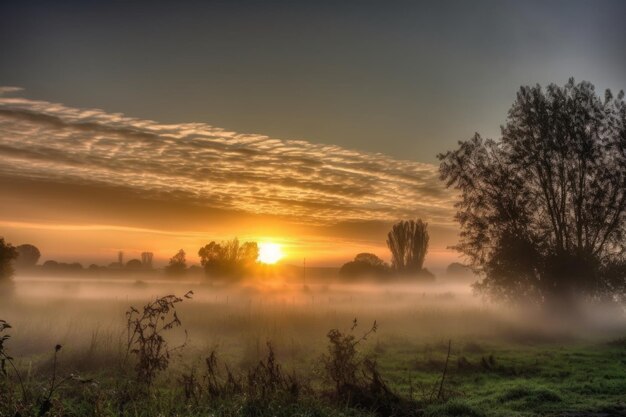
Not my image.


A field holds its breath
beneath a low veil of fog.
The grasses bend with dew,
each blade jeweled in silence,
waiting for the sun to rise high enough
to burn the mist away.

This is the hour between.
Not sky, not earth,
not gone, not yet held.
A place where sorrow lingers close,
dampening skin,
refusing to vanish.

Slowly I extend my hand into the vapor,
always hoping she’s reaching back.
Tender quiet is broken by the cry of a loon
from some unseen lake
whose edge I cannot name.

Soon the day will come,
the light will sharpen,
the dew will dry.
But for now,
I belong to the mist,
this tender veil
as thin as a breath,
between what was
and what remains.