All Our Children

My entire life, I’ve not liked meeting new people. I carry matching luggage filled with insecurities and self doubt. Since I lost my daughter, I’ve added new contents to these bags, which go everywhere with me. Though there are many additions . . . tonight, I will talk about just one. But it’s a really big and difficult one. For most people meeting others, it’s a question that’s asked an answered without much anxiety. Not so for bereaved mothers. We grow to dread this particular inquiry.

The question? How many children do you have. A common question for those meeting each other for the first time. I don’t like having to answer it. The situation can go one of two ways and either is stressful for us. Only one is stressful for the other party. I’ve reacted both ways, but there is a price I pay either way.

At times, we can simply answer with the number of children we have and the conversation goes no further. Often, however, the follow up question is asking us to share the ages of our children. This is when grieving mothers really start to panic. How do we answer this?

We can simply give the ages of our living children, then the age our deceased child left this world.

Ages are a weird thing. My twin boys just turned the age their sister was when she was killed, twenty three. In fact, on January 11th, they passed the age when she was the oldest she was ever going to be. They are older than their older sister. I can barely wrap my mind around this truth. If I answered in the way I’ve mentioned above, it would seem I have triplets, which isn’t the case. And the thought of answering in this manner has always made me feel uneasy, so I’ve not chosen to do it. I don’t fault mothers who do. We each have to choose what is best for us, no judgment.

Sometimes, in an attempt to keep the follow up question from being asked about our dead child, we don’t mention them. At all. It’s just easier, we think, to not have to make anyone else feel uncomfortable with our reality. This is a dangerous way to go, I’ve learned from experience, because we are left with a new guilt. We carry enough guilt for not saving our child, somehow, and now we are being disloyal to their memory by not admitting their existence. Internally, we are bleeding to death because of their absence, but we don’t let this fact show on our faces lest we cause discomfort in another.

I’ve chosen this tactic, early on in my new life without Becca, I am ashamed to say. The pain I saved the other person from feeling was heaped upon that which I already carried. The half dozen times, maybe more, I’ve done this have left me crying in the dark begging my daughter for her forgiveness. I don’t hide the fact she existed anymore. Not for anyone’s comfort. Not anymore.

We can, and eventually do, answer the question in a truthful manner. Not ashamed of the fact we have a dead child. No attempt to soothe their nervousness.. I’ve seen the look in people’s eyes when I’ve said my child is deceased. A mix of panic and uneasiness. They don’t know how to respond. And, I’ve learned, it’s not up to us to care how they respond. They’ll figure it out, or they won’t, but either shouldn’t change whether we talk about our child or not.

This is how my most recent conversation with a new person went:

“How many children do you have, Diane?”

“I have three. Becca, Gabriel, and Matthew.”

“Beautiful names! How old are they?”
“The boys are twins, they turned twenty three late last year. My daughter would have been thirty three.”

“Oh . . . would have been?” (that’s when the panic first flickered in his eyes.)

“Yes, she was killed ten years ago, by a drunk driver, she was twenty three.”

I saw his face grow red and he stammered something about having to get back to work.

Generally, this isn’t how uncomfortable this conversation can be. Most times people say they are sorry for my loss. I thank them and we move on. I have learned I can either chance the possibility that the other person will not react well by my answering honestly or I can omit my daughter’s having existed by leaving her name off the list. For me, the choice has become quite simple.

I won’t ever keep the life of my daughter to myself because of how others may react. I don’t care anymore. She’s my child. She was here. Her life mattered. Her death happened. I will say her name any and every chance I get.

When we begin walking the path of child loss, we are still finding our way in everything, because all we know has been replaced by our new reality. It takes a while for us to become strong enough to stand up to society’s expectations of a grieving mother. We have to find our legs and stand again. We must find our voice and speak again. We are the keepers of our child’s life. There is no shame to be felt for this.

For those of you who are on the side of the conversation, where you could feel discomfort, please don’t let it overwhelm you. We know we make you uneasy. That our child’s death forces you to face the fact children die. That if it happened to us . . . it could happen to you. The horrifying fact is: it can.

It happened to us. Please don’t add pain to our already anguishing journey. Stay with us and let us talk about our child. It’s the greatest gift you can give us.

Still Mothering

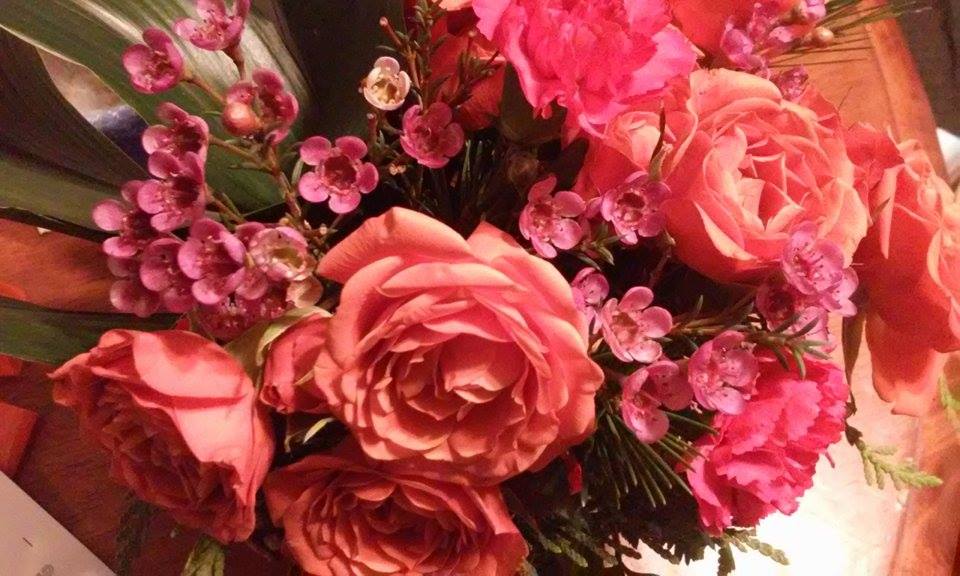
Behind me, there is a red set of shelves. In it’s former life it was a dresser. When I no longer needed it as such . . . I took the drawers out and made them shelves. I couldn’t get rid of it because it is a piece of furniture my daughter knew me to own. On it’s top, I have photographs, candles, and the marble urn which holds my daughter’s ashes. I always keep fresh flowers next to her urn. I call them ‘Becca Flowers’. Every night, I kiss her picture and tell her I love and miss her. I am going to do this until the day I die.

Another bereaved mom I know goes to the cemetery, to visit her daughter’s grave, every day. She decorates for the approaching holiday and talks to her child. I was privileged enough to help her choose new flowers, in the colors of Mardi Gras, to put in the wreath she keeps there permanently. We spent about twenty minutes picking the right flowers and color combination. The mom took much care in making sure the bouquet was exactly what she wanted, what her daughter would like. I understand her desire to spend the time and care she did in this small task. I do the exactly the same thing when I choose flowers to put next to Becca’s ashes.

Last week, I was talking to someone at work about how much I admire this mother for going to the cemetery every day to see her child. In response, he asked “Do you think that’s healthy?”. My immediate answer was “Yes.”. He asked me to explain and it’s taken until tonight for me to be able to put my reasoning into words.

When our child is born, and placed into our arms, we accept the responsibility that comes with being a parent. We help them learn everything they need to learn along the way. We love them completely . . . most times more than we love ourselves. Every single aspect of their life . . . we are a part of. As they grow, our role in their life changes. What they need from us moves from one thing to another, but it lessens as they grow more self sufficient. Then comes the days when they seem to barely need us at all. Yet we still have the deep calling to care for our child. It never goes away. Even after our child dies.
Especially after our child dies.

Try to imagine, if you can, having your child’s full life narrow to the size of a burial plot. Or a marble urn. All your mothering, the love you still need to give them, has such a small place to physically fit. The younger the deceased child the longer the list of things they never had a chance to do. Graduate from school. Attend college. Fall in love. Marry. Become a mother. Our child is robbed of so much.

Bereaved mothers are robbed, as well. Instead of helping my daughter choose a wedding dress, I chose what she would wear for the visitation. Becca will never call for me, while she’s in labor, because she needs her mom. All of those things, the mothering I never got to give her, still need a place to go. Where do I put it? I keep fresh flowers next to her urn. A candle burns every night.

Where does my friend do it? She keeps her daughter’s plot neat and tidy. Adorned with all the gifts she will never be able to place into her hands. I watch her rub her palms lovingly over the winter grass. Hear the words of loss and longing she speaks, as she places a kiss over her daughter, and tells her she’ll be back to see her tomorrow.

Is it healthy you ask? I think it would be unhealthier to have all of this love, and loss, bottled up inside of us with no place to go. We are mothers. Our child died, but we did not cease being their mother. Caring for the final spot our child inhabits is what we can do to care for our child in their absence. This helps us heal.

I hope those who have not lost a child can understand the importance of our actions when it comes to this. I also hope, very sincerely, that they never truly understand the truth of my words.

Sanctuary

This morning, at the last minute, I decided to go to church. I’ve not gone to church for a very long time. There are some pretty long standing beefs between myself and organized religion. Both the institutions themselves, and the deity said to be in charge of it all. Thus far, I’ve not written about religion in my blog. I guess today is the day to explain my beliefs. Only because I feel full disclosure helps my readers understand from where I write.

As humans, we like labels. Labeling a thing as either this or that helps us understand. It defines . . . but also confines. The closest definition of a word that explains religious beliefs, that I can find to describe myself is “agnostic”. However, even within the definitions, there are varying explanations, so it can get muddy. So, here’s my choice in what the meaning behind agnostic means to  me: I believe in the existence of a greater power, such as a god, but it can not be either proven or disproved. I know we can not know everything in the form we inhabit, here and now.

I don’t believe god is either male or female, rather both energies. I believe in the existence of another plane where our souls travel to upon our death, though it’s definitely not the Heaven of fluffy clouds and golden streets and the sound of harp music. I am not making fun of those who do believe in this place, who do believe god is an elderly white haired man sitting on a throne. I strongly adhere to the sentiment . . . to each their own. Please, know that I am not belittling your beliefs.

With my beliefs being shared, in a brief manner, I’ll now talk about my experience at church this morning.

I’d gone to catholic church as a child, with my nana, many times. The name on the wooden sign out front of the massive brick building was “Most Precious Blood” and it terrified me. Inside was no better. Cavernous and dark, it’s interior was old looking and felt eerily haunted to me. Though I can not remember any of the words that were said by the priest, I do remember the general feeling of being told I was not good enough to even be alive.  That there was little hope of escaping purgatory, even as a small child, no matter how hard I tried.

Today’s experience was much different. Though I did hear something to the effect we (the congregation) didn’t deserve “his” love . . . the message was much more positive than I had expected.The priest said that upon being baptized, in the catholic church, followers are given a mission. To spread the word of the church. There was a line in a song that said ” Lord, let me be a sanctuary”. As an agnostic, this is a sentiment I can get behind.

I want to be a sanctuary for other grieving mothers. Having traveled this journey myself . . . I know the terrain, the dark spots, where we can find light. No, I don’t have all the answers but I DO have experience from which to draw. When I say to another bereaved mother that I can understand . . . I really do.

My mission is to help other mothers who have lost a child. I won’t, however, say god had a plan for me to do this after my child died. I don’t believe that statement. It’s a choice I am making to turn my darkest time into something that shines light in our world.

I had a friend tell me, a few weeks ago, that my mess is my message. This saying is easier for me to say with full belief in it’s words. As I grow stronger, I am more able to use the horrible truth of losing my child as a message to reach others who are in a similar situation as my own.

Driving home after mass, another bereaved mom and I discussed what we heard and how we interpreted the words. She said that she has a firm belief in what her mission is after the loss of her daughter. To bring the truth of grieving, and all it’s parts, to our society. So others can understand what a parent goes through upon the death of their child. She said exactly what I believe: society needs to be taught the truth of grief. Before I lost my daughter, I didn’t understand. Neither did my friend. Now, we do and we have to do something with this painful knowledge.

The issues I have with organized religion did not disappear today. I’m not sure they ever will. In future blogs I will talk about them because I think it’s important to share my story fully.

Tonight, though, I’ll go to bed with the renewed belief that I have to do something with my knowledge and experience. I am not going out to try to bring people back to the church. But I do hope that, with my writing, I may be able to help people move back toward themselves.


Our Winter

A few days ago I read a meme on Facebook that said “The path isn’t a straight line, it’s a spiral. You continually come back to things you thought you understood, and see deeper truths. This couldn’t be more accurate in describing the path of child loss.

I’ve often described as traversing through a landscape which vaguely resembles what your world was before. Our lives get divided up into two parts: before and after. A boundary that is solid and immovable. In the after, as we look around, things are familiar yet different.

I remember wanting to stay stuck in the moment right after I found out my daughter had been killed. I knew I couldn’t go back to before, but I didn’t want to start moving away from the space of time she had been alive. I wanted the world to stop. Everything to freeze. I understood I couldn’t have her back but I couldn’t imagine a life without her. I just wanted to stay as close to my living child as I could. But we can only stay there so long. Eventually, reality forces us to look up and around us as we begin to bring our child’s existence to an end in the tangible world.

In the eighties, there was a made for TV movie called “The Day After”. There is a nuclear explosion and the survivors are forced to find a way to survive the nuclear winter that follows the blast. This is what life was like, for me, in the months following Becca’s death. Even now I wince as I write those two words together.

In my “winter of the soul” life was muffled. As if cotton surrounded me. Voices bounced around and I was never quite sure where they came from. Grey. There was so much grey. I couldn’t see colors. I knew I should be able to fashion words into complete sentences . . . but the ability was lost to me. As far as I looked, all I could see was broken pieces of what my life had been before. Pieces that were scattered across my entire world.

I remember I was in a panic to scurry around, on my hands and knees, trying to find even the tiniest pieces so I could put it all back together. It’s not possible. The biggest piece that was missing couldn’t be found in physical form again. My child. So I started to walk the path with my head down, eyes blurred with tears, and muscles sore from attempting to carry all the pieces with me.  Except, I’d stumble upon a piece, I thought I’d picked up already, over and over. I couldn’t figure out why. Had I dropped them? Or had they been stolen? Why were they reappearing?

Finally, it dawned on me, they are in my path again because I have acquired new tools. Tools that allow me to work on them and fit them in more accurately than the last time I held them in my hands. We learn as we walk this path. Even when we don’t realize it. We learn from others who have been there before us. They come back for us when we seem hopelessly lost, and walk us toward the opening. Answers are found within us. Answers we didn’t know we had. Or more accurately, we couldn’t see the first time we walked past them. They were covered with the thin grey layer that settled on everything when our nuclear winter began.

When I was young, I was sexually abused. This truth reared it’s ugly head into my life over and over. When I became a woman. When I started my period. The first time I had sex. When I birthed a daughter. But each time it appeared, it seemed smaller somehow. Weaker. Pale. It didn’t have the hold on me it did when I was a young teen. When events in my life triggered the thoughts, I was more able to examine them, then put them away until the next time. I knew there would always be a next time.

And that is what this path is all about. We are never going to get to the end of it and say “there, it’s done. I’m finished”. Our life will be spent holding the truth of the death of our child in our hands and finding a place to carry it. We look at it to see where we can fit it into our lives. We guard it. We mourn it. We live with it. We survive.

This life isn’t about getting over it, or getting through it, or even finding closure. It’s about finding a way to accept the truth and allowing it to live within us in a way that doesn’t slice our insides every single day. Child loss is our truth.

It’s a hard life. But it’s still life.


You Can’t Stop A Boulder

Once a week I have the opportunity to talk to other grieving parents. I don’t always avail myself to said opportunity, but when I do, I am stunned at what we have in common. No matter how we lost our child . . . many feelings are universal.

The one that is most often mentioned: guilt. We find a way of taking whatever happened and making it our fault. One mom shared a story with me. The story is of a little boy who was sleeping soundly in his bed. One night a boulder, that had been firm in the side of the cliff for hundreds of years,  came loose. The massive rock rolled down the hill, gaining speed, eventually crashing through a wall. Instantly killing a little boy as he slept soundly in his bed.

How had the boulder become free? A storm, years prior, had caused the river to flood and weaken the earth in that area. Somehow, the surveying team missed the danger when they inspected the area for homes. Four years later, the boys parents had chosen the home because of it’s good school system and close neighborhood. It had taken them a long time to find the perfect place to raise their child. As a condolence, people said that there was no reason for this to happen, it was after all, an act of God.

Those of us who have lost a child know what the parents did to themselves, don’t we?

They blamed themselves for their son’s death. If they hadn’t chosen that house, on that hill, with those rocks that had seemed so beautiful in the sunset, he would still be alive. If they’d never left their previous home then this would not have happened. For the rest of their lives, they will carry the guilt of what happened.

When I listen to other parents talk about the death of their child, I am amazed at how easily events can be described in a way that illustrates their responsibility. As their words spill from their mouths . . .  I want to cry out: It’s not your fault!! Yet, I do it to myself, too. I can manage to weave the recounting of Becca’s death into a tale that makes me the guilty party. Why do we have such an intense need to be culpable. Society isn’t blaming us, we are blaming ourselves.

I’ve heard parents say if they hadn’t sent their child to school that day, they wouldn’t have died in a bus accident. Or if they had kept them home when it began to snow, their child’s car wouldn’t have skidded off the road. If they’d said no to going to the movies, their child wouldn’t have been drinking in the parking lot and  succumbed to alcohol poisoning. The truth is, as parents, we can do everything right, and it still doesn’t matter.

If you are reading this, and haven’t lost a child, please don’t become terrified of allowing your child to live. You can not wrap them in a cocoon and keep them safe. If we are alive, we have to live life. Don’t change that. But, please, if you know someone who has lost a child and is struggling with this massive, and very common, guilt . . . share this with them.

A lot of times we won’t listen to ourselves, but it helps to hear it from someone else. We can let the guilt go.

Our children would want that for us.


Understanding Others

I often wonder what people see when they look at me. Does my pain show on my face? Is my exhaustion apparent in how I carry myself? One woman told me that I had haunted eyes and it was difficult to hold my gaze. I can understand her point. Who wants to face the death of a child unless you absolutely have to? I wouldn’t.

I didn’t notice it immediately, but eventually the fact that people would become uncomfortable when I talked about my daughter revealed itself. They’d avert their eyes, start to fidget, and attempt to change the subject. Awkwardly cutting conversations short when they didn’t want to hear what I was saying. Many of my friends stopped calling altogether. At first, I was angry. I felt abandoned. What happened to all those who promised to “be there” whenever I needed them? I would reach out . . . but my hand would comeback empty.

For a long time, I let the anger build. I told myself that I would never treat someone else like that. But how could I be sure? Then one day, when I was outside in the sun planting flowers, I had an epiphany. My sad eyes and broken heart were just too much for some people. And that was nothing to be angry about. If I didn’t have to live in a world in which the death of children existed . . . would I choose to voluntarily? Probably not. It can be a dark and lonely existence. If all of my children were alive, would I want to be reminded, often, that child loss occurs? I doubt it. So, if I can’t be certain that I would handle the situation differently, how can I judge others?

This realization was very freeing for me. I didn’t have to carry the weight of anger toward anyone. I could just let it go. Doing so helped me to be more able to deal with the things I had control over. The things I could do something about. I couldn’t change people. I had to meet them where they were, even if they couldn’t seem to meet me where I was. In a place that is so terrifying it’s hard for them to imagine.

The sun shone a little brighter that day.

The day we realize that we are not responsible for other’s emotions, or actions, is the day we start to put all our effort toward healing ourselves. We deserve this. Women, especially, have difficulty putting themselves before others. From an early age, we are taught to be givers. We need to add ourselves to this list. Find what you need to heal and do it. Every day.

Each of us has a switch inside that we must search out and flip. The “thing” that is going to cause a shift in our thoughts and move us toward wholeness. We can have a hundred people around us, never be physically alone, but that won’t help. The work we have to do . . . we have to do in the quiet moments inside of ourselves.

This doesn’t mean that we can’t lean on others, we can. And we should. We just have to understand our hardest work will be done within our own minds and hearts.

However, search me out if you need to. I am always here.


Confronting Guilt

Guilt is a monster that demands to be fed. No matter the cost . . . it’s going to find what it needs and take it from you. We are better served by looking it in the face and asking it’s reason for existing. There is always a reason. Often times, the reason isn’t our responsibility. Especially the reason our child died. But, somehow, we still carry the guilt.

The moment my daughter was killed I was sleeping restlessly in my bed miles away. Earlier in the evening, while I was at work, an ominous feeling settled on my shoulders. I tried to shake the feeling of impending danger but I just couldn’t. Even going so far as to tell my manager I wouldn’t be back to work there again. How did my subconscious mind know this? And if it was going to warn me . . . why not go all the way and tell me exactly what was going to happen so I could stop it?

As I lay safely in my bedroom, as my sons slept downstairs, my child’s life was ended by a drunk driver. Why did I go to sleep? How could I not pay closer attention to the feelings I was experiencing? I knew my boys were home that evening. They had no plans. I should have called my daughter and made sure she was alright. I had time. I left work near midnight. She wouldn’t be killed for just over two hours. If I’d acted . . . she might still be alive. If I had demanded she tell me where she was, then driven to get her, she would still be alive. If I’d picked her up and brought her to my home, tucked her into bed next to me . . . she’d still be here.

As her mother, I should have known this was the possible outcome of the night. I didn’t. Was this because I am not a good mother? Or I didn’t love my child enough? I failed her. I cost my daughter her life. And I have to live with this truth for the rest of my life.

When talking to others, and expressing this thought, I’m always told I have no responsibility for her death. (But I do.) I wasn’t the driver who chose to drive after drinking. (But I could have changed the course of events.) Physically, I had no hand her dying. (But I should have known my child was in physical danger.) You see how our mind works? How we can find a way to feel responsible for something we had nothing to do with? The weight of the guilt we carry can crush us and force us to our knees. It lives in our chest so fully we can’t take a deep breath. Our heart beats are restricted and our blood flow is weak. We are dying, ourselves.

Guilt will take what it needs, and we are left to exist on what’s left, unless we confront it. It’s parasitic existence must be ended. In truth, we most likely, couldn’t have stopped our child from dying. In our heads, this fact is acknowledged. Our hearts, however, don’t always know this. We spend our life, our child’s life, keeping them safe and preparing them for a future of their own. We baby proof our homes, walk them to school, get vaccinations and physicals, feed them healthily. Teach them about strangers, lock our doors at night, talk to them about safe sex. Their safety is entirely our responsibility. Except, when it’s isn’t.

I’ve not met another grieving mother who didn’t carry some guilt. It’s part of the whole package. Emotions you didn’t know you would experience. That you don’t know how to deal with. As I’ve said before: you can’t heal what you don’t acknowledge. Find the source of the guilt. Where you tell yourself you went wrong. And look it in it’s eyes. Question it. Examine it.

When it doesn’t have an answer for you . . . tell it to go.


After

Grief can cloud our world so completely we become hopelessly lost. Lost to those around us. To life and the world. Sadly, also to ourselves. We exist in a place that is shadowy and unfamiliar.

We exist in a place that is shadowy and unfamiliar . . . full of sights and sounds we never knew before. For a time, we stay stuck in the moment balanced between when our child was alive and their death. We try to reach back and find the few seconds before we knew the truth. We lower our heads and weep. When we look . . . the entire world has changed forever. There are some bereaved mothers who never find their way back.

For a time, we cope. There is always a flurry of activity around death, especially in the days just after it’s arrival. People rush in to care for us. Food is prepared to nourish our bodies. Words of comfort are said to nourish our souls.  The wagons have circled and for a time we feel protected.

Then time starts to move away from the day that changed us to the center of our being. The phone falls silent. All the condolence cards we are going to receive have been opened. No more prepared meals, it’s time for us to begin caring for ourselves again. With great sadness (and often anger) we watch as other’s lives to back to normal knowing ours never will.

This is when we realize the rest of our life is in front of us and we better figure out what we are going to do with it. So . . . we try. Remember, we are lost. I liken it to being dropped into the center of a landscape that has been blown apart by an atomic bomb. We see things that we know we should recognize, but we don’t because they have been altered enough to be unidentifiable. In our memories, we know these things should exist, but no matter how hard we look to find them, they can no longer be located. Pieces of what remains are scattered at our feet so we desperately try to put the past back together again. Make it whole. Know this: it’s easy to get lost here, crawling around on our hands and knees trying to find the smallest part of our former life. Not until we realize that this is a futile effort will we be able to embrace the life that we hadn’t planned on.

I think there is a hidden place in every grieving mother’s heart where she hasn’t quite admitted that her child is dead. It’s too difficult. So, there is a small place where our child still laughs. Where we let our minds imagine what they would have been some day. A quietness that allows us to hold them and stroke their hair. We visit this place, but not too often. The anguish is too suffocating. I often visit here. Just for a while, though. When I leave and close the door I know I will be back again.

During my days, I will continue to build my life. I won’t try to replicate the one I had before my daughter died. I’ll never be able to do so. However, the pieces of her I still have, I will carry them with me each day and use her to decorate my life.

Be patient with us, we are trying.

Low Tides

In the spring of 2002, my daughter did something not many teenage girls do. She asked me to go on spring break with her. I was shocked. And elated! We decided to go to California so I bought the tickets.  Before we knew it . . . we were on our way!

The flights were grueling. After eleven hours of layovers and travel, we landed in Los Angeles. Exhausted, we fell into bed and into a deep sleep. Early the next morning Becca gently shook me awake and asked me to walk down the beach with her. In the cool morning air, we quietly walked down to the edge of the Pacific Ocean. Together we stood there and took in the incredible vastness of the world.  Becca said she wanted people to know she’d been there. Bending over, she wrote her name in the wet sand. I lifted my camera to my face and took the picture you see above.

A decade and a half later, that’s all I want, too.

A few days after Becca was killed I started to write her letters. Letters turned into writing down all the memories I have of her so they wouldn’t be gone when I die. Which eventually took the form of a book. A book I am currently putting together. Spending long hours going over my writing can be very difficult. Stir up emotions that were settled for a time. Some days, it’s just too painful.Most days, actually.

Somewhere along the way . . . others started to help me remember her by writing her name in various places around the world. When my friends travel anywhere, they thoughtfully send me a picture of Becca’s name in a new location. People I’ve never met in person have done the same for us. I’m humbled and in awe that people are taking the time to help me keep my daughter’s memory alive.

This is what we want. We need to know that our child won’t be forgotten. They were here.

Shortly after Becca died I wasn’t even sure if she’d ever been real. My mind was in the protective fog that envelopes us after a tragedy.  At times I was convinced she had just been a beautiful dream. Now, I do all that I can to put her name in the thoughts of others. That’s where she is now. No longer flesh and bone, she’s made of memories and the love we carry for her. She exists because we exist. And we remember.

In the past three days, two people have sent me photos of my daughter’s name on the beach where they are visiting. Places I’ve never been. Stretches of sand my daughter will never visit. When people walk by, and see her name, they won’t know who she is . . . but my baby girl is thought of and that is what makes my heart happy.

Thank you, all of you, who remember my beautiful daughter. You have no idea the healing it gives my broken heart.

16427286_772669242883435_8838733795972878181_n

16468652_10208755516592614_1913792068_n