Ability to Bend

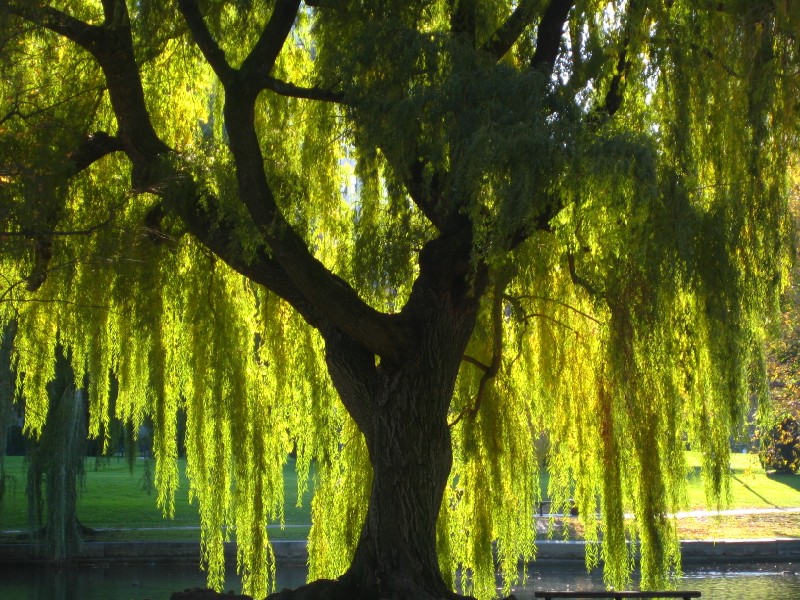
The Willow has been my favorite tree for as far back as I can reach through my thoughts. When I was young, I remember tying the long branches together and making a swing for myself. Back and forth I’d float . . . watching the sun sparkle and sprinkle down through the leaves. Drops of light fell warmly on my skin and I felt safe.

For me, Willows have always been female. Their energy soothing and loving. Soft and maternal. They seem to dance as they sway in the breeze, beckoning me to rest my back against their parchment white trunk. I don’t spend enough time in the company of Willows.

The Willow Tree is also known for it’s flexibility. The tree can bend itself into unbelievable contortions without snapping. In reading reference material for this blog, I’ve also learned the tree is a symbol for recovery and healing. Teaching us to surrender to the process instead of fighting the elements around us. To not only survive, but find a way to thrive. Find your way to thrive in unbelievably difficult conditions.

Every grieving mother needs to find her way to survive. I can tell you what has worked for me, and maybe it will help you, too. Though, we usually stumble upon the thing that saves us by chance. When you find it . . . hold on to it. Make it part of your every single day. No exceptions.

The past few weeks have been chaotic in our household. We’ve taken on the care of an individual who is very needing, and deserving, of this care. But it’s drained me. Completely. The reason isn’t that what needs to be done is too huge to accomplish. Instead, it’s because it hasn’t allowed me the time to do what I need in order to maintain my very fragile grasp on the peace I try to cultivate. The already frail hold has weakened, considerably. It’s not that far a fall to land in the place that will crack me open again. I’ve bent and bent and bent in the recent weeks. Even the Willow will eventually splinter, then break, and land with a thud. I don’t want to break.

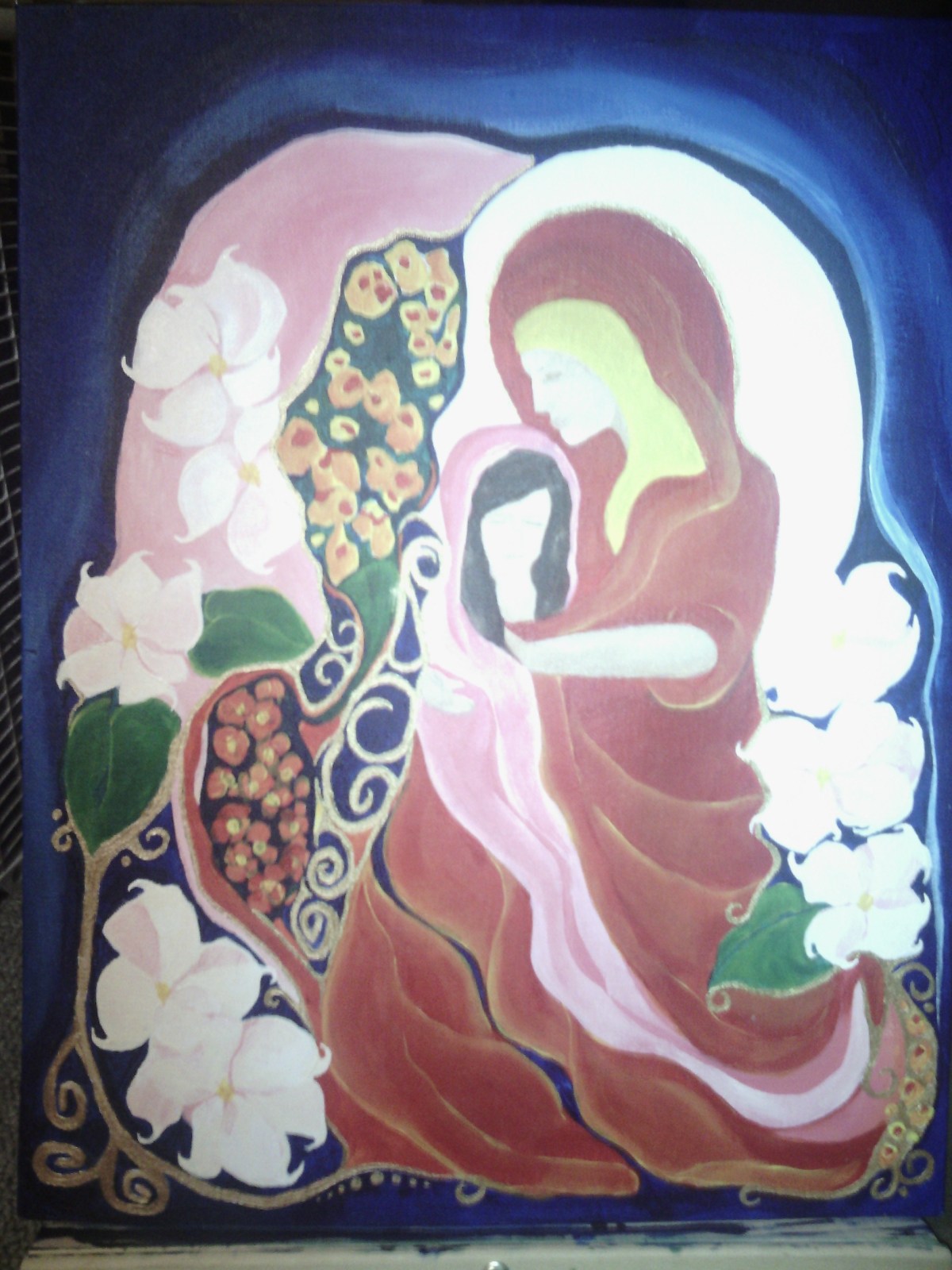
So, I have no choice but to make the time I need in order to engage my coping mechanisms. Paint. I need to paint. I feel agitated when I haven’t painted in a while. I will carve out time to sit in front of a canvas and create over the coming weekend.

Writing. Writing has been nearly impossible to even consider because my body and mind are never quiet enough, lately, to string two sentences together. Tonight, I had no choice. I was bending to the point I might not recover. It was write . . . or break. So I am writing.

There is no shame at being at the point when it’s all too much. Grieving mothers carry too much every single day just because we exist in a world without our child. A world that demands we participate when many days we’d really rather not, thank you. We owe no one an explanation as to why it’s too much. Though sharing your feelings could result in someone stepping forward and supporting you. As I’ve often said . . . the journey can be easier when shared with another. In any case, you need to take the time out to be in the space of what heals you. You owe this to yourself. To honor the life of the child who is gone. Don’t think it selfish. It isn’t. It’s self caring. Self preservation.

Your first priority must be yourself. Your physical well being, as well as your mental state. Grief attacks us on every single level. It takes any avenue it can find to get to our center. Winding itself around our thoughts and squeezing our heart until it feels as if it might burst. Insistently piercing each and every cell in our body. We can fight it and battle against it’s existence. Which will deplete the little energies we have remaining. Or, we can bend, contort ourselves into seemingly impossible shapes, and work within grief’s demands. We must become like the Willow in order to survive the grief.

Know you are strong, after all, you’ve come this far. Know you are capable. Know you embody the resilience needed to survive the death of your child. Find your way to move gracefully in grief’s currents and let it move you along.

Tomorrow, I think I’ll find a Willow Tree, lean my back against it’s trunk, and let my mind settle itself as the warm light washes over my skin. And heal a little more.

Forever Searching

As I’ve shared in my writings before . . . I have a very complicated relationship with divinity. The easiest way to explain it is like this: I feel that “god” is a person I am angry with but can’t seem to remove completely from my life. Yet, I have no intention of ever getting close to him again. I have relatives like this, too. They’ve hurt me deeply. I know they exist but I don’t have them in my life. There is a silent truce between us and I am fine with this.

Over the past few months, I’ve gone to church more than I have in the past ten years. The first time, I told myself, was to support my friend. Like many mothers who have lost a child . . . our faith is damaged and we seek answers. That is what I said to the Bishop when he asked me what questions of faith I was struggling over. But, I think I’m getting ahead of myself.

As I said above, I initially believed I was going to be of support to someone else. Sitting in a pew in a catholic church, then a folding chair in an old mall, and today, in the lobby of Martin Luther King Elementary School, I’ve realized I’m searching, too. I consider myself Agnostic because this term comes closest to what I seem to be. I know there is “something” but I don’t know what, exactly. There are times when I wish I had unflinching faith, but it’s not to be I guess. Not for me, anyway.

I felt that today, as I sat in a group of six people, listening to the Bishop speak. My friend and I were invited to this service personally by the Bishop. He knows our stories of child loss. And I truly think he thought he could answer our questions, assuage our fears. I am thankful he cared enough to want to do so.

Listening to his words, I believe he was trying to tell us that god takes, but god gives, too. That god took something from our lives to make room for something else. A seed has to die for a plant to be born. God has to squeeze us hard to get the best juice. I understand what he was attempting to explain to us. But, I have trouble with it.

God could have squeezed me in a different way. God could have taken something else from my life. If a seed has to die, let me be the seed. The flower that should be growing is my daughter. I am sure my friend feels the same way. I think nearly all grieving mothers would gladly change places with their deceased child. Happily, and without a second thought.

If we could, we would give them life, twice.

Near the end of the service, the Bishop asked me to share what my questions were. I’ve not had this chance before. A one on one discussion, with a man of the cloth, where I could honestly voice my thoughts. So, I did.

I told him I don’t understand a god that would take my child yet let my pedophile uncle live. I have trouble believing “god is good” when Syria is happening. That there even is a god who would let the horror in the world continue without doing something about it. None of it makes sense to me. And his answer was the same one I’ve been told over and over again: you just have to have faith.

That answer isn’t good enough for me. It wasn’t good enough before my beautiful daughter was killed, and it sure the hell isn’t good enough now. I am not angry with the Bishop, I am thankful he cared enough about me, my friend, about my struggle to take the time to build a sermon around it all.

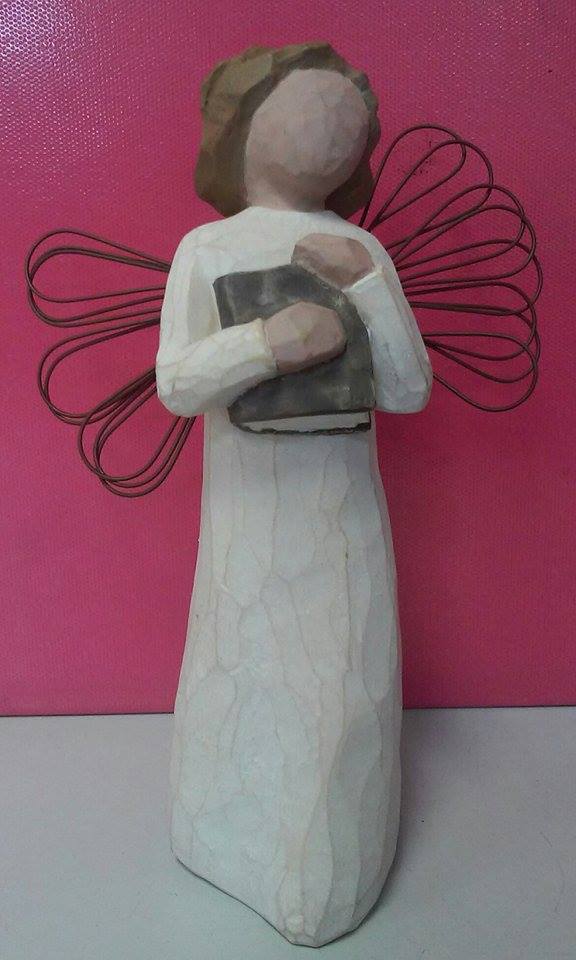
Later this afternoon, Stacey and I were walking around a thrift store. There were two Willow Tree angels sitting on the shelf. One of them was titled “thank you for the gift” the other was “angel of learning”. I don’t think those angels were there by chance. Our children are our gifts. The brightest blessings we could ever receive. And learning. Oh the things we’ve learned since losing our daughters. The biggest? How to live without them here.

I read once that our relationship with the deceased keeps developing as we learn more and we come to terms with their absence. I think I will forever search for answers. Answers about her death. Answers about all “the bigger questions” and that’s alright.

The searching keeps me moving forward.

Shores

This past weekend, I was lucky enough to spend a night on Mackinac Island. For those of you not familiar with this location, it’s an island off the northern tip of Michigan’s lower peninsula, with Lake Huron lapping it’s shores. We arrived in a small town at the edge of the Mackinac Bridge. Parking our car, we left our luggage with the porters and waited to board the ferry. The waters were a cold steel gray topped with fast moving whitecaps. I was scared. I’ve never been to the island, ridden the ferry, or been on one of the great lakes when the waves were so large.

Traveling with another bereaved mother, who’d been to the island many times, we boarded the boat. This trip was a sort of pilgrimage for her. Anxious about going somewhere she’d last been with her deceased child, she settled into her seat and looked out the foggy window. I ran my sleeve across the glass . . . trying to clear it enough to see outside. The ferry started to move and the swell of the waves grew larger as we pulled into open water.

My friend told me where the life vests and exits were “just in case”. Then, thinking it was funny, started to sing lyrics from “The Edmund Fitzgerald”. I looked at her with horror and she said “it’s a nurse’s sense of humor, dark”. Not long after that we hit a huge wave that lifted the boat about five feet into the air. Now, you have to know this boat seats nearly a hundred people and has two decks. Being tossed that high means the water was rough! For a moment, we hovered in the air as the boat fell. Then we slammed down into our seats. And I thought, if I die, I’ll see Becca. I think we lose our fear of death when we have a child that’s gone before us.

Either the captain slowed down or the waves calmed down as we approached shallower water, I don’t know which. I was then able to concentrate on the hazy shapes in the distance. I asked if the shape I saw was Mackinac Island. My friend said no, it was another island, but we were almost there.

My mind starting thinking about how grief is often times described as waves. How we are fighting the currents and just trying to stay afloat. I agree with this description. Then, a thought flashed into my head. She’d been here before. She knew what the islands looked like when the weather was sunny and the waters a clear blue calm. She’d never been here when the weather was as it was that day. But she knew that the mist covered shape in the distance was solid ground. Even though, at the moment, she couldn’t see it. The trip across this stretch of the lake wouldn’t last forever. She KNEW there was land.

Our ground was solid when our children were alive. When our child died, a tsunami swept across our land and wiped much of what we know away. On our good days, we stand on that ground, looking at the drastically changed landscape surrounding us. On the bad, the waters rise and sweep us to sea.

During these moments, the ones when we think of how easy it might be to slip below the surface and give in, we have to look across the water and find a familiar shape. We know there is land. Reaching it might be difficult . . . but it’s there! The waves rise and fall. When they carry you to their crest, find the land and swim towards it. Keep doing this, over and over. Until you make it to shore.

I think my friend was calmer than me on the ferry because she knew what lay ahead. I didn’t, therefore I was more anxious. We can help ourselves, and each other, by remembering what we stood on before our child died. Reminding each other that the maelstrom won’t last forever.

As we drew closer to the island, the soft shapes started to come into sharp focus. My friend pointed out a white church very close to the shore. She told me that her daughter, Mckenna, wanted to get married there some day. Now, she wouldn’t have the chance. Her mom was going to leave a rock, with her daughter’s name on it, outside of the church. Her pilgrimage.

The ferry slowed, we floated on the waves, and I took a picture of the church through a foggy window. A picture taken for a grieving mom, a daughter who’s future was stolen by someone else’s hand, and for me. Someone who didn’t know this shore existed, but felt blessed to visit it.

I don’t always know where my journey will take me. I do know that the journey can be better if you don’t always do it alone.

What I Do

A few days ago, a friend reached out to me for advice about grief. One of her friends lost her child, suddenly, earlier this month. My friend’s friend is lost and hurting. I was asked if I could talk to her. Of course, I said without hesitation. I never hesitate.

One of the bereaved moms I am close to said something when we were talking a few months ago. There is a “bat signal” that seems to always be in the dark sky. A signal we can’t see until our eyes are covered with the haze of grief. Or maybe uncovered when we lose trust in the life. I’m not sure.

Somehow, though, we seem to find each other more easily. Is it because before our own loss we didn’t spend much time thinking about the grieving mom? To immerse ourselves, willingly, into the reality of it would make us realize it can happen to anyone. We see how easily death could visit us one day. So, we don’t stay in that “space” for very long. If we give it too much thought, will our energy make it come true? Prayer is energy. Could acknowledging these types of thoughts give them life, too? Why risk it. Fortunately, if you haven’t lost a child, it’s easy to leave that “space”.

The longer I walk this path . . . the more I realize how many others are traveling on a parallel course. Every week or two, it seems, I learn of another newly bereaved mom who has just set a foot on her own path of loss. When we are standing there, at the beginning, we are at a crossroads. One we didn’t choose to stand in willingly. But here we find ourselves.

Two paths “Y” off before us. We desperately want to take the one on which we live our lives with our child. But that path is no longer available to us. It lays in ruin. Blown apart. Lost in the rubble that was our life, before. Life forces us to move. So we do. Hesitating as we turn toward the other arm of the “Y” which leads to a life we never considered.

Never have I seen a more broken being than a newly bereaved mother. Confused, numb, half alive. Her heart in her hands. Eyes full of anguish. And anger. Fleeting moments of hope that it isn’t true. Moments of clarity in which the blinding truth stops her from breathing. Physical collapse because any ability to hold herself up has drained from her body.

When I meet a grieving mom, especially one who’s loss is recent, I am completely humbled by the invitation (of sorts) I’ve been given to enter the very intimate place she is. The fog, which settles upon us the second we find out our child is dead, parts slightly and I am allowed in. This is a sacred place. A holy place. All of the minutiae of everyday life is gone. None of it matters. We are two injured souls finding comfort in each other. Maybe strength. Most certainly, understanding. When words fail . . . which they sometimes do, tears fill in the space between.

I often wonder if anything I say helps another grieving mom. I so desperately want to say something, anything, that will help ease the pain. Though my early months (years) on this path are hazy, I don’t remember anything anyone said to me making a big difference. I didn’t have another grieving mom to talk to, though. Maybe that would have made a difference?

When I meet a mom, after the loss of her child, I feel a responsibility to her. And to her child. I’ve mentioned before that I believe when we moms meet here on earth, our children meet in heaven. I always ask Becca to go find this new child, explaining the child may be sad or perplexed, and hug them and help them. My daughter has been there for ten years. Her goal in life was to help and educate children. I hope she is doing this up there, comforting the newcomers.

In truth, sometimes the weight of this aspect of life is very heavy to carry. I think of the pain these moms will be experiencing and it breaks my heart. Because I’ve been there. It’s a very solemn and holy task to be a touchstone for someone. I don’t take that responsibility lightly. Though it can be tiring, and I can become overwhelmed, I know I have to use my own experiences to make the way easier for someone else. That is what we are supposed to do . . . I truly believe this. What choice do we have but to do the best we can with what we have been given?

My daughter was amazing. Becca was always the first to jump up and in to whatever she could do to help another. If she saw someone with a need . . . she did what she could to fill it. Without question. And without asking for anything in return. In a lot of ways, my daughter was much wiser than I am. She was a very old soul. I miss her to the depths of everything I am.

Though my hearts grows a bit heavier every time I am asked to help a newly bereaved mom, I will continue to do so. Using my life to make the path easier to travel, for others, also makes my injured soul heal.

Please. We are not very different from each other. One single moment in time could put you right where we are. I truly hope this doesn’t happen to any of you. But it will.

Help who you can, where you can, any way you can. When we get down to the very basics of life . . . being there for each other is what matters most.

We are all one.

In The Understanding

I remember sitting, numb, in the big room inside the funeral parlor. The chair was uncomfortable. There were boxes of tissue on every flat surface. Scattered on the shiny table in front of me were multiple binders. Binders which held images of caskets and linings and flower arrangements. I kept thinking it all was a bad dream. That at any moment, my alarm would go off, and I’d wake up. Of course, this didn’t happen. Instead, I went to the store and wandered around, trying to find something for my daughter to wear at “her visitation”.

There are no words to explain the pain which accompanies a mother choosing her child’s last outfit. Up one aisle, and down the other, I searched for the perfect outfit for Becca. Finally, I found myself in the sleepwear section of the store. I saw a beautiful white silk nightgown with a matching robe. It looked so much like the simple dress she’d worn for her senior prom. This was what I had envisioned her in. Something that made her look like the angel she now was.

With the clothing chosen, I now had to decide how she would “look”. I told them I wanted her to look like the little girl that I had raised. Very little makeup. Her hair simple, in a pony tail, I wanted her to look natural. I needed her to look like herself. Even now, writing this, my heart is torn in two as I remember her laying there . . . covered by the Care Bear blanket she’d had since she was three. I’d always thought that blanket would cover her children someday, not be cremated with her.

Earlier today, I was in a position to hear two people talking about autopsies. Their conversation was light with some laughter. You need to know, one of the participants in this conversation is going to be a doctor. A discussion about viewing an autopsy is not perverse but expected of a medical student. Though this topic isn’t out of the realm of what is talked about . . . it completely ripped apart my insides as the memory of my daughter’s visitation rushed into the middle of my thoughts.

Because Becca’s death was brought on by the actions of another, she was autopsied. My daughter was killed on a Sunday. She was kept in the morgue, in one of those refrigerated drawers, until her autopsy sometime on Monday. I spent that time frantic because I desperately wanted to sit beside her, so she wouldn’t be alone. I wasn’t allowed. In my bedroom I sat, looking out the window into the snow, aching to be with my child.

The first opportunity I was able to see her was a few minutes before her visitation began. I was led into a room. In the center of the room, there lay my Becca, her hands crossed atop the Care Bear blanket. She was on a gurney because I couldn’t bear to see her in a coffin. A coffin made it too real somehow.

In a future blog, I’ll share more about the visitation. For now, I’ll talk about her autopsy scars.

I remember, hysterically thinking, why are they called scars?? A scar indicates healing. When I gently parted the robe across her chest, and saw the Y shaped incision, my heart nearly stopped. They were not scars. They were cuts. Cuts that were never supposed to happen to her body. Distraught, I felt wild to know if her organs were put back where they belonged. Was she treated with respect? Oh my God, I pray that she was treated with tender care. She was my baby. She deserved to be cared for, even at the end.

As I stood next to my daughter alone, having asked everyone to leave so I could say good bye, I arranged her robe back over the stitches and kissed her farewell. Turning and walking away from her was so incredibly difficult I couldn’t do it. I had to be forced to leave her side.

I’m writing about this today to convey a very simple truth. The meaning of something to us will rarely be what it is to another person. If I had heard the conversation I shared above, a few years ago, I would have exploded. There is too much raw emotion, for me, around the term autopsy. I am a mother who witnessed the remnants of the procedure on her child. The person who talked about it today is a medical student. Worlds apart. Completely different sides of the same thing.

We bring our own experiences to every situation. The little ones, and the big. In no way did these two people mean for their conversation to raise memories about my daughter. They couldn’t know it would shatter any peace I felt today. If they had, I am certain they would not have talked where I could hear them.

Most people are like this. They can’t know the memories behind every day things because they have not experienced them in the way a grieving mother has. I imagine, most of the time, people don’t realize why what they have said has hurt you. I doubt there is much intent in hurting us, further.

If you need to explode, then do it. Those who are close to you will understand. It took me a very long time to realize what I’ve tried to explain above. If you haven’t realized it yet, that’s ok, you will . . . in your own time. And your time is all that matters.

If you are one of the people who’s been hit by the fallout from just such an explosion . . . thank you for sticking around. We are doing the best we can to come to terms with all that’s changed around us, and within us.

The key is attempting to understand each other, even if we fall short in it’s completion, there is deep connection in the act.

(W)hole

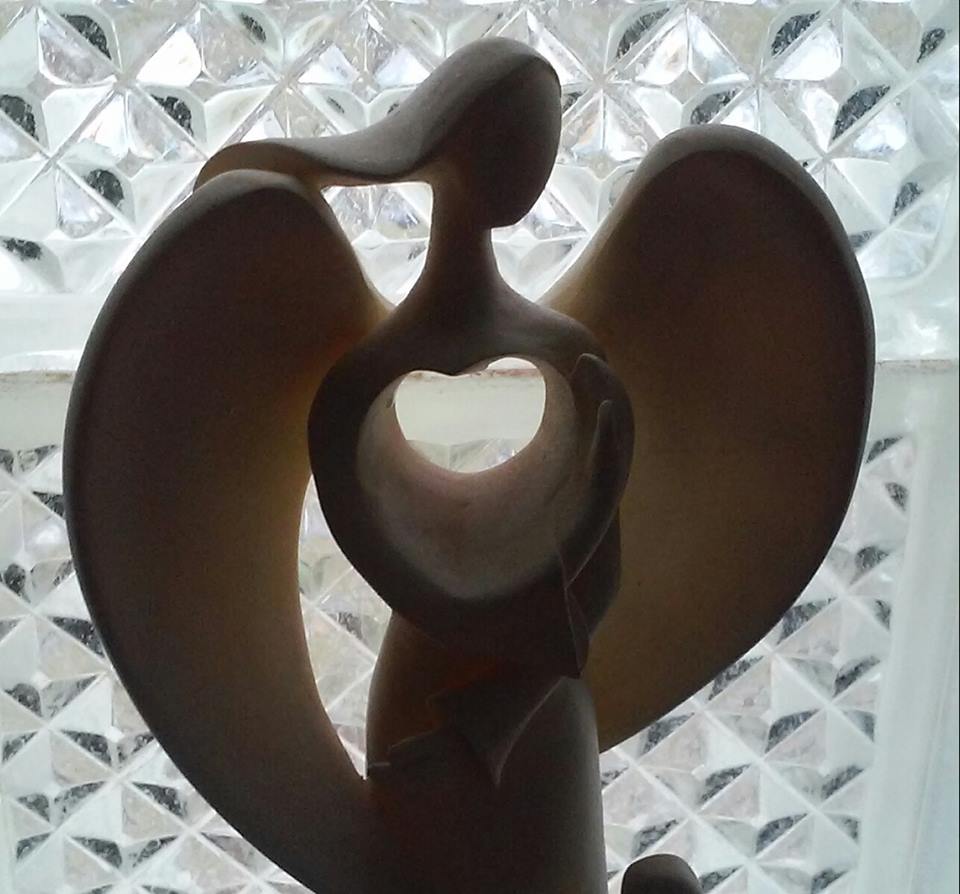
When I found the foot high statue in the image above . . . I was struck by what it said to me. A perfect depiction of the hole left in a mother’s chest when her child dies. The gaping wound every bereaved mother suffers when her baby is taken from her. You may not be able to see it, but every single one of us has it. And we all protect it, for the rest of our days.

Over the past few years, finally being strong enough to venture out of my safe little world, I’ve met other mothers who have lost children in as many different ways as you can imagine. But don’t imagine them . . . they will break your heart.

One of the often discussed truths is whether it is easier to lose a child when you’ve had the chance to say goodbye before they go, or when their death is sudden, with no preparation or last words. I lost my daughter in an instant. In the time it took for a car to flip and break her neck. She was here, then gone. I didn’t watch her suffer bravely through a long illness. Holding her hand and telling her I love her as she slipped away wasn’t an option for us. On a Thursday I hugged her, not knowing it would be the last time I would touch her while she was alive. The following Sunday, she was dead. I am thankful for the conversation we had Saturday afternoon when we both said we loved each other. At least, I have that.

I know mothers who did spend their child’s last moments with holding their hands. Telling them it was ok to go. Stroking their hair and kissing their foreheads and easing them into what comes next. At times, I envy this seemingly peaceful farewell. Most times, though, I can not imagine having to watch my child circling toward their death. I don’t think I would be strong enough. Would I have been able to tell Becca it was ok to go? I’ll never know.

Then there are those of us who have someone to blame for our child’s death. A person(s) took the life of our precious child by their actions. There is deep rage when our child’s death is the outcome of someone else’s choices. I’ve shared in prior writings the fact that the drunk driver that killed Becca had been arrested just six weeks prior for a second drunk driving offense. His choice to drink enough to show an alcohol level of .28, then drive, took my daughter from me. From the life she was building.

When I wanted to see her, touch her, I was told she was “evidence” of a crime, so I could not. Later, I was informed that the driver would not be charged with vehicular manslaughter because killing someone while driving intoxicated is an intention-less crime. Intention or not, my daughter isn’t any less dead. A law that benefits the guilty. You better believe there is a deep anger inside of me.

Then there is the horrible truth of murder. The person had intent to kill another human being. Someone decided that your child didn’t deserve to live. That they had the right to decide to cause them death. I don’t know how to even begin to wrap my mind around this truth. There is another level of complicated grief when there is an actual person to place blame on for our child no longer being here with us.

What about the soldier killed in war? Who do you place the anger on then? Where do you direct your rage? Toward an entire people? Ideology? I don’t know. I’m not sure there are any adequate answers for these questions.

The one thing all grieving mothers have in common is the hole blown through our chest . . . the space where our heart used to be, whole. Every one of us lives with this state of being. The individual facts that surround each death make our grief journey our own. The smallest truths we have to grapple with, over and over in the still dark of the night, are what we must find a way to heal intimately.

The answers we need to find are most often within ourselves. You can’t give them to us. We need you to help us remain strong enough to keep walking this path. To know that, even as we sit quietly, our minds are racing over the facts that surround our child’s death. Very rarely do we have a waking moment that is not influenced, in some way, by our child being gone.

We all have an empty space and we are trying to repair it as best we can.

Broken Heart

For the past few days I’ve been giving much thought to having a broken heart. Right after Becca was killed I remember thinking “how is my heart still beating? It should just stop.”. Before I lost my daughter I don’t think I ever gave any thought as to whether a person can die from heartache and loss.

According to science, broken heart syndrome is a real condition. Just last year we saw it happen with a famous mother and daughter. The mother died the day after her daughter passed. After reading about the condition, I’ve learned the medical term is: stress induced cardiomyopathy. Women are more likely to suffer from this than men. It’s a reaction to a surge of stress hormones. These facts are clinical. Here’s my truth about a broken heart.

Mine shattered when I was told my daughter was the young woman dead in the body bag. There was “proof” it was her, but I didn’t believe it until a friend came back from seeing her. He told me they unzipped the bag and let him kiss her forehead. She was still warm. Inside of my chest . . . my heart exploded. As I tried to wiggle out of the police officer’s arms, so I could run down to my daughter, my heart beat so wildly and out of time that I thought I might have a heart attack on the same highway where Becca died. There are days, still, when I wish I had.

The thought that our heart physically changes when we lose our child won’t leave me. As if it DID blow apart, but somehow, quickly knitted itself back together enough to keep my body functioning. The pieces reattached to each other, yes, but not arranged the same as before. My heart is different than it was when Becca was alive. I am different. From the smallest cells to the farthest corners of my mind, I’ve been changed.

I also believe I’ve been both weakened and strengthened. I know that sounds odd . . . and makes little sense, but I’ll do my best to explain what I mean.

The cracks in my broken heart have exposed a strength I’m not sure I would have found if not for losing my child. A strength that every single mother gains when she gives birth. The moment we hold our child for the first time, and whether they are with us for an hour or seventy years, we have the truth we could lose them. We don’t often consciously think this thought because it’s too horrifying, isn’t it? Yet, we do know that to love so deeply means we may hurt as deeply someday, too. So, way down inside of our mothers’ hearts, there is a small seed of strength waiting to be called upon if we ever need it. Sadly, some of us do.

When my heart broke wide open and the blood rushed out, so did the combined voices of all the bereaved mothers before me. The lineage of women behind me, cried with me, as I mourned my daughter. I didn’t know it, but I was being lifted by my feminine ancestors. We are held by the hands of those who went before us. Sometimes, in the quiet of the night, I thank them for walking with me during my journey.

All of this being said, personally, I would rather not have found out how strong I really am. I could live without the knowledge that a broken heart can repair itself. That I can march through the days, empty of my Becca, with some hope for my future.

Remember, even when we are alone, we aren’t truly alone. Our hearts can heal. Don’t expect to be the same as “before”. You won’t ever be that person again. The person you  become, however, will amaze you.

Let your heart heal. Your child would want you to.


Fearful

When the phone rang in the middle of the afternoon, a few years ago, I was surprised to see it was my son. Excitedly, I answered the phone and said hello!! My son’s first words were, “I’m gonna need you to not freak out.” That’s when I heard the sounds of hospital monitors in the background. And I did, indeed, freak out.

I started yelling, asking him if he was ok. Not taking into consideration that he was speaking to me, so he was ok. He told me to stop yelling, he couldn’t talk to me when I was like this, or he would hang up. You can probably guess he eventually hung up on me. With the promise he’d call back when I could be calm. When he did finally call back, I learned the details of the car accident he’d had on the slushy highway a few hours earlier. A crash that left him crawling out of a car, that had landed on it’s roof, in oncoming traffic. His only injury was a snapped collarbone, thankfully.

Even after I knew what had happened, I was still mildly hysterical, and a complete mess. My child was safe. He was hurt, but he would survive this. When I had calmed down enough to process what had happened, I realized I would never be the same when it came to my children being hurt. Bereaved mothers nearly always feel the fear that another one of their children may be taken by death.

Late last week I was talking with another grieving mom I know. She told me her very young son had been sick all day. High fever, lethargic. One of her sentences was heartbreaking. She shared she had been a nervous wreck all day, beyond worried. The truth that she’d had to bury one of her young children already was far too real to not take into consideration when her other child was so sick. This mom’s son was killed by a distracted driver. An adult who was checking his social media. Nothing this mother did led to her child’s death. He wasn’t sick. But even though the two situations involving her children were not the same, her mind circled the truth of child death. We go to the worst that can happen because we know it’s not impossible.

Even now, when my children travel to and from where they live and when I live, I am a ball of anxiety. They’ve had their licenses for years. They are both good drivers. Millions of people travel the roads of Michigan everyday without dying. But part of me is certain they will die, like their sister did, well before their time. When my son had a serious illness over this past Thanksgiving, I started to cry uncontrollably when he said he was going to play soccer, against the doctor’s orders. I begged him not to. Again, I was worried it would lead to his death. So much of the grief path is spent walking in exhaustion. Worrying about our surviving children, KNOWING death takes the young, we are always on guard. Always hoping to see the thing that might end their life before it reaches them.

Others, trying to comfort us, will say “oh, you’re worrying for nothing . . . everything will be alright.”. In our broken hearts, the truth courses through our veins with each heartbeat. No, it’s not always alright in the end. Like so many other things about child loss, unless you’ve been through it, it won’t make much sense to you. We don’t want to be a worried mess. We don’t want to struggle with allowing our child to live a normal life, one not full of our fears for them. However, we are forever changed.

I’ve shared before the fear I have for my twins who just turned the age my daughter was when she was killed. On January 11th, they officially became older than their sister ever did. For me, their life is delicate and could easily be taken at any moment. I wrestle with this truth and the other truth, I have to allow them to live their lives.

But it’s so difficult to know there is the chance that we may lose another child. To know this and to attempt to remain optimistic about the children we still have here. It’s hard as hell. Please understand this.
I want to take a moment to mention the mother who lost her only child. I can not speak to what it’s like to live in this reality. I haven’t experienced it. I do know one mother who did lose her only daughter. Her strength and courage amazes me daily. Maybe one day she’ll be able to share her feelings here as a guest writer. I think she has a story to tell . . . one that can reach the mothers I can not.

There is beauty in the broken. I see it everyday in the women I know.

All Our Children

My entire life, I’ve not liked meeting new people. I carry matching luggage filled with insecurities and self doubt. Since I lost my daughter, I’ve added new contents to these bags, which go everywhere with me. Though there are many additions . . . tonight, I will talk about just one. But it’s a really big and difficult one. For most people meeting others, it’s a question that’s asked an answered without much anxiety. Not so for bereaved mothers. We grow to dread this particular inquiry.

The question? How many children do you have. A common question for those meeting each other for the first time. I don’t like having to answer it. The situation can go one of two ways and either is stressful for us. Only one is stressful for the other party. I’ve reacted both ways, but there is a price I pay either way.

At times, we can simply answer with the number of children we have and the conversation goes no further. Often, however, the follow up question is asking us to share the ages of our children. This is when grieving mothers really start to panic. How do we answer this?

We can simply give the ages of our living children, then the age our deceased child left this world.

Ages are a weird thing. My twin boys just turned the age their sister was when she was killed, twenty three. In fact, on January 11th, they passed the age when she was the oldest she was ever going to be. They are older than their older sister. I can barely wrap my mind around this truth. If I answered in the way I’ve mentioned above, it would seem I have triplets, which isn’t the case. And the thought of answering in this manner has always made me feel uneasy, so I’ve not chosen to do it. I don’t fault mothers who do. We each have to choose what is best for us, no judgment.

Sometimes, in an attempt to keep the follow up question from being asked about our dead child, we don’t mention them. At all. It’s just easier, we think, to not have to make anyone else feel uncomfortable with our reality. This is a dangerous way to go, I’ve learned from experience, because we are left with a new guilt. We carry enough guilt for not saving our child, somehow, and now we are being disloyal to their memory by not admitting their existence. Internally, we are bleeding to death because of their absence, but we don’t let this fact show on our faces lest we cause discomfort in another.

I’ve chosen this tactic, early on in my new life without Becca, I am ashamed to say. The pain I saved the other person from feeling was heaped upon that which I already carried. The half dozen times, maybe more, I’ve done this have left me crying in the dark begging my daughter for her forgiveness. I don’t hide the fact she existed anymore. Not for anyone’s comfort. Not anymore.

We can, and eventually do, answer the question in a truthful manner. Not ashamed of the fact we have a dead child. No attempt to soothe their nervousness.. I’ve seen the look in people’s eyes when I’ve said my child is deceased. A mix of panic and uneasiness. They don’t know how to respond. And, I’ve learned, it’s not up to us to care how they respond. They’ll figure it out, or they won’t, but either shouldn’t change whether we talk about our child or not.

This is how my most recent conversation with a new person went:

“How many children do you have, Diane?”

“I have three. Becca, Gabriel, and Matthew.”

“Beautiful names! How old are they?”
“The boys are twins, they turned twenty three late last year. My daughter would have been thirty three.”

“Oh . . . would have been?” (that’s when the panic first flickered in his eyes.)

“Yes, she was killed ten years ago, by a drunk driver, she was twenty three.”

I saw his face grow red and he stammered something about having to get back to work.

Generally, this isn’t how uncomfortable this conversation can be. Most times people say they are sorry for my loss. I thank them and we move on. I have learned I can either chance the possibility that the other person will not react well by my answering honestly or I can omit my daughter’s having existed by leaving her name off the list. For me, the choice has become quite simple.

I won’t ever keep the life of my daughter to myself because of how others may react. I don’t care anymore. She’s my child. She was here. Her life mattered. Her death happened. I will say her name any and every chance I get.

When we begin walking the path of child loss, we are still finding our way in everything, because all we know has been replaced by our new reality. It takes a while for us to become strong enough to stand up to society’s expectations of a grieving mother. We have to find our legs and stand again. We must find our voice and speak again. We are the keepers of our child’s life. There is no shame to be felt for this.

For those of you who are on the side of the conversation, where you could feel discomfort, please don’t let it overwhelm you. We know we make you uneasy. That our child’s death forces you to face the fact children die. That if it happened to us . . . it could happen to you. The horrifying fact is: it can.

It happened to us. Please don’t add pain to our already anguishing journey. Stay with us and let us talk about our child. It’s the greatest gift you can give us.