On What Returns

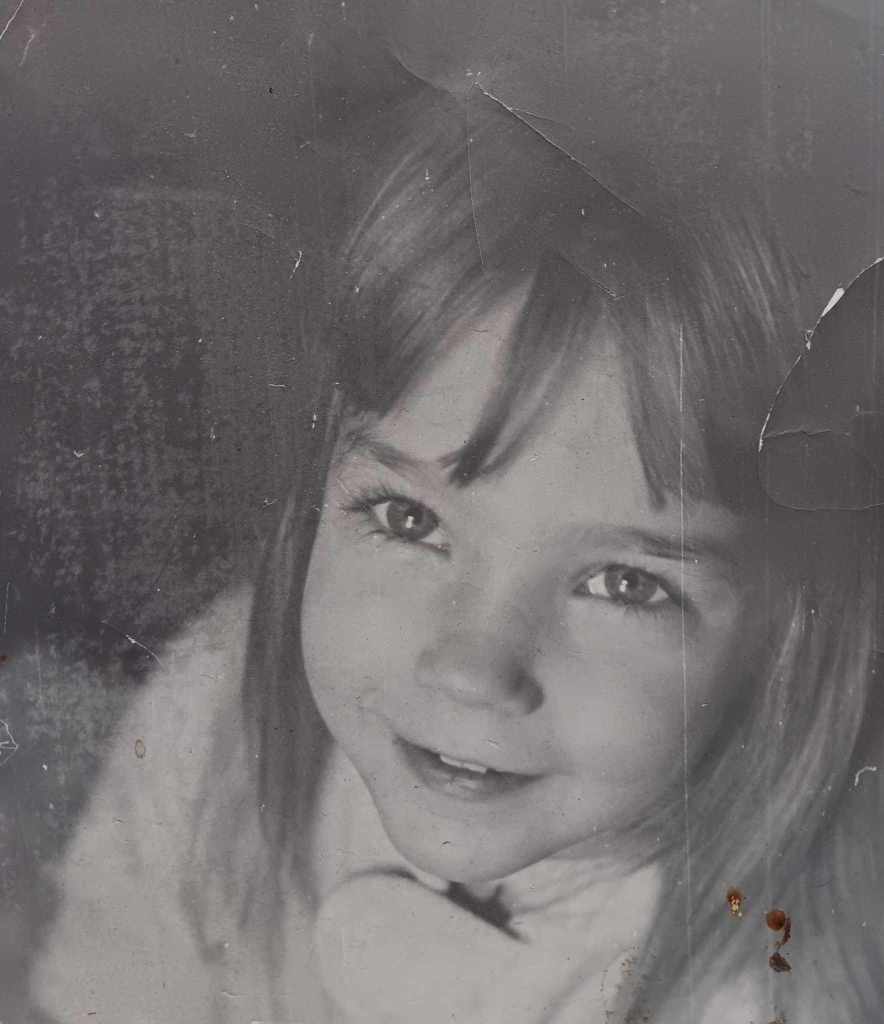
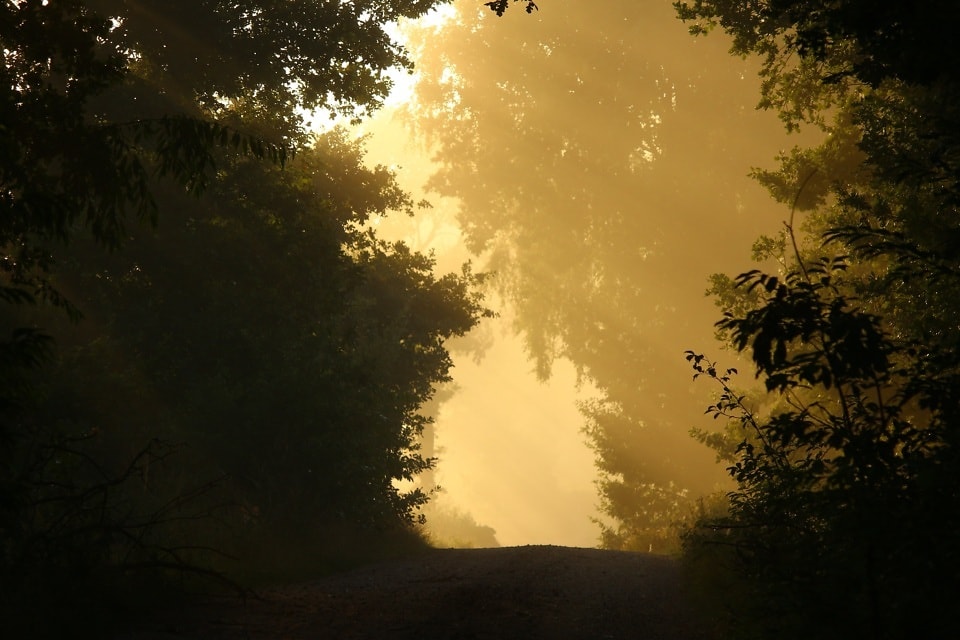
Not my image.

There is a change in the air when summer knows it’s time to begin to say goodbye and make space for the next season. It’s a dance as old as time and the earth moves in practiced step as each of them move forth. And somewhere, just beyond the edge of the clearing, my old friend waits – leaning against an ancient pine, his coat made of fog, his breath heavy with the scent of pine needles and rain. He doesn’t rush me. He knows I’ll come. The blues is patient like that, knowing that when the air thickens and the light tilts, I’ll see him standing there, waiting for me. 

I feel him before I see him. Dusk arriving early is always the first sign. My chest tightens; my steps falter – not because I don’t know him, but because I do. He is expected, familiar, but in the early days I wasn’t ready for his company. Our connection is different now. Looking forward to seeing him is too strong but there is a comfort when he’s near. 

I nod when I reach him. He nods back. There’s no need for greetings – we have known each other too long. We fall into step, side by side, our pace slow enough to notice the damp grass bending beneath us. The crows follow, black shadows skipping from branch to branch, their wings beating the measure of our walk. He doesn’t speak at first. He never does. It’s me who breaks the silence, asking the same questions I always ask – why now, why again, how long will you stay? He only shrugs, the fog shifting around his shoulders like a cloak. The crows answer in his place, sharp cries echoing through the thinning light. 

In those early years, the first decade or so after Becca was killed, his presence horrified me. Haunted was how I felt, as if grief were stalking me – waiting around every corner, slipping into every room. He existed only to remind me that my daughter was never coming back. And I hated him for it. His footsteps echoed in mine, heavy and relentless, and no matter how quickly I tried to walk, he was always there. The crows circled above, not companions then but omens, their cries sharp enough to flay. I lived in dread of his visits, even as I knew he would always return.

The season changed quickly this year. I thought I had more time before he appeared. But summer was ready to leave, and autumn was insistent.

We walk for a while in silence before I finally break it. “You’re back early this year,” I say. He shrugs, disturbing the fog around his shoulders. I watch until it settles again. Then he speaks. 

“The seasons change when they will. You know that.”

“I do,” I reply. “But sometimes I wish you’d skip a year.”

He chuckles, low and hollow.  “You wouldn’t know what to do without me.”

I glance at him. “That used to be true. In the beginning, you terrified me. You felt like a stalker, like grief itself walking at my side. I hated you.”

“And now?” he asks, his voice quieter, like rain slipping through pine needles. 

“Now…” I pause, watching the crows settle above us. “Now you’re an old friend I don’t exactly look forward to, but I don’t dread either. You remind me I can still feel. You remind me Becca mattered enough to make me ache.”

He nods, and for a moment, even the crows fall silent. “Then I’ve done my work,” he says.

I don’t answer right away. Part of me wants to snap, to tell him his work was cruel. Part of me wants to thank him, for not letting me forget. What comes out instead is a sigh, heavy as the dusk around us. “Maybe. But you’ll be back again. I don’t think your work is truly ever finished.”

Above us, the crows scatter in all directions, their shrieks falling like shrapnel, leaving the air torn open between us. We stand there, he and I, in the deepening indigo light. For a moment I think of asking him to leave. To never return. But, I know I would miss his companionship.”

I look at my old friend. Once a foe who I felt was here to torment me, now as a trustworthy part of my life. Knowing there is nothing else to say we turn away from each other. 

As we move in step, his scent lingers – moss and damp bark, the quiet perfume of things breaking down and beginning again. Comforting, in its way. A reminder that even endings feed the soil. He carries the cycle of life and death in his presence. 

We walk until the last light drains from the sky. The crows settle into the branches above, silent now, as if even they know it’s time to rest. He will leave when he chooses, as he always has. But for now, we walk together, and the evening feels less empty with him beside me.
On What Waited For Me

Initially, this piece of writing does not seem to belong with the rest. The writing I have done around loss of a child and the healing journey I am traveling. Trust me. It belongs here.

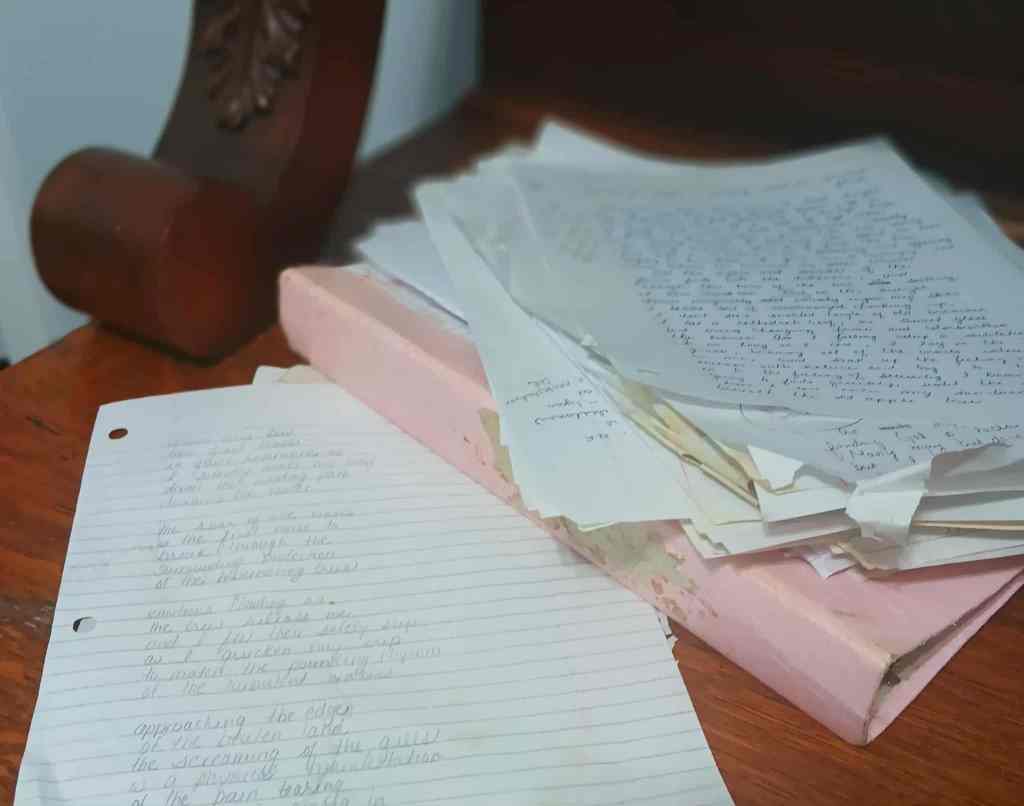
I can’t remember what I was looking for in the boxes in the basement last week. We moved nearly a year ago and most of the packed items remain that way. Last October, when we were packing, I threw away a large amount of things I no longer needed. There were, however, other things I could not bear to part with as they had a connection to my daughter. Or, my boys when they were small. And, to my surprise (and delight) there was a pink hard covered binder that I thought I had lost years ago. Handwritten words on college ruled paper were crammed inside. Relics of a former life.

On these faded and crumpled sheets were dozens of poems I had written over two decades ago. Before I lost my Becca. Prior to the before and after divide her death caused in our lives. 

I was happy I had found them as I thought they had been lost forever. And, in truth, I felt kind of alright with that because they had been written about love. Melancholy musings about love lost pale in comparison to the grief one feels after the death of a child. 

Carrying them upstairs I placed them on the small desk next to my bed. I was happy I found them but I wasn’t ready to read them yet. I am not sure why. Part of me felt they did not matter anymore. They were of the past. Another part felt as if they would be silly to me after having been through the things I have experienced. I can remember how much I ached when I wrote them but I didn’t truly know what aching loss was. I let them sit there for a few days. Eyeing them every time I entered my room. I felt embarrassed, somehow. Nearly a week passed before I sat down, took the pink binder into my lap, and opened the cover. 

The first poem I read pulled me backward through time. My younger self spilled across the page, desperate, raw, convinced that heartbreak was the deepest wound a body could know.

I saw the heartache everywhere. Page after page carried the same refrain: unloved, unlucky, unwanted. I poured it out with the certainty of someone who believed it was her truth. 

The emotions were unfiltered, splashed across the page crudely. Anger, sadness, emptiness—they tumbled out without grace, without restraint. I wasn’t writing poetry so much as carving open wounds onto paper. There was nothing polished about it. Just the desperate scrawl of someone who believed she was unworthy and wanted the world to see her ache. 

As I was reading them I thought: oh, I would write this so much differently now. Or, would I even write them at all? I can think of little as profound as losing a child. Surely, writing about romantic love lost is superficial. Yet, there were truths I could see between the written words.

Meaning always seems to reside in the space between.

There was anger. Anger is the flame that kept me moving. It burned at men for not loving me the way I thought I deserved. It burned at myself for being “too much” or “not enough.” But beneath it all, anger was a shield – a way to keep from admitting how much I wanted to be loved but I didn’t understand how.

Sadness is the ache I poured into poems, believing I was destined to be unwanted. It sat heavy in my chest, a familiar companion. Sadness told me the lie was truth and convinced me to keep repeating it.

Loss is not just the end of relationships—it is the empty space I carved out myself. It is love I could not hold, because I didn’t believe it belonged to me. I grieve the men I pushed away, but I also grieve the version of myself who never felt safe enough to stay.

Emptiness is the echo of my uncle’s words: you will never be worth loving. I let that sentence hollow me out, and then I kept filling the hollow with chaos. The chaos felt familiar. 

Unworthiness is the thread that tied all the others together. I wore it like a second skin, invisible and suffocating. I believed it so completely that I made it real, even when love stood right in front of me and asked me to trust.

Taken together, these emotions painted the story I lived by. 

Between the scrawled lines of heartbreak, I saw the girl who believed she was unloved. I saw the anger, the sadness, the emptiness that poured out of her, unfiltered. But I also saw something else—the way she kept writing, kept trying to name her ache. Even then, she was reaching for love, even if she couldn’t recognize it when it stood in front of her.

The truth is, I was loved. There were men who gave me their full hearts, and I could not stay. I read those poems now and feel the grief of that too—the grief of turning away, the grief of sabotaging love that was real.

The harder truth is this: I was not only hurting, I was hurtful. I was the mean one. I lashed out at men who offered me tenderness, cutting them with words sharper than I care to remember. Destroying all in their path. I turned cold when they needed warmth, distant when they reached for closeness. I sabotaged what could have grown, convincing myself that chaos was safer than vulnerable intimacy.

It shames me to admit this, but it is the truth: I drove away the very love I claimed I longed for. I didn’t understand how to stay, how to rest in gentleness. Meanness became my defense, and I used it every chance I could. Looking back now, I see the cruelty was not born of malice but of fear—the fear that if I let love root itself in me, it would reveal my unworthiness all over again.

I saw myself as the victim. And though there were times I truly was, I also made victims out of others. This is the hardest confession: that pain, when left unspoken, when left unhealed, becomes something we pass on. My cruelty was the echo of wounds I carried from childhood, but it did not feel like an echo to the men who received it. To them, it was sharp, cutting, real.

This is what I regret most—that I repeated what had been done to me, even as I swore I wanted love. That I became the one who hurt, even while drowning in my own pain. That there are some who deserve apologies I won’t ever see again.

The grief I feel at this realization is sharp. But it does not live alone. None of my griefs ever have. They are threaded together, one pulling on the next, like pearls on a single strand.

When I grieve the loss of love—the men I pushed away, the tenderness I couldn’t bear—I feel the weight of losing my daughter too. When I ache for Becca, I also ache for the girl I once was, scribbling poems in pink binders, believing she was unworthy. Each grief stirs the others, until I cannot tell where one ends and the next begins.

This is the truth I have come to see: grief is not separate. It belongs to the same necklace, the same life. To touch one pearl is to feel the whole strand tremble.

And yet, even as the strand trembles, I feel something else. The act of holding one pearl, of turning it gently in my hand, seems to soften the weight of them all. Each grief touches the others, but so does each act of healing.

It is not only sorrow that travels along the necklace. When I polish one pearl with honesty, the others catch the light too. Naming my meanness does not excuse it, but it loosens the knot of silence that held it in place. Weeping for my Becca does not lessen the ache of lost love, but it teaches me how to live with a broken heart and still keep loving.

The necklace is heavy, yes, but it is mine. A whole life strung together: love, loss, regret, tenderness. To carry it is to admit I cannot separate the parts of me. I can only tend to them, one by one, until the strand gleams with all that is unbearable and all that is beautiful too.

I don’t think it’s an accident that I found these poems now. If they had surfaced years ago, I might have rolled my eyes at my own melodrama, or stuffed them back into a box. But now I can read them differently. I can see what I never wrote: the fear, the unworthiness, the deep longing that sat beneath every line. Timing matters. The binder waited until I was ready to face not only the lies I believed, but also the truths I could not see.

Between the lines, I found not just sorrow, but myself.

On A Moment Remembered

Some moments stay with us long after we think we’ve moved on. Today, a woman I didn’t immediately recognize reminded me of one of those moments—one I had nearly forgotten, but she had not. A quiet kindness during her dog’s final goodbye. A gesture that meant enough to bring her to tears a year later.

It caught me off guard but it reminded me that compassion has a way of lingering. Sometimes the smallest acts echo the loudest.

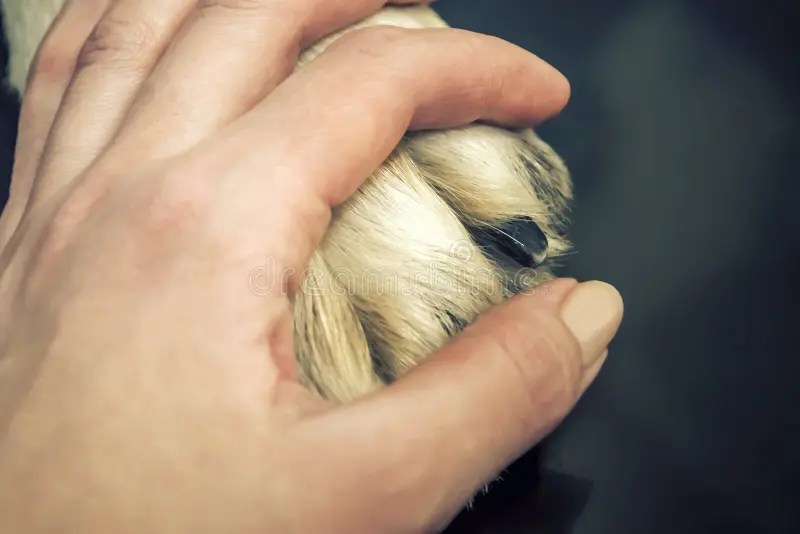
Image not of the author or Maddie. Chosen for symbolic representation of the bond we share with our animals.


Today was one of those perfect West Michigan summer days. Low eighties, little humidity, a breeze off the lake. Downtown hummed with life. Children laughing, birds chirping, the flea market buzzing two blocks away. A line stretched outside the art museum, and big, soft clouds floated across the sky. It was the kind of day that makes people fall in love with small towns.

I was working a fundraiser for the veterinary clinic where I work, a low-cost nonprofit that helps people care for their beloved pets. We don’t receive government funding, so we rely on donations. Today’s event was a “pub pedal” that brought together five local rescues. Volunteers sat at participating eateries to stamp “passports” and enter people into drawings.

I was stationed outside one of the new restaurant buildings. Because our town is small and tightly woven, I saw a lot of familiar faces – clients, friends, people I couldn’t always name but whose animals I remembered. That’s often the way it goes. I remember the dogs before the people.

A woman passed by on her way to the restroom and said she’d grab her stamp on the way out. I turned to my fellow volunteer and said, “I know her. I don’t know from where, but I know her.”

When she returned, she looked at me and said, “I know you from somewhere.”

Then she said, “Oh, you helped me with my do—” (let’s call her Maddie), and her voice broke. She turned away from me, hand covering her mouth, eyes tightly shut. I stood up and walked around the table to hug her, though I still didn’t know what moment she was remembering.

She tried to speak but had trouble finding words. Her tears came quickly and didn’t stop for a while. When she was finally able to talk, she told me I had been in the room when Maddie passed.

“You were incredible,” she said.

She remembered how I wrapped my arm around her when she was falling apart. How I gently positioned myself to block her view when it came time for the final injection – so her last memory wouldn’t be the needle, but Maddie’s face.

“You were so kind,” she said. “You made something unbearable feel a little less alone.”

And as she spoke, the memory returned. Exam Room 1. Her husband was there, his arm around her shoulders. They were both crying. I remember her heartbreak at saying goodbye to Maddie. I remember his grief too – but now I realize, some of his tears were for her. For the weight she was carrying. For the loss she was experiencing that he could not stop. 

Summer bustled on around us. People walked past, chatting, laughing, heading to lunch. And there we stood. She hugged me again – one of those long, anchoring hugs, the kind you give someone who helped you survive something you thought you couldn’t.

She cried into my shoulder while the sounds of the day kept going. The two of us, in a little pocket of memory, held still while everything else moved.

It’s rare to know if you’ve made a difference. That day with Maddie was nearly a year ago. I hadn’t thought about it in some time. But today reminded me: the smallest gestures matter. Presence matters. People remember how you made them feel – especially in the hardest moments.

I’m not sharing this to say, look what I did. I’m sharing it because this kind of work – the quiet, emotional, often invisible labor of love – matters.

And sometimes, if you’re lucky, the world hands that truth back to you.

We move through the world so quickly. Errands, events, weather talk. But sometimes, something breaks through – a glance, a hug, a memory returned – and suddenly we’re face to face with a moment that asks us to stay. To bear witness. To soften. These are the soul moments. The quiet confirmations that love – whether for a person, a dog, a stranger – is never wasted. If you feel one, pause. Let it hold you. You may not remember the day. But someone else just might.

And, this is what life is about. 

On Floating And Other Forms Of Stillness

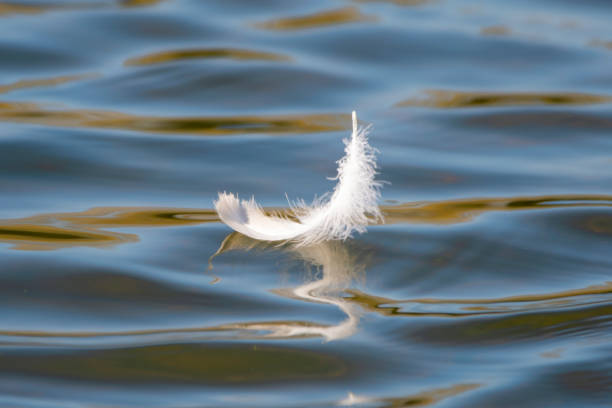
Not my photograph. Free image.

Two nights ago, I went down to the lake just to float. Dusk was still a couple of hours away, but the sun had softened. It wasn’t as relentless, and neither was I.

My favorite season at the lake is winter—on the deepest, windiest days. The sand turns to stone beneath my feet, frozen solid. The gulls scream into the sky like something primal and furious. And the waves? They don’t roll—they reach. They claw toward the shore, grabbing at the sand, dragging bits of it back to the cold, dark belly of the water. It’s stark. Wild. Beautiful in a way that feels honest.

My second favorite time is summer—just before the sun goes down. The heat has broken. Most of the crowd has packed up, leaving behind footprints and laughter in the air. It’s quieter then. The beach stops performing. The lake exhales. And in that softness, it’s easier to just be.

By the time I got there, the beach was near perfect. The sun had dipped low, casting gentler light. A few scattered people lingered. Small waves rolled in, steady and unhurried. The water was cool, not cold. A long shadow stretched across the lake from the lighthouse, like even the light had grown contemplative.

As I floated farther out, I saw a perfect white down feather drifting nearby. The waves swelled just enough to propel it forward without pulling it under. I thought, Well, that has to be a metaphor.

Ride the waves. Don’t let the grief drown you.

Then I thought, That’s too on the nose. Too tired. Surely that couldn’t be the lesson.

As I twirled gently in the water, I saw the lighthouse shadow growing closer. The real lighthouse stood in the distance, still and sure, casting a long dark shape across the surface.

Grieving parents live with the shadows of what life used to be, I thought. We have to find a way to stay in the light.

But that wasn’t it either. That thought didn’t feel right. It felt forced, too polished to be true.

The seagulls cried above me, their haunting screams echoing across the sky. Their voices always touch something in me. I’ve written about them before, about the winter lakeshore and how it mirrors my inner landscape. Grief, embodied. I’ve written about it enough to know that, in this moment, I had nothing new to say.

In all actuality, I didn’t figure out what – if anything – the lake had to teach me until later that night.

Not while I was floating. Not while I was squinting for messages in feathers or light. But much later, while I lay in bed.

The house was still. That kind of deep, sacred quiet that only comes when the day has finally given up. And maybe I had, too. I wasn’t hunting for meaning anymore. I wasn’t trying to pin purpose to every ripple.

I just was.

Earlier, as I had floated, I told myself to stop worrying about what I needed to learn. To stop dissecting every detail for meaning. I let my head fall back. I extended my arms beside me, closed my eyes, and let the moment hold me.

As I’d been taught in counseling, when feeling overwhelmed, I checked in with my five senses.

The smell of the lake was slightly fishy, yet clean.

Distant boats sped by in the background, their hum a kind of white noise beneath the occasional gull call.

I tasted a bit of lake water on my lips, gritty from the sand.

The light beyond my eyelids changed—soft pink to blue, then violet—as clouds passed across the low sun.

But it was the feel of the water that rooted me. The gentle rocking of the float beneath me. My arms lifted and fell with the swells. My feet dangled lower than the rest of me, brushing the colder waters below.

I felt weightless.

I felt cradled.

I felt peace.

Later that night, in bed, I could still feel it. The coolness of my skin. The sensation of water. It was as if the lake had rinsed something off of me, something that had been gathering on my surface for a while.

Grief residue. Thought loops. The ache of trying too hard to make sense of what may never be made sense of.

I felt… cleansed.

And that’s when the realization came.

Yes, we must find our own truth in this journey. Yes, we must seek meaning, search for signs, ask the unanswerable questions. We must question grief.

But we also have to stop chasing. We have to allow space not to know.

Yes, we grieving parents are seekers. We reach for answers. We demand meaning. We beg for signs: Why don’t I see them? Is my child mad at me? Do they still exist?

So many of us feel haunted by silence, wrecked by the absence of proof.

We want to believe our children are near, still part of us, still somewhere.

And yet, sometimes the deeper truth is this:

The burn to understand will exhaust us. The hunger for truth will leave us hollow. The endless grasping will not bring them back.

There is wisdom in the pause. There is grace in the unknowing.

Not trying to figure it all out is just as important as seeking answers. Maybe more important, for the soul.

We have to make space to be still. To unplug. To remain idle. To refill what grief depletes.

As I lay there that night, the peace was still with me.

The next day, I tried to call it back. Tried to summon that sense of floating, of being held.

It was already harder.

And today, it’s harder still.

That’s the nature of moments like that. They aren’t permanent. They don’t live inside us unless we choose to keep making space for them.

The lake held me longer than I expected—but only because I stopped reaching.

Some truths can only be heard in the silence after we stop asking.

On Sunday

This morning started full of intentions. After a full night’s sleep, I felt rested and upbeat. The kind of rested that feels rare. The kind that makes you believe in possibility again.

A whole day stretched out before me like clean canvas – quiet, unhurried, entirely my own. Paint. Write. Read. Maybe fit in a load or two of laundry. Little things, but meaningful. Pieces of a day that might have felt whole.

I got up and got ready to meet two friends for breakfast – an old coworker and my manager. Familiar faces. Easy conversation.

Stuffed peanut butter French toast. A warm cup of coffee. Laughter. The comfort of people I’m familiar with. 

Sunday was off to a good start. By the time I got home around 11 a.m., I felt light, maybe even hopeful. Like maybe this would be one of the soft Sundays.

And then – quietly, inexplicably – everything shifted.

It’s like grief and memory sometimes wait until you’re standing still. Until your guard is down, the coffee’s settled, and the toast has been digested. They don’t always arrive with fanfare.

Sometimes they just . . . slip in. Quiet as breath. Heavy as fog.

I had a beautiful, warm morning. And then – without warning – the air changed.

Sitting on my bed, I felt a heaviness settle over me. Not like sadness exactly. More like inertia. Like something unseen had layered itself over my shoulders and made movement feel pointless.

The light in the room looked the same, but I didn’t feel the same in it. It was as though a curtain had been pulled between me and the day I’d planned.

Nothing loud. Nothing dramatic. Just a soft detachment. Like I was watching the hours move from the other side of the glass.

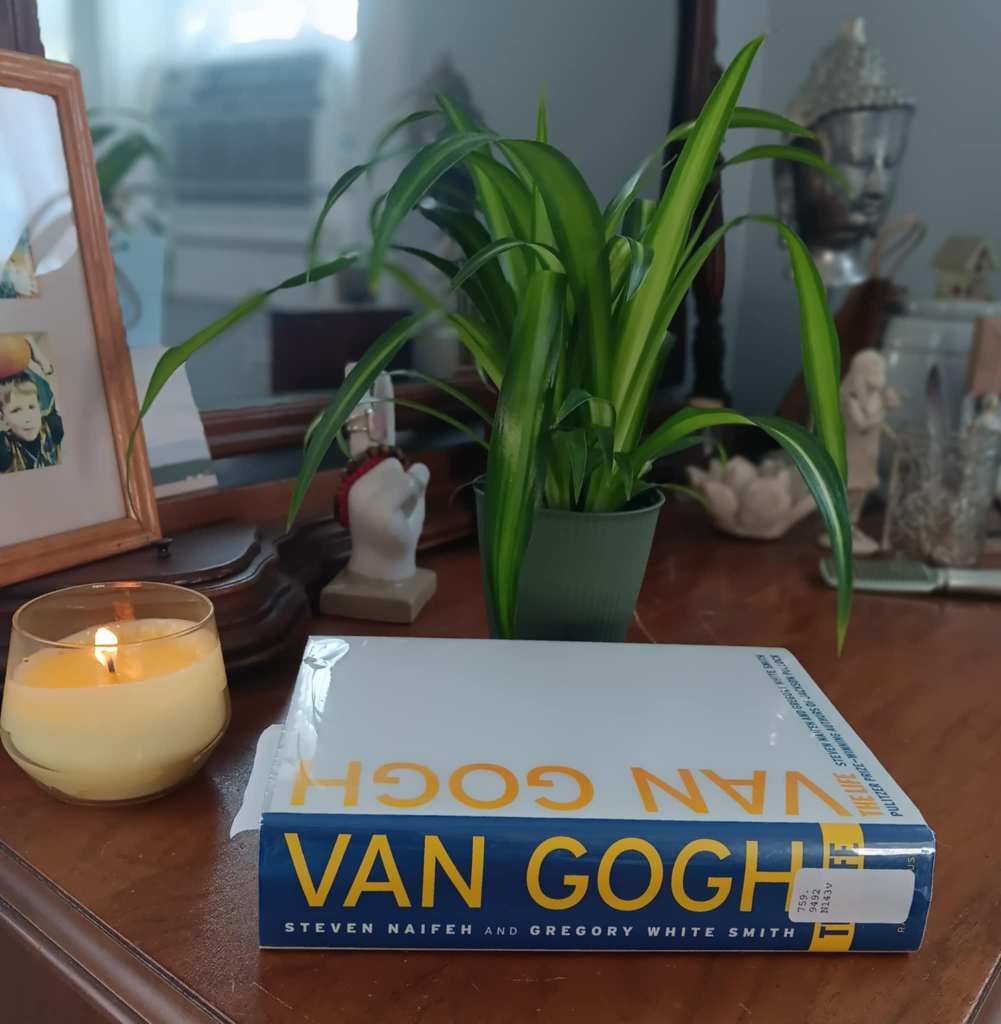
I glanced at the book on my dresser – Van Gogh: The Life – his story calling out in color and ache. But I couldn’t bring myself to open it. I couldn’t carry his sorrow today alongside my own.

I dipped a brush in paint, hoping muscle memory might override the fog. But nothing came out the way I wanted. The colors felt wrong. The strokes were clumsy. The image in my mind never made it to the page.

Still, I pushed through—because it felt like I should accomplish something. I wanted the act of finishing to save me. To prove I hadn’t wasted the day. But the finished piece wasn’t what I’d hoped for. It wasn’t what I needed.

And that’s when the familiar voice crept in—the one that says, Why bother? The one that dresses itself in logic but reeks of loss. The one that pretends to be practical, but is really just grief in disguise.

Because here’s the truth I keep learning. Grief doesn’t need permission. It doesn’t need a trigger or a tidy narrative arc. It doesn’t even need a reason.

Sometimes it’s just Sunday. And sometimes Sunday is enough.

Maybe it’s the echo of all the Sundays that came before. Those restless childhood days when Becca felt a sadness she couldn’t name. She’d act out, and I, not yet knowing how to read the language of her heart, mistook it for misbehavior.

It wasn’t until she was older that I understood: She was never trying to be difficult. She was just feeling too much. She was just being human on a day that always seemed to ache.

And maybe it’s the Sundays I carry from my own memory.  The ones when the boys were little. Sundays when I didn’t have to work, when we could stay in our pajamas too long, when the house was filled with their laughter and bickering and cartoons and pancakes and the soundtrack of a life I loved.

Sundays meant all three of them were with me. No school. No rush. No obligations. Just the soft kind of togetherness that mothers memorize without even meaning to.

But even then, Sunday evenings brought their own kind of grief. Because I knew Monday was coming. They’d go back to school. The world would take them again. And I would miss the way the house felt when we were all inside it, breathing the same air.

So maybe the sadness doesn’t just come from loss. Maybe it also comes from love. From having had something beautiful and knowing what it felt like to hold it. From remembering the sacredness of the ordinary.

And maybe it’s that Sunday too—the one that began just after 2 a.m., with a phone call. A shattering. A dividing line between the life I had and the life I live now.

Even when I don’t consciously think about it, my body remembers. My spirit remembers. And sometimes the weight of remembering outweighs the joy of intention.

That doesn’t mean the morning was a lie. It means that joy and sorrow can live side by side. That a day can begin in light and still gather shadow by nightfall.

And maybe that’s okay.

Maybe all that’s asked of me today is to name it. To say: It shifted. To acknowledge that I did what I could. To forgive the rest.

And to let that be enough.

On The Ones That Are Discarded

A Gentle Warning:
This piece tells the story of a very small life lost far too soon. It includes descriptions of a dying puppy and the emotional toll such losses take. I’ve written it with deep tenderness, but I know how hard these stories can be. If you need to protect your heart today, I understand.

Each of us saw the box as we pulled into the clinic parking lot that morning. Set right at the front door. Not the back, where donations of pop bottles or dog food are usually left. The front door placement felt intentional, like someone needed to leave something behind but couldn’t bear to face what they were doing.

We entered the clinic in silence. My coworker and I locked eyes, and neither of us had to say it aloud: this wasn’t going to be good. We headed through the clinic to the front door and unlocked it. 

You learn to read the signs in this line of work. A sealed cardboard box. No air holes. No note. A little too quiet. Sometimes they hold trash. Sometimes they hold trauma. And sometimes, both.

We went out together. That’s an unspoken rule in vet med—you don’t open death alone. You brace one another. In case it’s a kitten thrown out like garbage. A turtle frozen solid. Or a puppy someone couldn’t be bothered to keep warm.

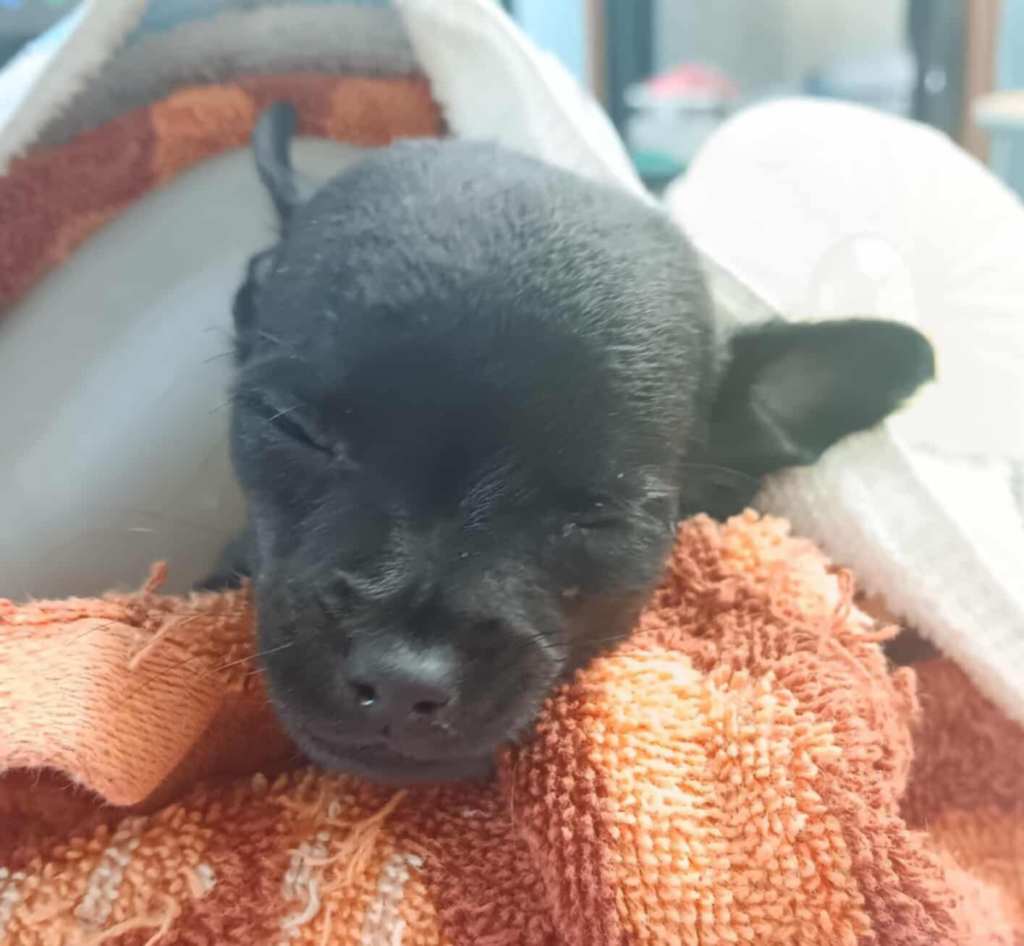
We opened the flaps. Inside was a mound of old towels, rumpled and damp with the kind of moisture that comes from breath, or fear. She reached in first and slowly picked up a corner. Just enough to peek beneath.

And then – black fur. A tiny tail.

And then – movement.

Just the smallest tremble. A twitch, really. And then, a slow, gentle wag.

That tail moved like it had been waiting for us. Like our voices woke up something that had nearly gone still. It wasn’t frantic. It wasn’t afraid. It was… happy.

That was the moment my throat closed.

“Oh fuck,” I said, because what else do you say when a dying animal greets you like a friend? When the thing you feared was dead is worse—almost dead—and still trusting?

My coworker reached in and lifted him out. I grabbed the box and followed her inside. We didn’t talk much. We didn’t need to. Everyone in the clinic started getting the things ready we needed to save a life. We just moved—fast, practiced, a kind of muscle memory that overrides heartbreak until there’s time to feel it.

In surgery, we laid him on the warming table and unwrapped the towel. And there he was. A miniature black Chihuahua, maybe a month old. Bones pressing sharp beneath thin skin. Eyes dull but still trying to track movement. A body almost out of fight. But still – somehow – alive.

He should’ve been curled up in a nest of littermates, belly full, dreaming about nothing at all. Instead, he was dumped outside a clinic in the dark, left to shiver and fade. Alone.

And still – he wagged his tail. Each of us talked to him. Willing him to stay with us.

We named him Sherman.

It’s the name of the street our clinic sits on, and it was the only thing we could give him that morning besides warmth and presence. But it mattered. No animal should pass unnamed. Unseen. Unloved.

Sherman died surrounded by hands that tried. Hands that moved fast and knew what they were doing, but were still too late. And when he left, I leaned down and kissed the top of his tiny head. His fur was still damp from warming towels. His body impossibly small.

“I’m so sorry,” I whispered. “I’m sorry we couldn’t save you.” Every one of us said our goodbyes to him. 

Then we had to get up.

Because it was minutes before 9 a.m., and the door had to be unlocked. The phones were about to ring. Clients would be arriving with their pets – dogs pulling on leashes, cats in carriers, questions in their eyes, trust in their voices. We didn’t have the time to grieve. There was no room to cry. Not even ten minutes to sit down and let it all land.

So we stood.

We reset our faces. Wiped our hands. And stepped into the day.

For the next seven hours, we kept moving. Cleaned kennels. Drew blood. Trimmed nails. Reassured nervous owners. Checked vitals. Delivered test results. Scheduled surgeries. Celebrated recoveries. Held space for the dying. Smiled. Nodded. Spoke softly.

We did the job.

And inside, we were still holding that box. Still hearing the shuffle of a tail on old towels. Still seeing that tiny flicker of joy in the final minutes of a life discarded.

That’s the hidden part of this work—what we carry between exam rooms. The grief we stuff into pockets so it doesn’t spill in front of clients. The anger we swallow because there’s no space for rage when you’re talking someone through puppy vaccines. The sadness that gets pushed down so far it sometimes takes days to find it again.

Sherman became part of that inner terrain. One more name stitched onto the quiet quilt of losses we never really get to lay down.

Each of us who does this work – this quiet, often invisible labor of care – has to find a way to carry the weight without letting it break us. We don’t always talk about it, but we feel it: in our backs, our bones, our dreams. In the moments between appointments when the room is quiet and we finally exhale.

As for me—pain is a language I already speak. I carry it every day.

But I’ve learned something over the years: some sorrow doesn’t stack heavier on the old grief. Instead, it folds in, becomes part of the whole. My soul doesn’t shatter under the weight—it expands. Makes room. Not because I’m stronger than anyone else, but because I’ve had to. Because there was no other choice but to find space where there wasn’t any.

That doesn’t mean it doesn’t hurt. It does. Deeply.

But I no longer fear the pain. I know how to hold it. I know how to whisper goodbye and still move forward. I know how to bend without breaking.

We go on because they deserve that. Every small life. Every discarded soul. Every wag of a tail that says, I still believe in you.

Sherman’s gone. But he was not unloved. Not unseen. Not unnamed.

He was here. His story is now part of my story. 

And I will remember.

On A Small Kind Of Magic

The next generation held gently in mine.

The house was full. Full of children, full of noise, full of that particular kind of wild that only happens after time spent on the shore of Lake Michigan. They were sun-kissed and overtired, yelling over each other in bursts of joy and complaint. One of the little ones had begun to cry—too much fun always spills over somewhere.

Amid the chaos, I sat quietly, holding a cup in my hands like an anchor. It was one of those moments where the edges blur and something deeper stirs beneath the surface. I watched it all like a woman half in this world and half in another—the chaos around me a blur, the stillness inside me something hard-won. I used to dread moments like this, where joy and absence collided. Now, I just breathe through them.

Gabriel was seated across from me, his shoulders soft with fatigue. Julia, his partner, walked up behind him and wrapped her arms around him. I heard them exchange quiet I-love-yous—just for each other, but not hidden. A small, sacred thing passed between them.

Moments later, Alexa emerged from the kitchen with something she’d made for Matthew. He looked up and said, “Thank you, love,” without hesitation. The kind of love that doesn’t need ceremony. The kind that has settled in, becomes part of the rhythm.

And right then, in the middle of the noise and the movement and the mess of real life, I felt the room bend toward something holy.

The sunlight, low and golden, flickered through the trees and spilled through the window, stretching across the wooden floor. And for a moment, I saw her.

My Becca. Smiling. Standing in that beam of light as if it had carried her in. I didn’t move. I was afraid if I blinked, she’d disappear. But I wasn’t afraid of her. I was afraid of losing the moment.

Her eyes followed the children as they ran and tumbled and squealed through the house. She laughed—not aloud, but with her whole face. I didn’t hear her voice, only the faint melody of a wind chime from outside, like a sound remembered rather than heard.

My breathing slowed. My heartbeat quickened. And then she turned to me.

That smile—her enormous, heart-splitting smile—lit her face like it always had. Like she had never left. Like she was just standing on the other side of time.

And then she was gone. But not really. Not ever.

Later, when the children had calmed and the night began to stretch out soft and tired, I went home. 

Sitting alone in my room I thought: This is what remains. Not just the grief. Not just the missing. But this—the life that still surrounds me, the love that grows, the magic that still dares to show up.

And here’s the part I couldn’t have imagined, years ago: That I’d be able to see it. Because in the early years, I couldn’t.

Grief narrowed my vision to what was gone, what would never be. Every joyful moment was filtered through the ache of Becca’s absence. Her missingness sat at the center of every gathering, louder than the laughter, sharper than the light.

But something changes—not quickly, and not easily. And, more importantly, never completely. 

Over time, grief loosened its grip just enough to let in other things. Love. Laughter. Sunlight. Not instead of Becca, but alongside her.

I didn’t stop grieving. I never will. But I learned to hold both truths at once: That she is gone. And that there is still good.

And in that moment last night—children spinning, love spoken quietly across the room, and Becca in the light—I didn’t just see the beauty. I accepted it.

Not as a betrayal of her memory. But as an offering she would want me to receive.

It’s not that the ache has gone. It never will. But it has made room. And when moments like this arrive—when love spills out of my sons, when my grandchildren’s laughter fills the air, when Becca visits on a beam of sunlight—I don’t brace myself. I open. I accept. And I thank her for staying near.

On The Death Of A Man I Already Grieved

Me, around four years old. Smiling for the camera while carrying things no one yet knew.

When my father died, the grief had already passed through me. Not the grief of losing him—but the grief of never having him in the way a daughter deserves.

The loss wasn’t new. It had begun in my late teen years, deepened in early motherhood, and sealed itself the day I realized silence and blame were his only language.

There was harm. He was physically abusive to me—not as a child, but later, as an adult. He broke my nose more than once. He choked me to the edge of unconsciousness. And each time, I was told it was my fault. That I didn’t know when to be quiet. That I pushed too far. That I brought it on myself.

And even earlier, when my uncle molested me, my parents responded the best way they knew how at the time. They found someone—a student counselor they trusted—and sent me to her. But it didn’t help. Later, when I sought true therapy as an adult, my father raged again.

“Leave the past in the past,” he said. As though silence could erase pain. As though survival meant forgetting.

And then, when Becca died, they swooped in — rushing to offer what they called help.

The truth is, I couldn’t help myself in those early days. I was drowning. But their help wasn’t comfort. It was control. The same old patterns, wearing the costume of concern. And soon enough, their version of help shifted into blame. They held me responsible — for her death, for how I had raised her, for daring to walk a different path than the one they wanted me to walk.

That was the final rupture. A day near the first anniversary of Becca’s death. The day I chose distance was the day I chose life. To protect my sons. To protect what was left of me. To begin again.

But not everything was broken. There was one moment I carry still — a memory that lives untouched by all the rest.

When Becca was born, I had planned to release her for adoption. I believe my parents thought it was the best choice. After her birth, she was taken from me immediately. My father never went to the nursery to see her — I learned later he thought it would be too painful.

But a few weeks later, when I chose to bring her home, everything changed. I rode back with the adoption agency representative, returning to my house in the deep cold of a Michigan January. And as we pulled into the long, snowed-in driveway, I saw him waiting.

He stood near the road, afraid the car carrying his granddaughter might get stuck or slide into the trees. He had never seen her face, but as he lifted the car seat from the back seat, he could hear her soft cooing under the blanket. The air was too frigid to pull it back, so he carried her carefully, listening to the little sounds she made as he walked her up through the snow.

In that moment, he allowed himself to love her. In that moment, there was only the simple, pure act of a grandfather carrying his granddaughter safely home.

When word came that his life was ending, my sons gently asked if I wanted to speak with him. If I needed closure. But I didn’t. The closure had already come—not in words, but in the space I had built between us. I think if you had asked him, it was they, my family, who chose to walk away from me. That’s fine. Maybe it was. 

When he passed, a distant cousin sent a single heart emoji. That was the message. As I told my sons, my throat tightened—not for him, but for the ache of what never was.

There were no tears. The grieving had been done long before. Those were my son’s exact words. “You grieved him a long time ago mom”. 

But as I spoke to each of them I realized this truth:  They are fathers now—present, kind, steady. They are everything he could not be for me. Their children know safety. They know tenderness. They know unconditional love.

The cycle ended with them. And in them, something new grows: The kind of fatherhood that heals what once was broken.

Some grief comes like a sudden storm. Some arrive like a drought you’ve already survived. His death was the latter. But my sons — they are the rain that followed. Proof that love can grow where harm once tried to root itself.

And still — I allow for this:

I know his childhood was hard. Maybe he did the best he could. Maybe not. Maybe he simply failed. But wherever he is now — wherever we all eventually find ourselves — I believe the bigger picture is finally clear to him. He sees his mistakes. He sees mine, too.
 

And I believe this: Becca was there to meet him. Her arms wide open. Because that is who she is.

I hope he has found peace. I truly do.

On The Communion Of Grief

There is a ritual I have come to recognize, and hold dear, among grieving mothers. It is not held in temples or churches or under official signs. It happens in parking lots, across chipped coffee cups, beside hospital beds, in Facebook comment threads at 2 a.m. It happens when you least expect it, but it is entirely appropriate. It happens when one mother says the name of her child, and another doesn’t look away.

Most people do. They look down, or change the subject, or fill the silence with something too bright. I used to take it personally, but now I know—it’s not cruelty. It’s fear. Grief, especially the grief of a mother, terrifies them. 

But every once in a while, grief finds someone who understands.

It happened once while I was working the front desk at the clinic. A woman I knew came in, usually bright and chatty, but that day she was unraveling—red-blotchy face, trembling voice. She tried to hold it together just long enough to buy flea prevention for her dogs.

When I asked gently if she was okay, she stammered. Quietly, like a confession, she said: I lost my son. He committed suicide.

Without thinking, I stood up and walked around the counter. I wrapped my arms around her, right there in the middle of the lobby. People stared. I didn’t care. She mattered. Her loss mattered. She needed someone to hold the weight of it with her, even for a minute. She needed to say his name.

I saw her again about a month later. She thanked me for my kindness, but more than that—for not flinching when she said the word suicide.

She told me how much it meant to be able to say her son’s name without watching someone recoil. I nodded, and told her what I know to be true: You deserve to speak his name.

She reminded me of something I already knew but needed to feel again: we carry the need to speak our children’s names like breath.

We tell the story of our child innumerable times. Again and again and again.

Sometimes I only say, “My daughter died in a crash.” Sometimes I say her name and let it hang. Sometimes, when someone really wants to know, I tell them about the poetry, the joy, the light she left behind. I remember one time in particular—we were on a farm, she was around five, riding on the back of a pony while I led it by the reins. I looked back at her. The wind was blowing her blonde hair, her head thrown back, and she was laughing—that laugh. A whole-body laugh. Pure joy. The kind of joy you don’t forget, even after everything else is gone. I want people to know about my daughter. Not just how she died but how she lived.

We are good at listening, too. Knowing what the other person is willing to hear. We don’t need to take that into consideration when talking to another bereaved mother. 

With them, we don’t have to scan the room for exits. We don’t have to explain why we still cry years later, or why certain dates crush our lungs. We just speak. And they nod. It’s the rarest kind of ease. Grief without apology.

Not because we’re afraid we’ll forget. Not because we haven’t accepted the death of our child. But because the story is what we have left. It’s how we mother, now. It’s how we include our child in our everyday life still. It’s how we survive. 

There’s a rhythm to it—an inhale when we say their name, an exhale when we reach the moment they left. Some of us tell it with clinical precision, like an autopsy report. Others spin it like poetry, fractured and strange. Some cry every time. Some haven’t cried in years. But we all need to tell it.

Because grief unspoken calcifies. Because their life deserves an audience. Because silence is too heavy to carry alone.

When another mother listens—really listens—not with sympathy but with knowing, something sacred passes between us. We become witnesses for each other. We say: Yes, I hear you. Yes, that was real.

Being witnessed doesn’t undo the grief. It doesn’t fix it. But it makes it bearable. It makes it human. It reminds me I’m not just a mother who lost a child—I’m still Becca’s mother. I’m still here. 

We are midwives to memories. Midwives don’t just deliver—they guard, soothe, hold steady when the pain comes. So do we. We breathe with each other through the contractions of memory. We place gentle hands on old wounds to remind each other we’re still here, still real. We whisper, You’re not alone. You can do this. I’m right here. And when the story breaks open again, we help gather the pieces, wrap them in warmth, and say, Look. Look what love made.

And in the telling, a tiny burden lifts. The story never gets lighter. But we get stronger from the lifting.

And when I tell Becca’s story—when I speak her name into a world that keeps moving forward without her—I am drawing her back into it. Not as a ghost, not as a shadow, but as a force. A daughter. A person who was and is, because I remember.

Because I say her name.

Because I tell the story

And because I tell it, she remains.