On Care That Doesn’t Save

Reader note: This essay addresses animal injury and end-of-life care.
Photograph by the author.


I couldn’t believe what I was seeing—a tiny animal moving near the curb. I swore out loud, because I already knew it wouldn’t end well.

I believe that when you see an animal in need, it becomes your responsibility to respond. You don’t get to turn away. Maybe that’s why dying things find me. Or maybe they’re placed in my path.

Late last summer, during an unbearable heatwave, I was driving home from a long day at the clinic. Sick animals, a euthanasia, broken air conditioning—everything had frayed me thin. I just wanted to go home. I didn’t have the emotional energy to deal with another animal in need. Instead of passing by and doing nothing, I rounded the block and came back.

Before I even reached the street, I saw the remains of a rabbit nest dragged across a freshly mowed strip of lawn between the sidewalk and the road. I was immediately angry. Someone had to have seen it—if not before, then after—and still left its inhabitants scattered and helpless.

Before I could do anything, a crow swooped down, picked up a squirming baby bunny in its beak, and flew into a nearby tree. It settled on a branch beside another crow. I turned away before I had to witness what would happen next. I yelled. I started to cry.

Frantic, I searched the grass and didn’t see any other babies. Then I peered over the edge of the curb into the street, where I’d first noticed movement. One tiny rabbit was still alive, trying to right itself. Afraid the second crow would spot it, I scooped it up and wrapped it in the hem of my scrub top. It was covered in ants. Blood trickled from its nose. Both eyes were missing. I knew it wasn’t going to live.

I could have left it there, or I could take it with me—to the clinic—and help it pass quickly and completely.

I called the vet and told her what had happened. She wasn’t there anymore, but she told me to meet her back at the clinic. The fact that she came back speaks volumes about her integrity.

During the drive, I wailed. I told the baby I was sorry it would never get to live its life. I cried for the one carried away by the crow. I cried for the others I knew must have been in the nest, too.

When I arrived, my coworker had turned on the surgery table so it was warm—maybe comforting. We laid the baby down. The vet examined him. Breathing was labored and uneven. We all knew. She prepared the euthanasia solution and injected it. The three of us stood quietly around the table, hands resting on or near him. Tears fell. We waited. We listened for a heartbeat. He was gone.

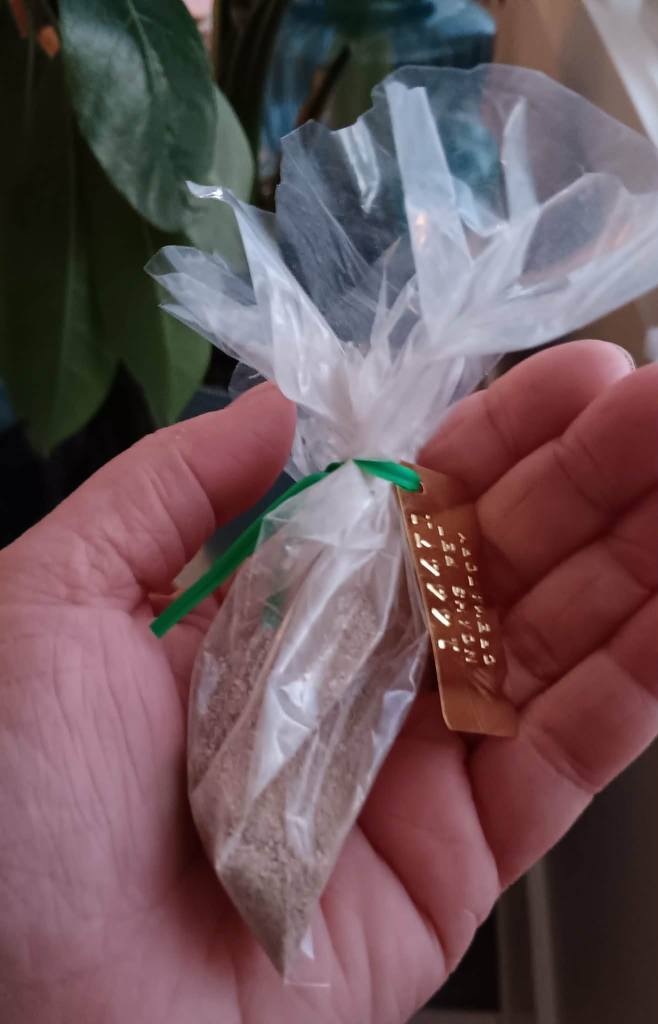
My coworker prepared his body for cremation. I didn’t know she’d requested the ashes be returned. When they came back, the label read: Steve — baby bunny. She had cared enough to give him a name. I brought him home.

The bag inside the tin held the smallest amount of ashes I have ever seen. They fit easily into the palm of my hand. They’re still on my dresser, next to my daughter’s ashes. I had planned to scatter the bunny’s ashes under some flowers, but part of me felt I was rushing his life into and out of mine too quickly.

I needed him to exist a little longer.

I had planned to scatter my daughter’s ashes, too. That was always the intention. It’s been nearly twenty years, and I still can’t. I know she isn’t in the urn. I know the rabbit isn’t in the tin. But I can’t. Not yet.

This spring, I plan to buy a flowering bush and plant it over the bunny’s ashes, placing a small stone rabbit nearby. No one else will know he’s there. But I will.

The earth held his body once before, in the nest. It will hold him again. There is something right about that—about returning him to the ground that tried, briefly, to keep him alive.
On A Moment Remembered

Some moments stay with us long after we think we’ve moved on. Today, a woman I didn’t immediately recognize reminded me of one of those moments—one I had nearly forgotten, but she had not. A quiet kindness during her dog’s final goodbye. A gesture that meant enough to bring her to tears a year later.

It caught me off guard but it reminded me that compassion has a way of lingering. Sometimes the smallest acts echo the loudest.

Image not of the author or Maddie. Chosen for symbolic representation of the bond we share with our animals.


Today was one of those perfect West Michigan summer days. Low eighties, little humidity, a breeze off the lake. Downtown hummed with life. Children laughing, birds chirping, the flea market buzzing two blocks away. A line stretched outside the art museum, and big, soft clouds floated across the sky. It was the kind of day that makes people fall in love with small towns.

I was working a fundraiser for the veterinary clinic where I work, a low-cost nonprofit that helps people care for their beloved pets. We don’t receive government funding, so we rely on donations. Today’s event was a “pub pedal” that brought together five local rescues. Volunteers sat at participating eateries to stamp “passports” and enter people into drawings.

I was stationed outside one of the new restaurant buildings. Because our town is small and tightly woven, I saw a lot of familiar faces – clients, friends, people I couldn’t always name but whose animals I remembered. That’s often the way it goes. I remember the dogs before the people.

A woman passed by on her way to the restroom and said she’d grab her stamp on the way out. I turned to my fellow volunteer and said, “I know her. I don’t know from where, but I know her.”

When she returned, she looked at me and said, “I know you from somewhere.”

Then she said, “Oh, you helped me with my do—” (let’s call her Maddie), and her voice broke. She turned away from me, hand covering her mouth, eyes tightly shut. I stood up and walked around the table to hug her, though I still didn’t know what moment she was remembering.

She tried to speak but had trouble finding words. Her tears came quickly and didn’t stop for a while. When she was finally able to talk, she told me I had been in the room when Maddie passed.

“You were incredible,” she said.

She remembered how I wrapped my arm around her when she was falling apart. How I gently positioned myself to block her view when it came time for the final injection – so her last memory wouldn’t be the needle, but Maddie’s face.

“You were so kind,” she said. “You made something unbearable feel a little less alone.”

And as she spoke, the memory returned. Exam Room 1. Her husband was there, his arm around her shoulders. They were both crying. I remember her heartbreak at saying goodbye to Maddie. I remember his grief too – but now I realize, some of his tears were for her. For the weight she was carrying. For the loss she was experiencing that he could not stop. 

Summer bustled on around us. People walked past, chatting, laughing, heading to lunch. And there we stood. She hugged me again – one of those long, anchoring hugs, the kind you give someone who helped you survive something you thought you couldn’t.

She cried into my shoulder while the sounds of the day kept going. The two of us, in a little pocket of memory, held still while everything else moved.

It’s rare to know if you’ve made a difference. That day with Maddie was nearly a year ago. I hadn’t thought about it in some time. But today reminded me: the smallest gestures matter. Presence matters. People remember how you made them feel – especially in the hardest moments.

I’m not sharing this to say, look what I did. I’m sharing it because this kind of work – the quiet, emotional, often invisible labor of love – matters.

And sometimes, if you’re lucky, the world hands that truth back to you.

We move through the world so quickly. Errands, events, weather talk. But sometimes, something breaks through – a glance, a hug, a memory returned – and suddenly we’re face to face with a moment that asks us to stay. To bear witness. To soften. These are the soul moments. The quiet confirmations that love – whether for a person, a dog, a stranger – is never wasted. If you feel one, pause. Let it hold you. You may not remember the day. But someone else just might.

And, this is what life is about.