On A Moment Remembered

Some moments stay with us long after we think we’ve moved on. Today, a woman I didn’t immediately recognize reminded me of one of those moments—one I had nearly forgotten, but she had not. A quiet kindness during her dog’s final goodbye. A gesture that meant enough to bring her to tears a year later.

It caught me off guard but it reminded me that compassion has a way of lingering. Sometimes the smallest acts echo the loudest.

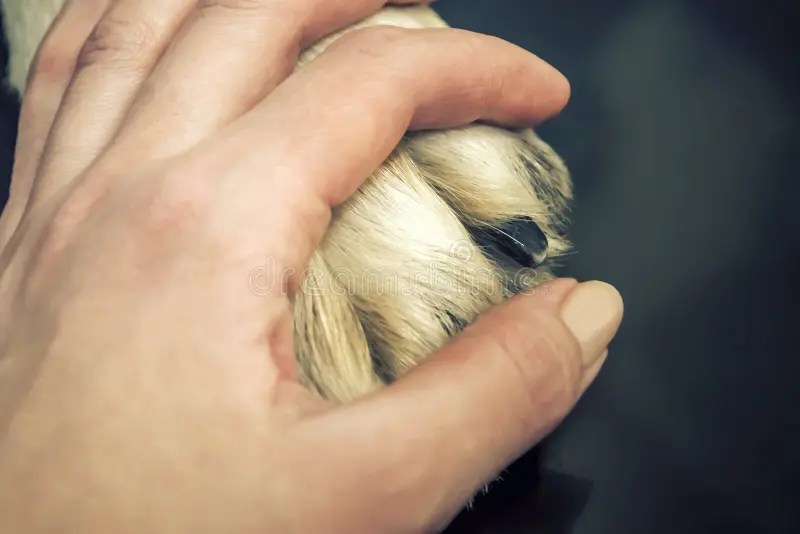
Image not of the author or Maddie. Chosen for symbolic representation of the bond we share with our animals.


Today was one of those perfect West Michigan summer days. Low eighties, little humidity, a breeze off the lake. Downtown hummed with life. Children laughing, birds chirping, the flea market buzzing two blocks away. A line stretched outside the art museum, and big, soft clouds floated across the sky. It was the kind of day that makes people fall in love with small towns.

I was working a fundraiser for the veterinary clinic where I work, a low-cost nonprofit that helps people care for their beloved pets. We don’t receive government funding, so we rely on donations. Today’s event was a “pub pedal” that brought together five local rescues. Volunteers sat at participating eateries to stamp “passports” and enter people into drawings.

I was stationed outside one of the new restaurant buildings. Because our town is small and tightly woven, I saw a lot of familiar faces – clients, friends, people I couldn’t always name but whose animals I remembered. That’s often the way it goes. I remember the dogs before the people.

A woman passed by on her way to the restroom and said she’d grab her stamp on the way out. I turned to my fellow volunteer and said, “I know her. I don’t know from where, but I know her.”

When she returned, she looked at me and said, “I know you from somewhere.”

Then she said, “Oh, you helped me with my do—” (let’s call her Maddie), and her voice broke. She turned away from me, hand covering her mouth, eyes tightly shut. I stood up and walked around the table to hug her, though I still didn’t know what moment she was remembering.

She tried to speak but had trouble finding words. Her tears came quickly and didn’t stop for a while. When she was finally able to talk, she told me I had been in the room when Maddie passed.

“You were incredible,” she said.

She remembered how I wrapped my arm around her when she was falling apart. How I gently positioned myself to block her view when it came time for the final injection – so her last memory wouldn’t be the needle, but Maddie’s face.

“You were so kind,” she said. “You made something unbearable feel a little less alone.”

And as she spoke, the memory returned. Exam Room 1. Her husband was there, his arm around her shoulders. They were both crying. I remember her heartbreak at saying goodbye to Maddie. I remember his grief too – but now I realize, some of his tears were for her. For the weight she was carrying. For the loss she was experiencing that he could not stop. 

Summer bustled on around us. People walked past, chatting, laughing, heading to lunch. And there we stood. She hugged me again – one of those long, anchoring hugs, the kind you give someone who helped you survive something you thought you couldn’t.

She cried into my shoulder while the sounds of the day kept going. The two of us, in a little pocket of memory, held still while everything else moved.

It’s rare to know if you’ve made a difference. That day with Maddie was nearly a year ago. I hadn’t thought about it in some time. But today reminded me: the smallest gestures matter. Presence matters. People remember how you made them feel – especially in the hardest moments.

I’m not sharing this to say, look what I did. I’m sharing it because this kind of work – the quiet, emotional, often invisible labor of love – matters.

And sometimes, if you’re lucky, the world hands that truth back to you.

We move through the world so quickly. Errands, events, weather talk. But sometimes, something breaks through – a glance, a hug, a memory returned – and suddenly we’re face to face with a moment that asks us to stay. To bear witness. To soften. These are the soul moments. The quiet confirmations that love – whether for a person, a dog, a stranger – is never wasted. If you feel one, pause. Let it hold you. You may not remember the day. But someone else just might.

And, this is what life is about. 

On The Ones That Are Discarded

A Gentle Warning:
This piece tells the story of a very small life lost far too soon. It includes descriptions of a dying puppy and the emotional toll such losses take. I’ve written it with deep tenderness, but I know how hard these stories can be. If you need to protect your heart today, I understand.

Each of us saw the box as we pulled into the clinic parking lot that morning. Set right at the front door. Not the back, where donations of pop bottles or dog food are usually left. The front door placement felt intentional, like someone needed to leave something behind but couldn’t bear to face what they were doing.

We entered the clinic in silence. My coworker and I locked eyes, and neither of us had to say it aloud: this wasn’t going to be good. We headed through the clinic to the front door and unlocked it. 

You learn to read the signs in this line of work. A sealed cardboard box. No air holes. No note. A little too quiet. Sometimes they hold trash. Sometimes they hold trauma. And sometimes, both.

We went out together. That’s an unspoken rule in vet med—you don’t open death alone. You brace one another. In case it’s a kitten thrown out like garbage. A turtle frozen solid. Or a puppy someone couldn’t be bothered to keep warm.

We opened the flaps. Inside was a mound of old towels, rumpled and damp with the kind of moisture that comes from breath, or fear. She reached in first and slowly picked up a corner. Just enough to peek beneath.

And then – black fur. A tiny tail.

And then – movement.

Just the smallest tremble. A twitch, really. And then, a slow, gentle wag.

That tail moved like it had been waiting for us. Like our voices woke up something that had nearly gone still. It wasn’t frantic. It wasn’t afraid. It was… happy.

That was the moment my throat closed.

“Oh fuck,” I said, because what else do you say when a dying animal greets you like a friend? When the thing you feared was dead is worse—almost dead—and still trusting?

My coworker reached in and lifted him out. I grabbed the box and followed her inside. We didn’t talk much. We didn’t need to. Everyone in the clinic started getting the things ready we needed to save a life. We just moved—fast, practiced, a kind of muscle memory that overrides heartbreak until there’s time to feel it.

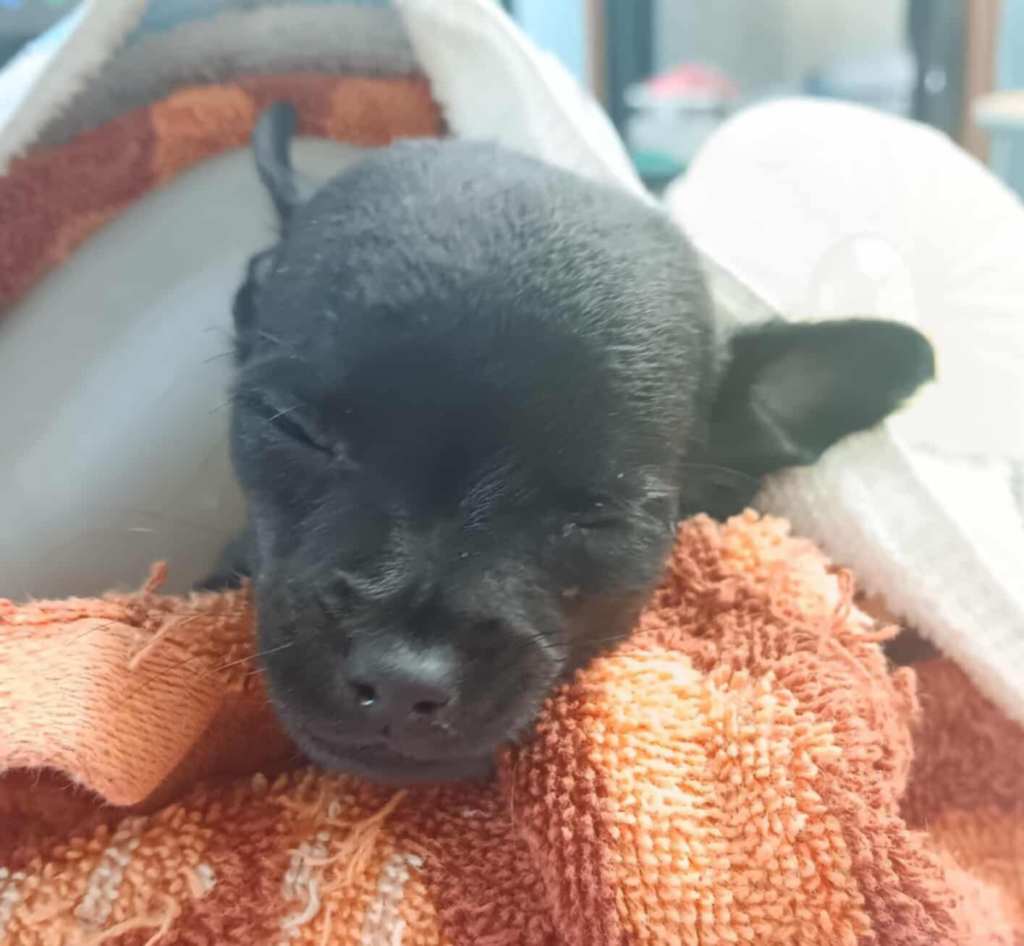
In surgery, we laid him on the warming table and unwrapped the towel. And there he was. A miniature black Chihuahua, maybe a month old. Bones pressing sharp beneath thin skin. Eyes dull but still trying to track movement. A body almost out of fight. But still – somehow – alive.

He should’ve been curled up in a nest of littermates, belly full, dreaming about nothing at all. Instead, he was dumped outside a clinic in the dark, left to shiver and fade. Alone.

And still – he wagged his tail. Each of us talked to him. Willing him to stay with us.

We named him Sherman.

It’s the name of the street our clinic sits on, and it was the only thing we could give him that morning besides warmth and presence. But it mattered. No animal should pass unnamed. Unseen. Unloved.

Sherman died surrounded by hands that tried. Hands that moved fast and knew what they were doing, but were still too late. And when he left, I leaned down and kissed the top of his tiny head. His fur was still damp from warming towels. His body impossibly small.

“I’m so sorry,” I whispered. “I’m sorry we couldn’t save you.” Every one of us said our goodbyes to him. 

Then we had to get up.

Because it was minutes before 9 a.m., and the door had to be unlocked. The phones were about to ring. Clients would be arriving with their pets – dogs pulling on leashes, cats in carriers, questions in their eyes, trust in their voices. We didn’t have the time to grieve. There was no room to cry. Not even ten minutes to sit down and let it all land.

So we stood.

We reset our faces. Wiped our hands. And stepped into the day.

For the next seven hours, we kept moving. Cleaned kennels. Drew blood. Trimmed nails. Reassured nervous owners. Checked vitals. Delivered test results. Scheduled surgeries. Celebrated recoveries. Held space for the dying. Smiled. Nodded. Spoke softly.

We did the job.

And inside, we were still holding that box. Still hearing the shuffle of a tail on old towels. Still seeing that tiny flicker of joy in the final minutes of a life discarded.

That’s the hidden part of this work—what we carry between exam rooms. The grief we stuff into pockets so it doesn’t spill in front of clients. The anger we swallow because there’s no space for rage when you’re talking someone through puppy vaccines. The sadness that gets pushed down so far it sometimes takes days to find it again.

Sherman became part of that inner terrain. One more name stitched onto the quiet quilt of losses we never really get to lay down.

Each of us who does this work – this quiet, often invisible labor of care – has to find a way to carry the weight without letting it break us. We don’t always talk about it, but we feel it: in our backs, our bones, our dreams. In the moments between appointments when the room is quiet and we finally exhale.

As for me—pain is a language I already speak. I carry it every day.

But I’ve learned something over the years: some sorrow doesn’t stack heavier on the old grief. Instead, it folds in, becomes part of the whole. My soul doesn’t shatter under the weight—it expands. Makes room. Not because I’m stronger than anyone else, but because I’ve had to. Because there was no other choice but to find space where there wasn’t any.

That doesn’t mean it doesn’t hurt. It does. Deeply.

But I no longer fear the pain. I know how to hold it. I know how to whisper goodbye and still move forward. I know how to bend without breaking.

We go on because they deserve that. Every small life. Every discarded soul. Every wag of a tail that says, I still believe in you.

Sherman’s gone. But he was not unloved. Not unseen. Not unnamed.

He was here. His story is now part of my story. 

And I will remember.