On The Love That Outlives Safety

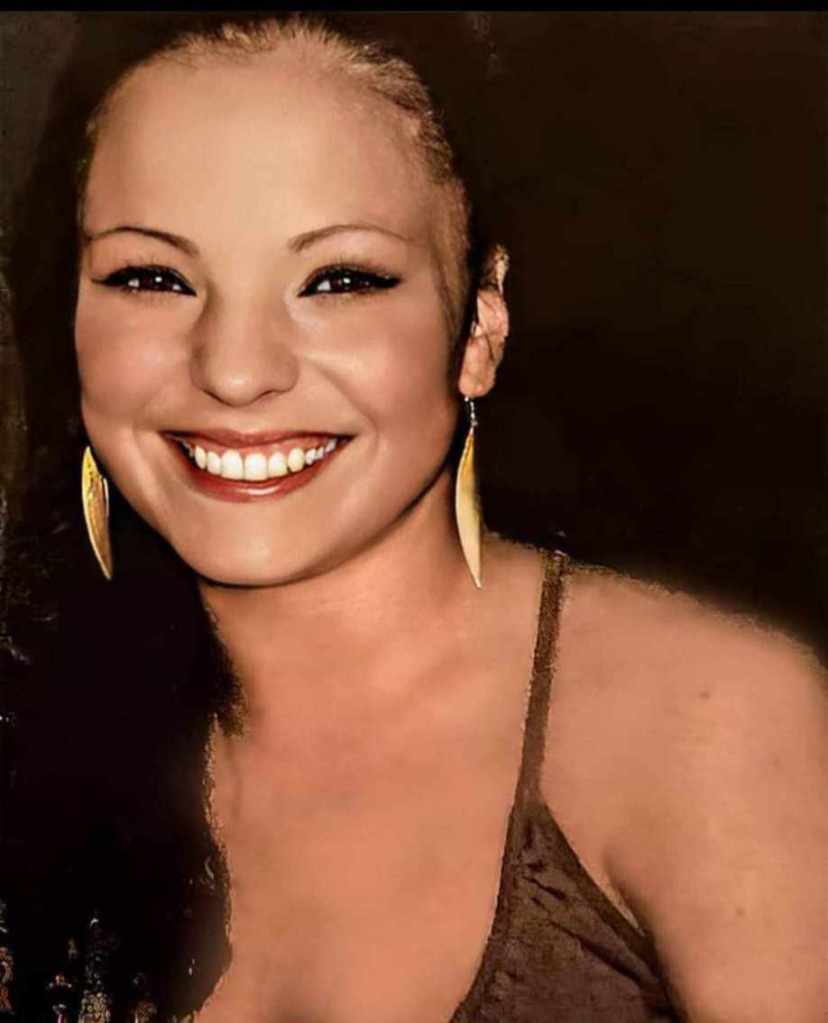
This photo was taken just hours before her life was taken. I share it not to mourn what was lost, but to honor who she was.

She was five the first time she disappeared. Just long enough for my body to forget how to breathe. Just long enough to taste what it might mean to lose her. I got her back that day. Years later, I wouldn’t.

I was at work when I was told I had an important phone call. Panic didn’t set in until the new babysitter said Becca had never made it to her house after school. This was a babysitter Becca had met her a few times. She’d been at the house once. She was to be dropped off at the front door by the school bus. For whatever reason . . . this failed to happen.

This was the first time I knew: the world would not keep my child safe. 

Hurried phone calls were made. From the bus garage I learned the driver had not let my daughter off in front of the babysitter’s house as was the normal protocol. Instead, she let a five year old get off the bus at an intersection more than half a block from where she needed to be. The driver did not tell my child which direction to go. The bus door was shut and the driver pulled away. Leaving a scared confused little girl standing vulnerably at a busy crossroads.

All I could see in my mind was the smallness of a five-year-old girl and the indifference of a school bus door shutting behind her. My hands trembled as I hung up the phone, only to pick it back up and dial the police.

I was frantic. Words spilled out in the wrong order—too many at once, none of them calm. It took a full minute before the voice on the other end could piece together what I was trying to say.

Officers would be dispatched immediately, I was told.

But that didn’t bring peace.

My daughter had been missing for nearly an hour. That meant she’d been wandering—alone, scared—for far too long.

It was a teenage girl who saved her.

Walking home from school, she saw my daughter—small, crying, and clearly lost. She didn’t ignore the scene. She didn’t keep walking. She took Becca’s hand and walked her slowly through the neighborhood, up and down the streets, until they came upon the right house.

A police car was parked out front.

The moment they saw my daughter, they knew it was her. The clothes matched the description I had given them. A puffy pink winter jacket with fur. White boots. She was safe.

Later, Becca told me a man had pulled up in a car and asked her to get in. Said he would help her find the house.

She didn’t get in.

To this day, I don’t know if he meant to help or if something darker lived behind that invitation. I try not to let my mind go there, but it does.

Two hours passed from the time the bus driver let her off to the moment she was found.

Two long hours when it was hard to breathe. Hard to move. Hard to speak.

One hundred and twenty minutes in which I did not know if my daughter was dead or alive. Or whether I would ever see her again.

I got her back that first time.

I wrapped her in my arms and promised she was safe now. That I would never let anything happen to her again.

But safety is a fragile thing. It only stretches so far.

There would come another day. Another phone call. Another stretch of time where I didn’t know if my daughter was dead or alive.

Forty-five minutes. Not as long as those two hours when she was five, but infinitely heavier.

Because part of me already knew.

I knew she was in trouble. I knew it was bad. But until someone said the words out loud—until they confirmed it was her—there was still that small, desperate hope. The kind that gasps for breath. The kind that claws at time. The kind that doesn’t survive the truth.

I kept her safe when she was small. I fed her, clothed her, and taught her to look both ways. But I could not teach the world to love her the way I did. I could not make it hold her life as sacred.

I knew this wasn’t going to end like it had when she was five.

That night, unease wrapped itself around me and wouldn’t let go. I couldn’t name it, but something inside me knew: something was about to happen, and it would change my life. Irreversibly.

The call came in the early morning hours.

But before the phone ever rang, I felt her.

Becca sat on the side of my bed and stroked my leg the way she always did when she wanted to wake me gently. I stirred, confused—why would she have come over in the middle of the night?

I opened my eyes, expecting to see her. Expecting the outline of her body, the glow of the hallway light behind her.

But there was no one there. No shape. No shadow. Only the certainty of her presence.

I could feel her. I could smell her.  She had touched me. And I knew.

I sat up in bed, searching for her. But I already knew I wouldn’t find her there.

The air was too still. The silence too loud. And then I looked at the phone. The message light was blinking. That blinking light. It felt like a countdown. Like the final seconds before the world collapsed.

The message was from my parents.

“Becca’s been in a crash,” my mother said, her voice uneven. “And it doesn’t look good.”

I would later learn that another driver had seen the accident and ran to help. He reached the car, saw her, and knew she was beyond help. She was already gone.

He found her phone and pressed redial. The last number she had called. My parents.

I can’t explain why, but I find comfort in that – that one of the last things her phone did was reach for the people who loved her. That someone was there, even for a moment, trying to reach back.

Again, I found myself in a space of time when I didn’t know, for certain, if my daughter was alive.
A stretch of minutes where I held that fragile hope like I had eighteen years earlier, when she was a lost child.

Hope is cruel in those moments. But it’s all we have. Hope keeps you upright, even when it rips through your insides like glass.

It asks you to imagine your child still breathing. And then punishes you when she’s not.

There’s something that happens to a mother’s body when she spends time in that liminal space. Between the not-knowing and the knowing. Between she might still be alive and she is dead.

It rewires you.

Something primal stretches thin. The nerves stay coiled. The heart never really goes back to beating in rhythm with the world.

After the first time, when she was five and lost, I learned that safety is a myth. That all it takes is one careless act – a bus door closing too soon, a turn in the wrong direction—for everything to unravel.

After the second time, when she was killed, I stopped believing the world cared about keeping anyone safe at all. 

I walk through life differently now. Suspicion hums under the surface. Joy feels like a dare.
Trust has to be earned in ways I can’t always explain.

The truth is:

Even when everything looks okay – even when the sun is shining and the news is good and the children are laughing – my body is always half-ready to grieve again.

It’s not anxiety. It’s memory. A memory so deep it lives in my marrow.

Because I have stood in that unbearable place where a phone might ring and everything might end.

After she was found at five, I never again assumed she’d be safe just because she was supposed to be. After she died, I never again believed the world had any interest in protecting what I loved.

Grieving mothers wait. We wait for hope to return only to feel it slip through our fingers like mercury – impossible to hold. Impossible to let go. 

I’m sorry I didn’t keep you safe my Becca. 

But I never stopped loving you with every part of me that remains.

On The Things I Say Instead Of Telling You My Daughter Is Dead

Unfiltered survival. Taken on a night I didn’t know how to keep going—but did anyway. Image credit: Diane Neas

Note to the reader: This piece is about the coded ways grieving mothers speak. It’s about what we say to survive the unbearable, and what we leave unsaid. If you’ve lost a child, I hope this helps you feel less alone. If you haven’t, I hope you’ll read with an open heart.


I have a list of answers I give when someone asks me how I am doing. They vary depending on how close to the surface my grief is that day. Well, truthfully, it’s always just beneath my skin like a bruise that never fades. Press too hard and it pulses to the surface.

I say “fine,” even when I’m not.

I say “hanging in there,” even when I’m unraveling. 

I say “stabilized, eating, eliminating”. That is considered a good outcome in the animal world. 

I say “living, laughing, loving,” and you laugh, which is the goal—because if you laugh, you won’t ask what I really mean.

I have an entire vocabulary now. Most bereaved mothers have learned this language. One that says just enough to end the conversation, but not so much that it opens us wide.

Because the truth? The truth is that she died. And I didn’t.

And I still don’t know what to do with that.

So instead, I answer in code. I give you the version of me you can handle. I’ve learned to protect your comfort at the cost of my truth. Because if I told you what it’s really like…you would never ask again.

But I’m protecting myself, too. There are days when telling the truth would cause me to implode on the spot. Days when I’m just trying to make it from sunup to sundown. I’m not lying to you. I’m giving myself space to take a breath.

When I say “alive” I mean: unwilling to die even if I wanted to. 

When I reply “functional” I mean: still broken but making it through.

When I sarcastically say “living, laughing, loving”  I mean: I’m not doing any of those things right now. Or maybe I am, but not in the way you think. Not the Hallmark version. This is survival with a grimace, not a glow. This is gallows humor in a forced lighthearted tone. 

So you can laugh, not be uncomfortable and I can stay hidden. 

Most people don’t want to know that children die. That love isn’t always enough. If they let it in—even for a moment—it would ruin the myth that our children are safe. That we can protect them. That we’re in control.

As much as I wish that were true… it simply isn’t.

And that truth is so devastatingly huge, so unbearable, that most people have no choice but to ignore it. Because how could anyone live every moment of every day waiting for their child to die?

I live on the other side of that coin. I am waiting for my child to come back to life.

Child loss grief isn’t tidy. It isn’t neat. It’s infinite. All consuming. Not to say other deaths don’t shake us. They do. But the death of a child tears through the center of our lives. It shatters the order we were promised. The order we were prepared to follow.  

And our society doesn’t do well with grief, either. Friends, neighbors, coworkers, even well-meaning strangers – they want us to be done with it. They want us back to normal. Quickly. Quietly. Without disrupting the world around us too much. Or, maybe more accurately, without touching their world for any length of time. As if, somehow, child death is contagious. 

As if proximity to our sorrow might summon tragedy of their own.

We are the cautionary tale no one wants to hear. The proof that it can happen. The walking reminder that love doesn’t guarantee survival.

We are the poster parents for dead children. We are what happens when the nightmare doesn’t end, when there’s no miracle, no second chance, no waking up.

When the life you lived with your child has come to its unnatural end.

Then comes the quiet aftermath. People stop asking—at least, not in the way they used to.
They stop wondering how you’re doing in this new life. Because they can’t hear it.

To truly listen would make it tangible. And they don’t want to know.

To hear it again—to really hear it—feels heavy to them.
Too much.
Too dark.
Too real.

To ask is to invite the specter of child death into their lives,
as if their own child might be noticed and taken.

We are wreckage that still breathes. We are left in a darkened theater, the spotlight fades, and we clutch our child’s life story to our chest. 

Still, we get up. We feed the pets. We answer emails. We smile at the barista. We make it to work. We carry our grief like an extra organ. Heavy, but vital. And we find strange, sacred comfort in others who carry it, too. Not because we’re healing, exactly—but because we’re still here. And being here means something. It has to.

Eventually, people start asking again – but differently. The urgency fades. The specificity disappears. You’re no longer asked how you are in relation to the death of your child. You’re asked the way we ask a dozen people in a single day.

“How are you?”

Like there’s only one possible answer.  Like the biggest thing that ever happened to you isn’t sitting right behind your eyes, waiting. So, instead of being honest, we speak in our code. Speaking in code is its own kind of fluency. 

And sometimes – on the rare, quiet days – we say “fine,” and it’s almost true.

Not because the grief is gone, but because, for a moment, it isn’t the loudest thing in the room. 

And, that too, is survival.

If this resonated with you:
I see you. Whether you’re speaking in code or holding your story in silence, you are not alone. Take your time. Grief has no outline you need to follow.

On The Quiet Work Of Still Mothering

Mothering doesn’t stop after the death of a child. It simply shifts into a kind of prayer. We find a way to carry love beyond the edges of this life.

Their life begins with us in the most intimate way, and sometimes, it ends this way, too. Even when death separates us, nothing can sever the otherworldly tether. Our bodies knew theirs. Our hearts shaped theirs. That intimacy doesn’t end—it just becomes invisible to everyone else.

After she died, my mothering didn’t disappear. It just had nowhere to go.

I didn’t realize this for a long time. That deep need to keep mothering my deceased child was all-consuming. I went from expansive, all-encompassing mothering to the implosion of that care after loss—and the desperate need to put it somewhere.

Before, mothering was in everything: meals, plans, worries, dreams. Death collapses all that vastness. And when it does, the absence doesn’t feel quiet—it feels feral. This can feel like madness. It did for me.

Without knowing I was doing it, I began creating a space where I could still care for my daughter. It started with a simple instinct—the same quiet rhythm I once used to fold her clothes or lay out her favorite books beside her bed. I began gathering things. Placing them near her urn. Not with ceremony, just with care.

Little by little, a kind of altar formed. Not to worship. Not to heal. Just to keep mothering.

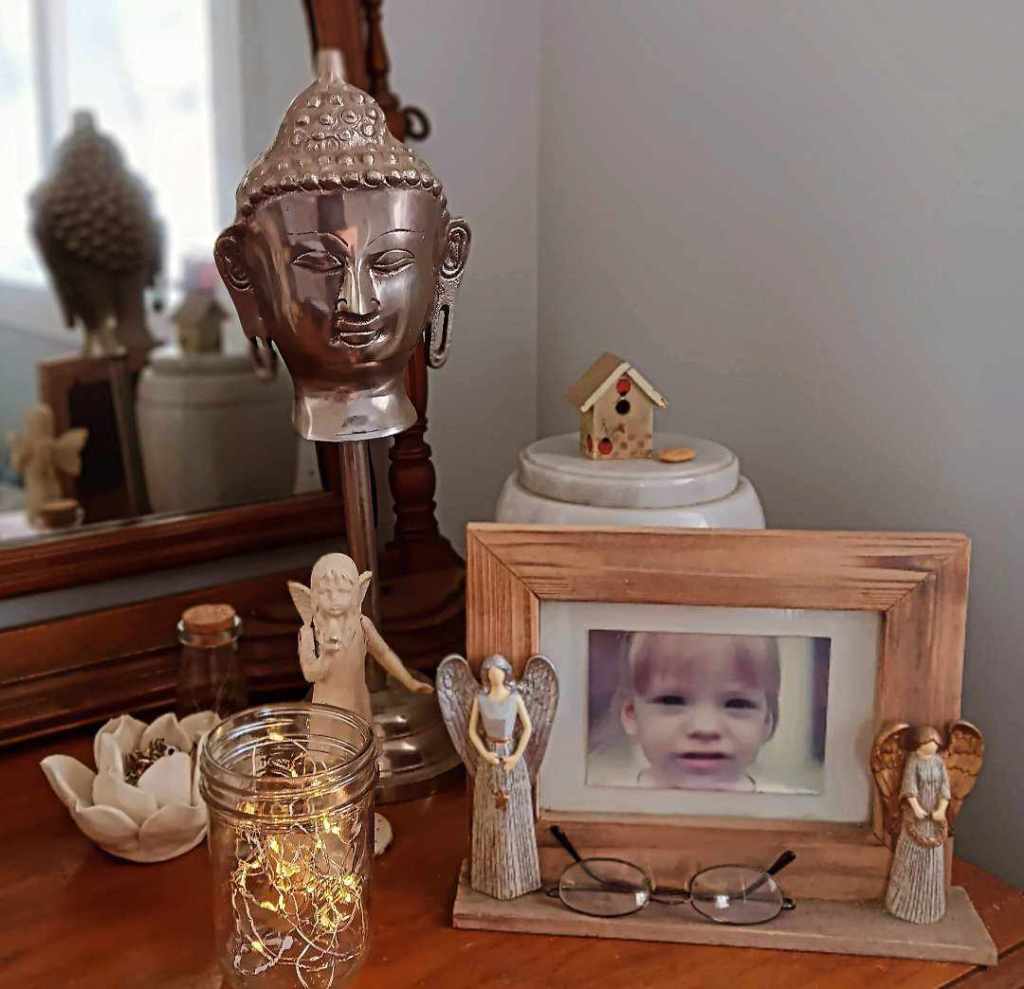
In my home, I’ve made a small altar for Becca. It sits on my dresser. 

Her urn is marble—cool, smooth, solid. It rests behind a photo of her as a little girl, maybe three years old, with her sweet, mushy lips and soft cheeks. Just looking at it makes my heart skip. Her glasses are nestled at the bottom of the frame. A gift from a friend, the angels on the frame cradle her image like a relic.

To the left is a mason jar filled with fairy lights. I turn them on for her when the nights feel heavy. Behind it stands a white metal statue of a young girl with wings, a bird resting in her hand. My sister gave it to me, saying it reminded her of Becca. We don’t speak anymore, but I’ve kept the statue. Some things still belong.

There’s a peaceful Buddha head that sits nearby—not for religion, but for the sense of calm it offers me when I look at it. On top of her urn is a tiny ladybug house she received as a gift when she was young. Next to that there is a small smooth stone I brought home from Sicily. I know she was there with me. 

There’s also a delicate, flower-shaped votive holder. I don’t use it for candles. I tuck inside it the jewelry I’ve been given by my children—gifts from the ones still here, resting beside the one who isn’t.

Behind it, there’s a tiny glass jar filled with cat whiskers. I can’t seem to throw them away. When I find one, I keep it. I don’t fully know why—but it feels like something sacred. Something she’d understand.

This is one of the ways I keep mothering.

I mother through my work, too—through the animals I care for, especially the ones who have been hurt or forgotten. I mother in quiet, invisible ways every day.

But this… this is different.

This is the intimate space between mother and daughter. The one place where I am still doing only for her. No one else. Just her. Just me. Just love that hasn’t stopped.

I’m not the only mother who does this. We all find our own ways to keep mothering.

Some visit their child’s grave weekly, sometimes daily, tending the space as carefully as they once tended their child’s room. I’ve seen mothers kneel beside headstones, gently scrubbing away moss with water and a soft cloth, whispering as they work. Sometimes they lie down on the earth itself—stretching their bodies across the grass, as if to wrap themselves around the child who rests below.

Others return to the place where their child took their last breath—a roadside, a quiet clearing, a stretch of sidewalk—and turn it into a sacred place. Flowers are left. Rocks are painted. Names are written again and again. These places, transformed by love and grief, say: You were here. You mattered. You still do.

These acts may seem small to outsiders. But they are essential. They give us something to hold. Something to clean. Something to protect. A place for our hands to go when our arms are empty.

One does not simply stop being a mother when the child is gone. That’s one of the hardest truths of child loss—we are still mothers, just with no child to mother in the ways the world recognizes.

We are left with silence in the space our child once filled. A silence so loud it can feel like it might break us. And into that silence, we pour what remains of our care. We light candles. We straighten photos. We gather little trinkets, or brush leaves off gravestones, or place our hands on the earth and whisper, I’m still here. I will always be here.

This is not denial. It’s not unhealthy. It is love, made visible.

Continuing to mother after death is not holding on too tightly. It is holding on rightly—to the truth that love does not end when life does. And so we build our small altars. We tend them as we once tended scraped knees and tangled hair. They are not substitutes. They are sacred spaces where we place the mothering that still lives in us.

And in doing so, we remember: we are not alone in this.

All over the world, in quiet corners and sacred places, other mothers are still mothering too. There are small altars. Sacred shelves. Sun-warmed headstones. Jars of buttons. Half-folded blankets. Unopened birthday cards. There are mothers who tuck notes into the soil, who leave offerings at crash sites, who talk to the sky in whispers only their child would recognize.

We each find our own way. We create places where our mothering can still live. Places where we can do, when so much was taken. Places where we can say, again and again, I remember. I still love you. I always will.

These acts may be quiet. They may be unseen. But they are not small.

They are the threads that keep us tethered—not just to our children, but to ourselves. And to each other.

This is how we keep mothering.

On The Space Grief Carves For Care

When I was told that Kimchi was coming in tomorrow for spay surgery my first words were: no, I don’t want to see her. My immediate reaction was to shut down seeing her again because letting her go had been difficult. 

Kimchi is the momma dog I fostered after she gave birth at our shelter to seven puppies. She’d been surrendered because her owners could no longer care for her. In the immediate days following the birth of her puppies, five of them passed. I was asked if I would take her home, with her two remaining babies, and foster until the puppies were able to be adopted. I said yes. 

Loving fully and completely knowing it will end in a goodbye is a bravely foolish thing to do. 

Two days after she came to my home one of her babies died. A daughter. This left me with a petite dog who was fiercely protecting the one baby she had left. I understood why she couldn’t trust me. Why she curled protectively around her one remaining baby. Life is hard to trust when your baby dies. 

Kimchi didn’t have to explain her grief to me. I was already fluent in it.

I recognized the wild grief in her eyes because I’ve seen it in my own. The kind of grief that makes you curl around what’s left, even if it hurts. I, too, am a mother who lost a daughter. I, too, once stood over a body that no longer breathed and didn’t know how to go on. So I didn’t ask Kimchi to trust me. I simply sat nearby, heart open, until she chose to.

Six weeks later I found myself completely in love with this little cream-colored dog and could feel my heart breaking as I drove her to the shelter to meet her new family. As I walked out of the visiting room, leaving her behind, I sat in my car and broke down. I told myself: you did it. You did what you promised to do and now it’s done. 

I hadn’t thought about seeing her again, ever, but especially not so soon after saying goodbye. 

Yesterday, I said no. I don’t want to see her. Today, I saw her. 

When she realized I was there she became excited and jumped all over me. I scooped her up and told her how much I missed her. I knew I was going to break again when I said goodbye but I couldn’t help but feel joy in seeing her.

I didn’t want to see her. And yet I asked to be the one to recover her after surgery.

I hovered close as she went under. I needed her to feel safe—even in unconsciousness. 

And when she came out of anesthesia—trembling, crying, her body unsure of where it was or what had happened – I was there. As I held Kimchi, I felt as if I was also holding the part of myself that woke in a world I didn’t recognize—one where my daughter was dead, and nothing made sense. A part of me that was in pain, scared, lonely. A part that cried out, just like she did coming out of anesthesia, unsure of where she was or why it hurt so much. I couldn’t comfort that version of myself back then—not the way I wanted to. But I could comfort Kimchi.

I held her in my lap like a child. Whispered to her like a mother. She wailed, and I spoke softly into the space between us.

I told her about her son. About his sweet, blonde eyelashes and the way he leans into people when he wants love. About how he is filled with confidence no matter what he is doing. I told her she made something beautiful, and that I had kept my promise. That he was safe now. That she could rest. I held her close and whispered all the things I once needed someone to say to me. You’re safe now. You did your best. You are not alone.

“You did good, Momma,” I told her. “Now it’s your turn.”

Her new owner was on his way to pick her up and I felt my heart beat faster. I had to say goodbye to her again and I didn’t know if my heart could take it. I told her how much I loved her and left her with one of my coworkers so she could give her to her owner. I was in the back of the clinic when she came slowly running into the room, looking for me. She’d slipped her harness and had followed me. I gently picked her up and returned her to the front. My heart aching all over again. 

Why do we give ourselves over to loving a creature, a person, when we know it will end in pain. Yes, there is always the chance something will happen and an end will be forced upon us, but why choose it knowingly?

Because the love is worth the breaking. Because what they give us is more than what we lose. 

Maybe the not knowing IS the sacred space. 

Maybe that’s why I do this work.

I can’t mother Becca in the ways I once did. But I can mother the ones who show up broken, confused, too small for the world. I can be there for the tremble after surgery, the first safe sleep, the fear that softens into trust.

Maybe I seek them out. Or maybe they find me—these small ones who are lost or hurting. Maybe they sense something in me, some quiet knowing. I sit beside them. I hold them. I whisper that they’re safe.

Maybe it’s them I’m comforting.
Maybe it’s her.
Maybe it’s me.

Or maybe the lost and hurting find me because somehow they know I can see them. Really see them. The way I wish someone had seen me in the first days after Becca died. The way I still long for her to be seen, remembered, mothered—wherever she is now.

Every act of care is a whisper to her: I didn’t stop loving you. I just had to find new ways to show it.

All I know is that when I care for these fragile beings, some part of my mothering still lives. And it matters. The work doesn’t fill the hole Becca left. Nothing ever has. Nothing ever will. But maybe it gives the hole shape. Edges. Texture. A way to carry it without constantly falling in.

I used to think grief would blur everything—make the world dim and muted. But instead, it sharpened my sight. I see pain more clearly now. I notice the flinch that others miss. The tremble. The look in an animal’s eyes that says I need someone to see me. I recognize it because I’ve lived it. Because I still do.

Grief didn’t take my tenderness—it amplified it. It made me softer in the places that matter and fiercer in the ones that I protect. It turned me into someone who can sit beside the hurting and not look away. Someone who can say: I don’t have to fix you. I’ll just be here while you find your way back.

As I carried Kimchi back to the front of the clinic, her small body pressed against mine, I realized I wasn’t just saying goodbye to a foster dog.

I was saying goodbye to another piece of mothering.

Another moment of fierce, selfless love with no promise of return.

Another act of showing up for the scared and the hurting, simply because I could.

She buried her head in my chest like she used to, and for a breath, I let myself believe that all the love I still carry for Becca—the kind I can’t give her directly—was being received by this little dog who once guarded her son with everything she had.

“You did good, Momma,” I whispered again, unsure whether I was speaking to Kimchi, or to myself.

On The Sanctuary Of My Own Making

My inner safe place is often different each time I visit. The way it appears to me carries the nuances of where my mind is at the time. But there is one thing that is always there, no matter how my sanctuary shifts and changes: the memory of the first time I held her.

I wasn’t supposed to keep her. She was meant to be released for adoption. She was taken away from me immediately after her birth, as planned. But somewhere in the hush of the hospital night, a nurse — not knowing the arrangement — brought her to me for a feeding.

And I touched her. And in touching her, something deeper rooted itself inside me.

It wasn’t logical. It wasn’t planned. It was something far older than paperwork, older than fear. It was a bond sealed in the space between heartbeats, before anyone could stop it.

That moment created the foundation of my sanctuary. It is the place inside me where no one else’s decisions could reach. Only she and I existed there, beyond anyone’s plans or expectations.

No matter what other objects are in my sanctuary, this truth is always here.

It is my anchor.

Those first months after her death, I spent entire days there.

The first time I found my sanctuary, it wasn’t soft. It wasn’t comforting. It was a small, dark hole.

The walls were jagged — rough enough to slice open my skin if I reached out to steady myself. The floor was wet and cold, with no place to sit, no comfort to be had. There was no light. No warmth.

Just the truth — the simple, terrible truth — that she was gone.

Gone and never coming back.

The space was small, because that truth was everything. A single, shattering moment that collapsed the rest of my life beneath it.

But over time, as I began to see not just her death but the destruction it left behind, the space changed.

It grew.

It opened into something cavernous, and that was almost worse.

There were ledges, sudden drop-offs. Unstable footing. The air smelled like warm earth and something ancient — the faint scent of decomposing plant matter, like the forest floor in late autumn.

The sounds I made — the screams, the sobs, the broken words — bounced off the stone walls and came back to me louder than I meant them to be. They shattered against the cavern walls and tumbled into the darkness below, as if even my grief had to fall somewhere.

But then, one day, something shifted.

I heard a voice — a woman’s voice — echoing softly from around a bend.
It wasn’t calling out to me exactly, but I recognized it. Somewhere deep in my bones, I knew it.

It was her. The night nurse. The one who unknowingly undid everything.
The one who, by accident or grace, brought my daughter to me that first night.

She didn’t know the plan. She just saw a baby and a mother and did what made sense.

Her voice in my memory is gentle but clear, like light catching the edge of a wall in the darkness. I follow the sound through the cavern, around the bend, and suddenly — I’m there again.

Back in the hospital.
Back in that moment.
Back in the quiet where I first held her.

And that moment — that simple, sacred, accidental moment — becomes the first thing in the sanctuary that offers me comfort.

And it’s the one thing that is always there when I visit.

The first time I held her.
The moment I didn’t mean to have.
The moment I’ll never let go of.

Though there were times I entered the sanctuary and found memories waiting — uninvited, unexpected —there were other times when I carried them in with me.

Some memories refused to be avoided. They planted themselves firmly in my path, and so I picked them up and descended, holding them close.

Not just the worst memories — but the ordinary ones. The small, intimate ones.
Those hurt more, somehow, than the life-shattering moments.


A mischievous smile. A shared joke. Her voice saying “I love you” in that way that shattered my heart all over again.

Yet through the pain, I was learning how to be again.

Bringing memories down into that space helped me understand them better.
I would sit in the small places worn smooth from previous visits and cradle them to my chest. Places to rest — places where I didn’t crumble under the truth of her death.

I think that’s where healing begins. Not in the outside world, but in the stillness of rest.

And so it went, for years and years. Thousands of visits. Each one reshaping my soul, turning it — slowly, faithfully — back toward the light.

Grief made room for memory. And memory made room for life.

Over the years since her death, my inner sanctuary has undergone immense change. Years passed as the architecture softened and shifted.

As I changed.

Sharp edges wore down as memories and emotions continually washed over them. Towering stone cliff faces — once solid and impenetrable — cracked in places, allowing small beams of sunlight to slip through. The light reached the cavern floor and revealed things I needed to see.

But only when I was ready.

My soul allowed me to acknowledge what it could bear to carry, in its own time.

And then one day, not long ago, I noticed something new.

The gathered light — once scattered and hesitant — had begun to rise.
It spread upward, casting a warm illumination, and for the first time, it touched nearly the entire space.

And I could see. Not just the grief. But the shape of who I had become inside it.

Dozens of memories are nestled among the moss that now covers the stone floor and climbs up the walls. Not all of those moments are happy ones. But I am content they are there. This is how it must be.

I never want to forget anything connected to Becca.

More often these days, though, I see something new. Something from my life since losing my daughter. And there is room for those, too, in my sanctuary.
There is a necessity that they exist among the past.

My core self is still different every time I venture within. I think it will always be this way — until the day I am no longer here. Shifting as my relationship with grief continues to deepen and expand.

I am perpetually becoming.

Becoming as life draws me in and forces me to make changes,
and acknowledge there is still a future for me.

On Becoming Wild

Spring makes me sad, but it used to make me rage. Because what season dares to bloom when your daughter is dead?

Spring is the season of renewal. Months earlier, the earth slowly closed down for a long, cold slumber, with the promise of new life as the seasons turned. As the blanket of winter snow melts the air warms up, and storms start to form. Delivering the rain needed for the new growth bursting forth across the land.

Spring—and its promise of new beginnings—seemed obscene to me in the years following Becca’s death. The only season that felt comfortable to me was winter. Even though it held hard days and anniversaries, I made sense in the frigid days and lengthy nights. My soul was in its own winter, and I accepted this truth.

The first spring after losing my daughter was brutal.

Not only did it betray my idea of the world, it also held court proceedings for the drunk driver who killed my child. So much of it is a blur, memories spinning into each other, but I do remember seething when the sun shone brightly and splashed warmness all around me.

No. Not acceptable.

My world was still in the deepest part of winter.

I was rage-filled because my daughter did not have the hope of a future.
Hers was stolen from her that January night on the dark highway.
Her life was finished. Completed in a way that was not her choice.
Any dreams she had for her life were wiped out in a split second.

Yes, I lost her—but she lost herself.

I had years of this anger. Spring promised what we couldn’t have.

This is our first spring in the new house, so the budding and flowering plants are new to me. There was a rhythm in the old house I was accustomed to watching unfold — including which plants came to life first. Next to the driveway there were five flowering bushes that would show the first buds, then blooms, of the season. I had found them in the dumpster outside a local nursery, small and half-dead, so I dug them out and brought them home.
I had no idea they would take off and grow so big when I planted them.
I felt like I had saved their lives, so I was always happy when I saw them bloom

Various other plants and flowers would arrive shortly thereafter — Tiger Lilies, Lilacs. The Bridal Wreath Spirea was one of my favorites. Its long slender branches spilled over the brick half-wall onto the front porch. The flowers were delicate, but their existence was fleeting.


Much like my daughter’s time here on earth.


I’d sit near them, on a rocker, when I had a chance, because I knew they would soon be gone.

The new house has a whole different variety of plants — a new variety, but much fewer in number. I have a clean slate, of sorts, to plant what we choose.

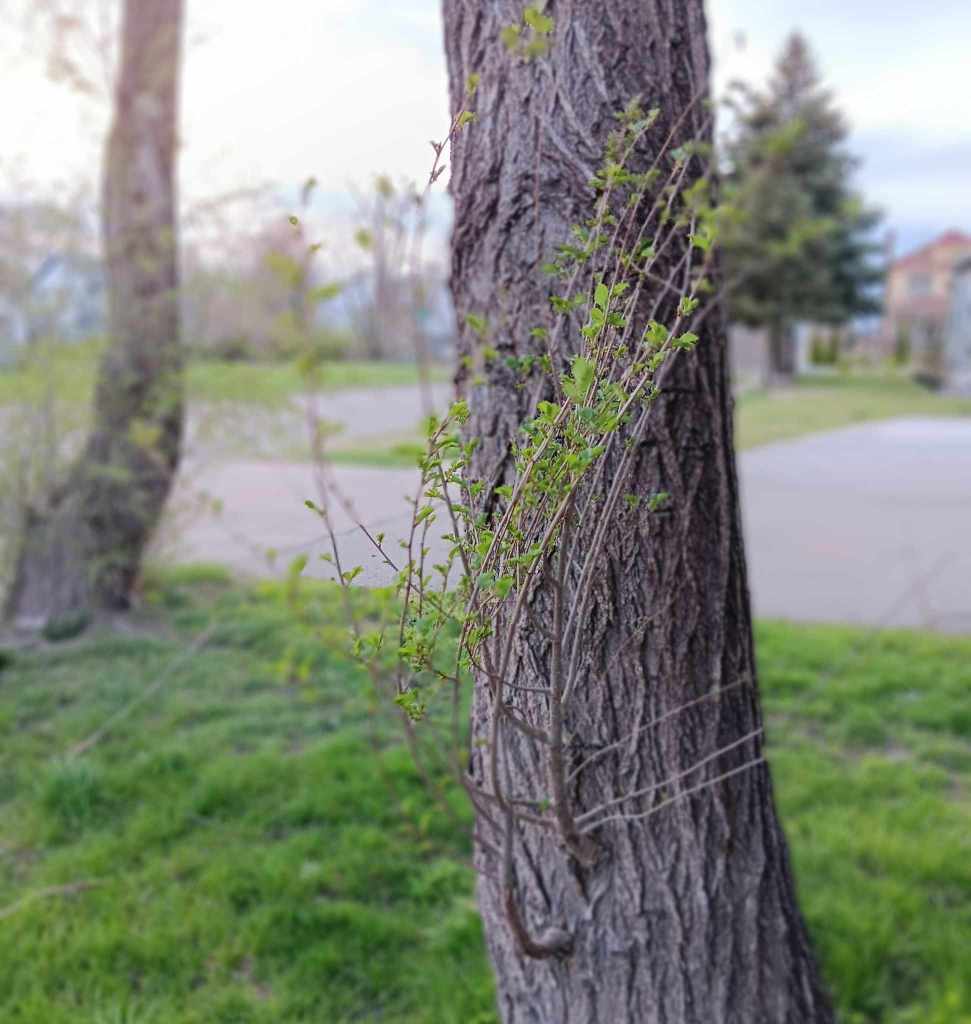
I was sitting on the front steps and noticed a tree on the corner of the yard and the alleyway. It’s a good-sized tree. I’m not sure of the type. The main trunk is probably twenty-two to twenty-four inches in diameter, so I am unsure of the age. Multiple limbs have been removed over the years because they came too close to the roof, we were told. My roommate, the actual owner of the house, mentioned that she might take the whole tree down.

As I was sitting there looking at the tree, pondering its past, I wondered if it hurt when its limbs were removed.

Were the round scars, where life used to be, sensitive?

I felt a sadness because in a few weeks the entire tree might be gone.

Then I noticed something I had not seen before — dozens of thin branches growing from near the base of the tree. I had seen them in the winter when everything was bare, but now they had little bursts of tender green leaves along each one.

Had I thought they were dead and not just in hibernation?

The thought struck me that though the tree had been cut, vital parts of its whole taken away, it still believed in life.

The tree resonated with the innermost parts of who I am as a grieving mother.

Wounded, but still sprouting. Still trying to make something of the light.

To most, I think, those spindly, defiant branches would need to be trimmed off.
They are unsightly, I was told. Left would be dozens of tiny new injuries for the tree to scar over. The hopeful defiance in reaching toward life would end. How tragic.

Losing a child is much the same.

Child loss doesn’t break you. It un-makes you.

You’re no longer who you were before — it’s like every cell was burned down to ash, and only some are able to rebuild. Like the tree, you lose vital parts.But in child loss, it’s not a limb — it’s the roots. Somehow you’re still expected to stand.

And, miraculously, you do stand.

You exist. Waiting.

Waiting for your child to come back.
For all of it to make sense.
To breathe without suffocating from the grief.

I think winter understands this resting — the space between.
The life that held your child and this one that doesn’t. The holding steady.
That is where healing begins, I believe. Not in the exuberant insistence of spring. But in the small places of hibernation. Unseen places.

Our winter of the soul is a different length for each of us. Often, we can spend years in this season. I did. Over a decade, truthfully. Well over.

There is a strange safety in winter. You know what to expect — the bare branches, the muted sky, the sharp air that cuts when you breathe.

You don’t trust spring at first when it comes. You feel the sun one day, unexpected and gentle on your face, and you think — maybe.


Maybe the hold is loosening.

Maybe it’s time to stretch toward life again.

And then the dark clouds gather on the horizon. The temperature drops.
The wind returns with that certain smell — the one that tells you snow is coming, even before you see it. Pushing back against the warmth you dared to welcome.

It reminds you: winter isn’t finished with you yet.

Grief is like that, too.

Just when you think you’ve found your footing again, it howls through the empty places inside you, knocking you off balance. But maybe — just maybe — those moments of warmth aren’t lies. Maybe they are promises.
Not that winter is over — but that spring will, eventually, outlast it.

Then there comes a day when you realize: spring came earlier this year.
Not in the physical world, but in your own. Though it seems the two seasons cannot possibly co-exist… they somehow do. And you find yourself walking through them both at the same time. Winter and Spring. Sorrow and joy.

And maybe this is how healing begins. Life overlaps the pain. We don’t leave winter behind. Instead, we learn to turn toward the sun more often.
To take the places deep inside where our child’s death slaughtered us —
and let the new green shoots of healing take root, and have a chance to grow.

Just like the branches at the base of the tree — too wild for some, too unkempt — that is how healing can appear to the world.

Not pretty.
Not curated.
Not understandable to those who don’t know.

As I sit and admire the tree at our new house, I am struck at how alike we are.

I didn’t plan to survive after Becca died.
I didn’t know how anyone could survive this unimaginable loss.

But survival, it turns out, isn’t always a choice you make.
Sometimes it’s what happens while you are lying broken on the ground. When your soul is in hibernation.

I look at the tree’s tangled base — the low, rough branches, the scars twisting its trunk — and I realize: It didn’t grow that way to be admired. It grew that way to stay alive.

So did I.

Healing didn’t make me prettier.
It made me wilder.

And maybe that’s the truest thing about surviving the unbearable:
You don’t grow back into the person you were.
You grow into someone the world might not recognize —
someone rougher, braver, rooted deeper than before.

Someone who knows that new life doesn’t erase the scars.
It rises up through them.

Don’t Forget Her – Please

I’ve always wondered what the moments immediately following my daughter’s death were like for her. Was she scared? Confused? Angry? Sad? Maybe all of them. Probably all of them. I can let my mind ponder these things for only so long before I dissolve in tears. Recently, I saw a contest that invited the writer to choose one of five prompts and craft a story around it. I chose a simple prompt: write about someone who is afraid of being forgotten. I knew I could use the question to dig down into losing my daughter, Becca. 

None of us want to be forgotten. Not when we are alive but especially after we die. I started to imagine how Becca would have taken some time, before leaving this plane, to ensure she didn’t easily disappear from people’s thoughts. What would she have done? Who would have mattered to her? How could she affect physical action when she no longer had a corporeal body. A story started to form and I decided to enter the contest with my writing.

Those of you who knew my daughter when she was alive understand when I say she is truly unforgettable. Those who never met her . . . I hope my writing brings her to life for you. 

Below is my piece entered into a Reedsy Prompt Writing Contest.  

“Don’t Forget Her, Please”

In the quiet place between life and eternity, the in-between place dividing then and now, there was a girl named Becca. In life she’d had an infectious laughter and a lightness of spirit. Truly a gift to those who knew her. Where she stood now, there was a solemness and her being felt stuck. Becca had died too young, with dreams left unfinished and a heart heavy with the weight of time she would never have.

She had spent her twenty-three years filling journals with poetry, capturing the world in sketches, and weaving laughter into the lives of those she loved. As she had grown it had felt as if time passed slowly. But in the grand scheme of things, she feared it wasn’t enough. It wasn’t enough to have made a difference in the world, to have left her mark. What was a handful of years compared to the vastness of forever?

Becca stood in the place between, a division of two very different realities, an ethereal landscape of soft lights and whispering winds. A soft humming hung in the air around her. From which side did it emanate? Was it the buzzing of the activity of the living or the soothing, somewhat disconcerting, sounds of timelessness?

She could see the world she left behind, a hazy fragile globe cradled in the hands of the living. Her mother, her twin brothers, and a few close friends—they mourned, they remembered. Becca could feel their pain. But she knew memories were fleeting things, like footprints in the sand, washed away by the tide of time.

“I don’t want to be forgotten,” she whispered to the nothingness around her. The universe didn’t answer. It rarely did.

And so, Becca resolved to make herself unforgettable.

Her first act was to find a way to linger in the minds of those she loved. She watched over her mother, who sat at the kitchen table every night, holding one of Becca’s old notebooks and looking at her daughter’s picture. Guilt gnawed at Becca’s spectral heart. If only she had written more, she thought, left behind more words. She longed to touch the pages again, to whisper in her mother’s ear and tell her to share the poetry with the world.

“Let them see me,” she pleaded, invisible hands brushing over the paper. And somehow, her mother’s hands turned the pages to Becca’s favorite poem. With the line “she was here in the beginning and there in the end – don’t forget her please”. A soft smile touched her mother’s lips as she traced her fingers over her daughter’s handwriting. Becca felt a whisper of relief.

But she needed more.

Becca wandered through the lives of her brothers, whispering old jokes into the air between them, nudging them toward memories they had buried under grief. She slipped into their dreams, crafting moments of their childhood—midnight snacks, summer days spent by Lake Michigan, their yearly Halloween parties where the whole neighborhood celebrated. Slowly, they started talking about her again, as if she were still present, as if she had left more than a fading shadow.

Still, it wasn’t enough.

She turned to the world outside her family, haunting the spaces she once loved. She watched as her best friend, Linda hesitated considered deleting Becca’s number from her phone. Becca felt a moment of panic. That number was a thread connecting her to the world of the living. So, she whispered into Linda’s thoughts, planting the idea of writing down all their adventures. A memoir of sorts— through Becca and Linda’s eyes. And Linda, sensing something more than nostalgia, began to write. As she wrote, her endless tears mixed with moments of laughter and her heart began to heal.

But even that didn’t feel like enough.

In the next moment Becca found herself in her old college library, floating among the shelves where she had spent so many hours. Her plan had been to be a teacher and use art to help children learn. A thought struck her—what if she could leave behind more than memories? What if she could lead people toward the books, she had left her sketches in?

With a determination only the dead could muster, Becca began nudging people toward the forgotten corners of the library, where her sketches were tucked away inside textbooks she had once studied. She watched in quiet joy as strangers stumbled upon her drawings—little pieces of herself scattered through the world. Some took pictures, some smiled and moved on, but the thought that her work might continue to exist beyond her death filled her with a fragile kind of hope.

Still, the fear lingered.

Becca knew she couldn’t stay forever. Spirits weren’t meant to cling to the living world for too long. And so, she made her final effort—an act of quiet defiance against oblivion. She whispered into the hearts of those who knew her, urging them to live boldly, to carry pieces of her within them. She wanted them to chase dreams she never would. To create in ways, she didn’t have the chance to, and to live the life, fully, she no longer had in front of her.

One by one, they listened.

Her mother shared her poetry on a blog she wrote about healing from the loss of a child, where strangers found solace in both of their words. Her brothers took her dreams of travel and embarked on adventures they knew she would have loved. Linda finished the memoir, sharing Becca’s stories with anyone who would listen.

And Becca? She watched it all unfold, a soft presence in the breeze, a shimmer in the corner of their eyes. Eventually, she felt the tug—the quiet call of the beyond, the promise of peace. And though she was afraid, she realized something profound: being remembered wasn’t just about clinging to the past. It was about inspiring others to carry a piece of you into their future.

With that, Becca let go, drifting toward the unknown with a heart that no longer feared being forgotten. She had left enough echoes behind.

And that, she realized, was enough.

On Eighteen Years of Grief

Tonight is the hardest night in my grief journey. The countdown until my daughter dies again has dwindled from months to weeks, then days, and now mere hours. Yet, the number of years since that unbearable night continues to rise. Eighteen years tonight. I can’t stop it.

As the clock creeps past the 2 a.m. mark, on January 21st, the weight of knowing my daughter was breathing her last breath is almost too much to bear.

In those early years after she left this earth, I would stay awake all night, unable to let the moment pass unnoticed. I needed to feel it, to acknowledge it, to be present in my pain as if my awareness could somehow tether her memory to me more securely. As if my being aware of what was about to happen would somehow allow me to stop it. The pain, now, is a different kind of unbearable. I find myself hoping for sleep. Needing unconsciousness to mercifully shield me from reliving those final moments once again because, try as I might, there is nothing I can do. My heart cannot withstand losing her over and over.

The night she was killed in 2007, I had an unsettling feeling that something monumental was about to happen. I didn’t know what it was, but I wish I had. If only I had known, I would have done everything in my power to keep her by my side. To hold her close until the danger passed. I would have protected her. I would have kept her alive.

I woke abruptly from a restless sleep, that night, moments after she died.

Someone had sat gently on the edge of my bed and rubbed my leg, the way she used to wake me. I know it was Becca. I felt the shift in the mattress as her weight pressed down, her familiar touch. She had come to me in that moment, to say goodbye. I know it was her. I will always be thankful she came to me.

Eighteen years have passed, and I still don’t know how I have survived without her. My first true love. My only daughter. Each day feels like forever yet they blur together with a quickness. 

Today, I went through the motions of work, caring for the animals at the clinic while my mind replayed her final hours. She was supposed to go to her grandparents, but when her new computer didn’t arrive on time, she changed her plans. A family friend had called, hoping she could babysit, and I know she would have said yes. So many tiny decisions, so many inconsequential moments that could have, should have, led her away from the place where she died. But instead, they conspired to lead her right to it.

People say, “time heals all wounds,” but I know now that isn’t true. The pain doesn’t lessen; it burrows deeper, intertwining with every fiber of my being. The grief becomes heavier, and though I carry it every day, I will never become strong enough to bear it with ease. My soul remains fractured, an open wound that time cannot and will not mend.

So here I sit, crying as fiercely as I did the moment I learned she was gone. The raw, primal wail of a mother who has lost her child—a sound born from the deepest pits of anguish. I cared for her, I cherished her, and yet someone else treated her with such cruel disregard and stole her from me.

I often strive to offer hope and encouragement in my writing, but tonight, I cannot. Tonight, I am shattered. I am angry. I am a mother who longs to hold her daughter once more, to feel the warmth of her embrace, to hear her laughter fill the room.

Becca, wherever you are, know that you are loved beyond measure and missed in ways words cannot capture. I see you in the delicate hush of dawn, in the soft glow of twilight. Your laughter echoes in the babbling brook, and your voice whispers in the wind as it brushes against my cheek. I search for you everywhere, and I will never stop searching because the truth is, I can never fully accept that you are gone.

On Navigating Grief

The current image has no alternative text. The file name is: 1359603.webp

I’m sitting in Denver International Airport as I write this, the echoes of my visit still vivid. I spent three days with my son and his family, meeting my new grandson. Those moments were magical—soft, fleeting reminders of life’s beauty. Yet, yesterday was my deceased daughter Becca’s forty-first birthday, and her absence hovered, both painful and profound.

Every time I find myself in an airport or on a flight, my thoughts turn to Becca. This time was no exception. As the plane ascended into the sky, I watched the edge of the new day breaking on the horizon. A thin, delicate line of pink separated yesterday from today, and in that liminal space, I felt her presence. I imagined her fingertips tracing the soft colors, delicately weaving through the dawn as if waiting for me to draw closer. For a fleeting moment, I felt so near to her that I half-expected her face to materialize just beyond the oval window, smiling in that way only she could.

Flying often feels like being untethered from the weight of the everyday, floating somewhere between earth and eternity. In those moments, I cry. Something about being suspended in the sky, outside of normal time, brings me closer to the everythingness of life. I sink into my thoughts, letting the vastness of the heavens make sense of the tangled grief and joy within me.

This season, my season of deep sorrow, has been especially heavy. My emotions simmer close to the surface, ready to spill over at the slightest provocation. Irritation—whether an emotion or simply a state of being—has overtaken me so often that I’ve had to apologize to those around me. It’s not that I want others to carry my grief; it’s that I feel I will implode if I don’t release it.

As the sky shifted from pink to gold that morning, I silently talked to Becca. I told her where I was heading—though I’m certain she already knew. My sons and I often talk about how we believe she has known my grandchildren before they came into this world. She must have guided them, whispered reassurances to them, and protected them as they prepared for their new lives.

Shortly after her death, Becca visited me in a dream. “Mom,” she said, her voice steady and sure, “I couldn’t do what I planned in life, but I can still do it here.” She told me she was helping children who had crossed to the other side, soothing their fears and uncertainty, just as she had planned to do as a teacher. “I’m still helping children,” she said. It felt so deeply her—her nurturing spirit, her fierce love for others. Knowing this, it makes sense to me that she would guide her brothers’ children as they left her space to enter this realm.

Holding my newest grandson, I marveled at the thought that he had been with her more recently than I had. His calmness carried an echo of her giving spirit, and I feel her presence in the stillness of that tiny moment.

Writing is a strange process for me—so much to say, yet so often, I can’t find the words to do my feelings justice. But in the in-between of travel, when the weight of the everyday lifts, the words sometimes come. I scribbled notes in the airport, trying to transform fleeting thoughts into sentences. Writing demands emotional vulnerability, especially when grappling with grief. It feels like opening a wound that will never truly heal, yet I’m compelled to try.

Flying over the Mississippi River on the final leg of my journey, I watched it stretch below like a living thing, winding and meandering without apparent direction. From the air, the river seemed both chaotic and deliberate, as though its detours were as vital as its course. It reminded me of life—how we imagine it as a straight path but find ourselves pulled in unexpected directions. I thought of Becca, her life like a tributary that veered away too soon, fading into the landscape before it could meet the sea.

We spent her birthday together, my family and I, sharing stories and laughter through our tears. The heaviness of grief became too much at one point, and I excused myself to sleep—a reprieve from the unrelenting sorrow. The passing of time doesn’t ease grief; it sharpens it. Each memory is another act of mourning, a reminder of what was and what will never be.

As night slipped in and pushed the day away, I found solace in the quiet truth that tomorrow would come. Grief remains, but so does the hope carried in each sunrise. Writing this has been its own act of healing, however small.

In sharing our stories, in embracing even the smallest acts of life, we find moments of connection and healing. And perhaps, in some way, we draw closer to those we’ve lost, their love continuing to ripple through us like the great river’s winding path.

I look forward to traveling again soon. When a stream of consciousness flows through my thoughts without direction, and I can experience where I end up and what healing awaits me.