On What Can Still Be Tended

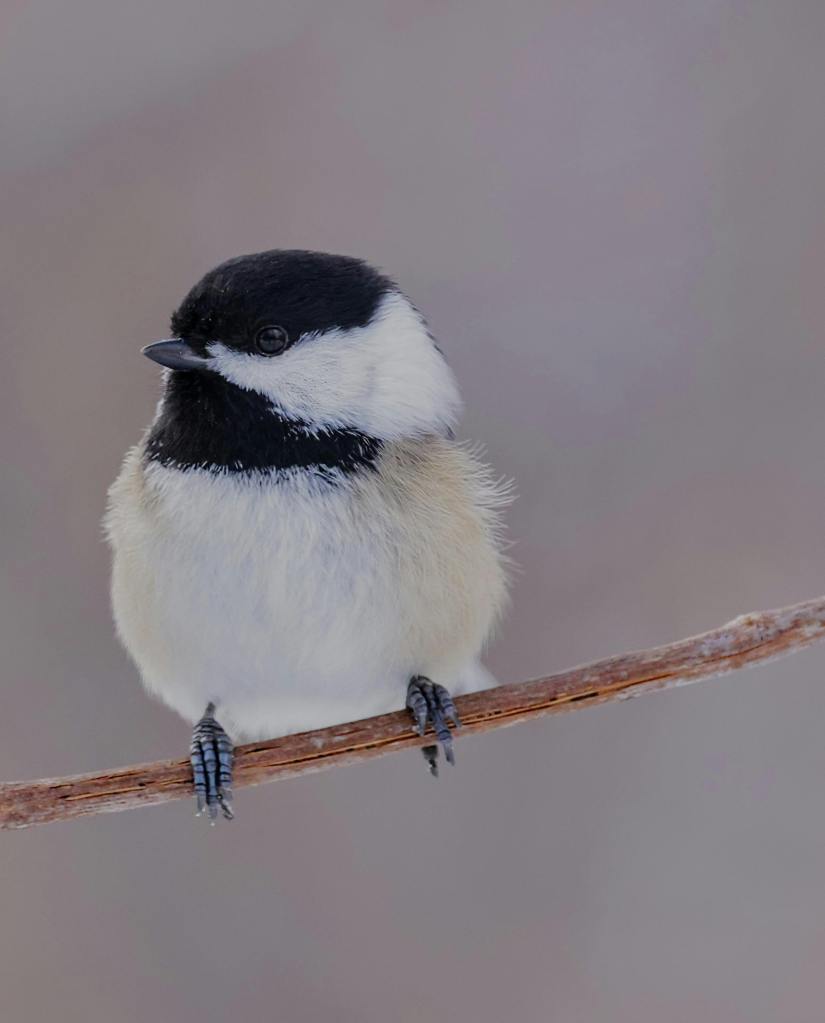
Image was not taken by author.


The past six days I spent at one of my son’s homes. The time together was priceless and I wasn’t ready to leave. I’m never ready to leave either of my sons. Even when times are good. 

As I was packing to leave, my son had already left for work and my ability to hug him one more time had passed. I picked up a stuffed animal that had belonged to him as a child. A striped orange cat with camouflage shorts. The rest of his outfit was lost years ago. I held the cat to my face and inhaled deeply, as if I could smell my son as a child again through the animal. I tucked him under my arm and carried him down the stairs with my pillow. I just couldn’t put him back down. I needed him. A connection that spanned who my son was then and who he is today. 

A link from when he lived with me as a small child to stretch across the miles between us now. 

The drive from his house to mine is roughly two and a half hours and I generally cry at least part of the way. I can’t stop the tears. It is hard to say goodbye when I know that I have already lived through a “last one” and we aren’t guaranteed another with any of our children. 

When I got home I was exhausted. Emotionally. Physically. Mentally. My face was puffy and my nose was stuffed. I cried longer than usual.  I wanted to take a nap right away. I tried. My mind wouldn’t stop circling. I tried to paint. I couldn’t get anything to look the way I wanted. I finally turned on the tv for background noise and cleaned up. Did laundry. Trying to stay busy until bedtime. The house was quiet in a way that wasn’t peaceful, but empty. 

Bedtime finally arrived and my mind was able to slow down and allow me to sleep. I slept deeply and for a long time. I would like to say I awoke rested but in truth I didn’t. I woke up less physically tired, though. 

The sun was bright as I sat down on the couch with a cup of coffee in my favorite mug. The animals arranged themselves around me as they usually do. I felt a bit lost and wasn’t sure how to fill the day. Next to me, on the table, was a little notebook I was using to plan a new garden. I picked it up and let my eyes wander over the plans I’d been making the week before. A list of plants I wanted to add to the area. Another list of plants and seeds I already had – given to me by friends. A third page held the names of people who offered me flowers and small trees if I wanted to come dig them up. Then, I remembered it was Saturday and the farmer’s market was open.

My friend and I decided to go down to the market. What a perfect place to wander for a while. The entire side yard is a blank canvas so there is a large area to fill. There are a number of songbirds who come to the feeder so I knew I wanted to build the garden around the wildlife that visits daily, and nightly. Birds, rabbits, turkeys, possums, a skunk, and last year we had two adolescent raccoons who stopped by at dusk for nearly a week. I don’t have a preference about who eats at the feeder. Any hungry animal is welcome to partake. 

There are also a handful of domestic animals, stray cats in particular, who seem to come to our house in order to feed. There is one big old scruffy gray tom cat who I see once in a while. His left ear is tipped so I know he has been fixed. I love catching a glimpse of him now and then even though I can tell he wants nothing to do with me. That’s ok. I just want him fed. 

Part of the garden, the area in the back protected on three sides, is going to be a semi-permanent area for the strays in the neighborhood. A handful of insulated houses. Fresh food and water. Safety. 

There was a booth at the market that had little plants for sale. One of the plants had the most beautiful green leaves. Their shape pleased me immediately. I asked about them and learned they are nasturtiums. The woman at the booth said she had two kinds. Orange and red, and just red. The flowers are edible. I bought four. Two of each color. Then I saw catnip. I had planned on getting a few plants to put in the cat shelter area so I got one plant for them and one for the two cats who live in our house, Walter and Avi. In a box next to the catnip were bulbs. A sign on the front of the box said “Tulip bulbs – fill a bag for $1”. We filled two bags and brought home roughly forty bulbs. I have no idea what colors they are but I am looking forward to finding out when they bloom next year. 

Later in the day we went to a garden center and my friend purchased six fruit trees. We hadn’t planned to but I am so happy we did. Two apple, two pear, and two peach. Years are going to pass before we get fruit, I imagine, but that’s alright. They felt perfect for the pollinator section of the garden. It is easy to imagine them bursting with blooms. By next year, I hope, the branches may be able to hold the weight of a nest. In five years, fruit will fall to the ground and feed an animal. In ten years there will be shade enough to cool the yard. 

A few hours after getting home from the garden center I remembered I hadn’t finished the laundry yesterday. I got off the couch, looked out the window at the fruit trees lining the fence across from the bird feeders, then went down to the basement. 

Moving clothes from the washer to the dryer, I suddenly heard a loud buzzing very near my head. I looked up at the small window and saw movement. I realized there was a bumblebee that was trying desperately to get outside. She (they are all shes to me) kept hitting the glass. Her body was dirty with cobwebs. I couldn’t figure out how she had gotten down there but I knew I had to get her outside. 

I ran upstairs and grabbed a cup and a piece of paper and was able to catch her easily. She was right where I’d left her. She wasn’t going to leave that window with the sunshine falling through.

She was on the wrong side of outside. 

I got her outside, removed the paper from the mouth of the cup, and gently shook her onto a flowering bush. She didn’t land, though. She dropped a bit then took flight. I watched her fuzzy bottom zig-zagging across the front yard. 

As I watched her disappear, I understood something familiar in her earlier desperation: my grief did not remove me from the world entirely. It placed me beside it. Life remained visible. I just could not always reach it. 

Bereaved parents live life adjacent.

I walked toward the new trees again imagining future blossoms, feeling the cool shade to come. There was a small chickadee perched on the delicate branch of one of the apple trees as it gently swayed in the breeze.

I picked up the gardening notebook when I went inside. I wanted to add the plants that came home with us today. The inventory of what we have is growing longer. This isn’t just a list of what we physically have. If I read between the lines it is also a list of what remains. What is possible. What is alive. What can still be tended. 

What brings me back into life.
On Becoming Wild

Spring makes me sad, but it used to make me rage. Because what season dares to bloom when your daughter is dead?

Spring is the season of renewal. Months earlier, the earth slowly closed down for a long, cold slumber, with the promise of new life as the seasons turned. As the blanket of winter snow melts the air warms up, and storms start to form. Delivering the rain needed for the new growth bursting forth across the land.

Spring—and its promise of new beginnings—seemed obscene to me in the years following Becca’s death. The only season that felt comfortable to me was winter. Even though it held hard days and anniversaries, I made sense in the frigid days and lengthy nights. My soul was in its own winter, and I accepted this truth.

The first spring after losing my daughter was brutal.

Not only did it betray my idea of the world, it also held court proceedings for the drunk driver who killed my child. So much of it is a blur, memories spinning into each other, but I do remember seething when the sun shone brightly and splashed warmness all around me.

No. Not acceptable.

My world was still in the deepest part of winter.

I was rage-filled because my daughter did not have the hope of a future.
Hers was stolen from her that January night on the dark highway.
Her life was finished. Completed in a way that was not her choice.
Any dreams she had for her life were wiped out in a split second.

Yes, I lost her—but she lost herself.

I had years of this anger. Spring promised what we couldn’t have.

This is our first spring in the new house, so the budding and flowering plants are new to me. There was a rhythm in the old house I was accustomed to watching unfold — including which plants came to life first. Next to the driveway there were five flowering bushes that would show the first buds, then blooms, of the season. I had found them in the dumpster outside a local nursery, small and half-dead, so I dug them out and brought them home.
I had no idea they would take off and grow so big when I planted them.
I felt like I had saved their lives, so I was always happy when I saw them bloom

Various other plants and flowers would arrive shortly thereafter — Tiger Lilies, Lilacs. The Bridal Wreath Spirea was one of my favorites. Its long slender branches spilled over the brick half-wall onto the front porch. The flowers were delicate, but their existence was fleeting.


Much like my daughter’s time here on earth.


I’d sit near them, on a rocker, when I had a chance, because I knew they would soon be gone.

The new house has a whole different variety of plants — a new variety, but much fewer in number. I have a clean slate, of sorts, to plant what we choose.

I was sitting on the front steps and noticed a tree on the corner of the yard and the alleyway. It’s a good-sized tree. I’m not sure of the type. The main trunk is probably twenty-two to twenty-four inches in diameter, so I am unsure of the age. Multiple limbs have been removed over the years because they came too close to the roof, we were told. My roommate, the actual owner of the house, mentioned that she might take the whole tree down.

As I was sitting there looking at the tree, pondering its past, I wondered if it hurt when its limbs were removed.

Were the round scars, where life used to be, sensitive?

I felt a sadness because in a few weeks the entire tree might be gone.

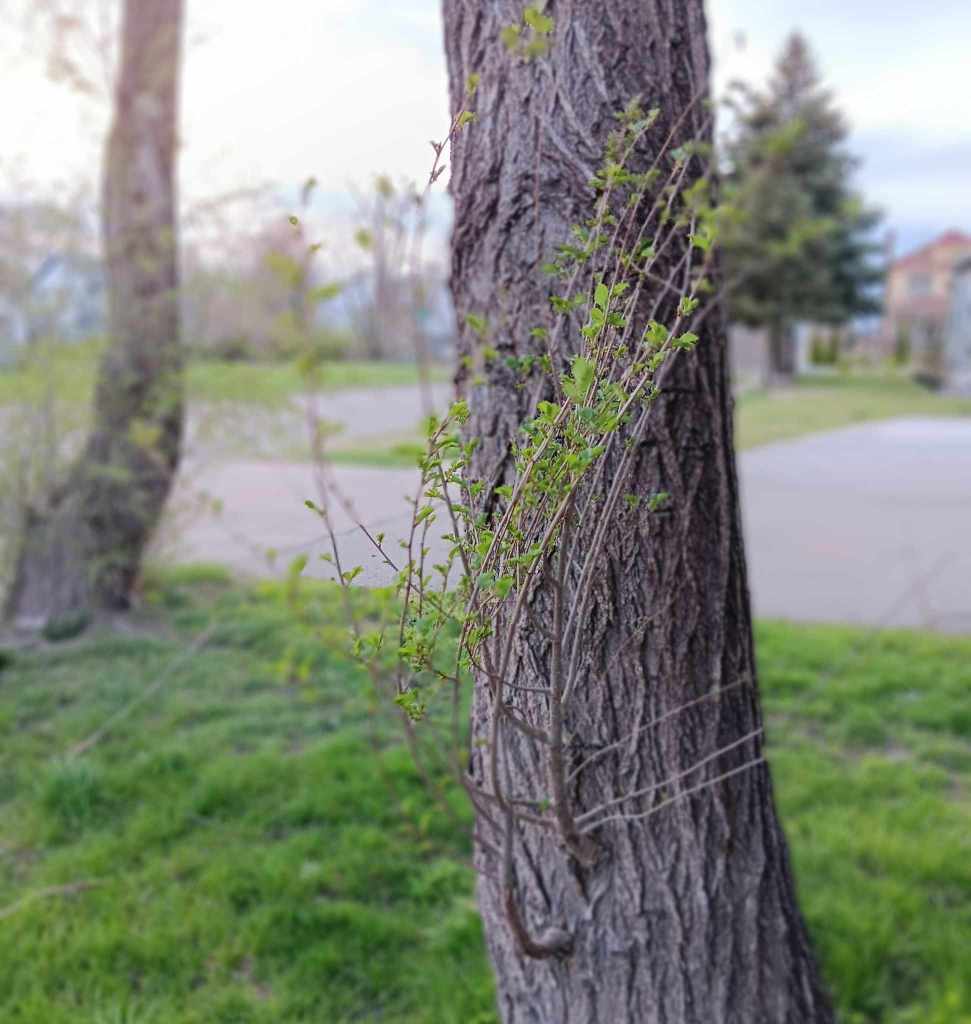
Then I noticed something I had not seen before — dozens of thin branches growing from near the base of the tree. I had seen them in the winter when everything was bare, but now they had little bursts of tender green leaves along each one.

Had I thought they were dead and not just in hibernation?

The thought struck me that though the tree had been cut, vital parts of its whole taken away, it still believed in life.

The tree resonated with the innermost parts of who I am as a grieving mother.

Wounded, but still sprouting. Still trying to make something of the light.

To most, I think, those spindly, defiant branches would need to be trimmed off.
They are unsightly, I was told. Left would be dozens of tiny new injuries for the tree to scar over. The hopeful defiance in reaching toward life would end. How tragic.

Losing a child is much the same.

Child loss doesn’t break you. It un-makes you.

You’re no longer who you were before — it’s like every cell was burned down to ash, and only some are able to rebuild. Like the tree, you lose vital parts.But in child loss, it’s not a limb — it’s the roots. Somehow you’re still expected to stand.

And, miraculously, you do stand.

You exist. Waiting.

Waiting for your child to come back.
For all of it to make sense.
To breathe without suffocating from the grief.

I think winter understands this resting — the space between.
The life that held your child and this one that doesn’t. The holding steady.
That is where healing begins, I believe. Not in the exuberant insistence of spring. But in the small places of hibernation. Unseen places.

Our winter of the soul is a different length for each of us. Often, we can spend years in this season. I did. Over a decade, truthfully. Well over.

There is a strange safety in winter. You know what to expect — the bare branches, the muted sky, the sharp air that cuts when you breathe.

You don’t trust spring at first when it comes. You feel the sun one day, unexpected and gentle on your face, and you think — maybe.


Maybe the hold is loosening.

Maybe it’s time to stretch toward life again.

And then the dark clouds gather on the horizon. The temperature drops.
The wind returns with that certain smell — the one that tells you snow is coming, even before you see it. Pushing back against the warmth you dared to welcome.

It reminds you: winter isn’t finished with you yet.

Grief is like that, too.

Just when you think you’ve found your footing again, it howls through the empty places inside you, knocking you off balance. But maybe — just maybe — those moments of warmth aren’t lies. Maybe they are promises.
Not that winter is over — but that spring will, eventually, outlast it.

Then there comes a day when you realize: spring came earlier this year.
Not in the physical world, but in your own. Though it seems the two seasons cannot possibly co-exist… they somehow do. And you find yourself walking through them both at the same time. Winter and Spring. Sorrow and joy.

And maybe this is how healing begins. Life overlaps the pain. We don’t leave winter behind. Instead, we learn to turn toward the sun more often.
To take the places deep inside where our child’s death slaughtered us —
and let the new green shoots of healing take root, and have a chance to grow.

Just like the branches at the base of the tree — too wild for some, too unkempt — that is how healing can appear to the world.

Not pretty.
Not curated.
Not understandable to those who don’t know.

As I sit and admire the tree at our new house, I am struck at how alike we are.

I didn’t plan to survive after Becca died.
I didn’t know how anyone could survive this unimaginable loss.

But survival, it turns out, isn’t always a choice you make.
Sometimes it’s what happens while you are lying broken on the ground. When your soul is in hibernation.

I look at the tree’s tangled base — the low, rough branches, the scars twisting its trunk — and I realize: It didn’t grow that way to be admired. It grew that way to stay alive.

So did I.

Healing didn’t make me prettier.
It made me wilder.

And maybe that’s the truest thing about surviving the unbearable:
You don’t grow back into the person you were.
You grow into someone the world might not recognize —
someone rougher, braver, rooted deeper than before.

Someone who knows that new life doesn’t erase the scars.
It rises up through them.